
Private tours
Sri Lanka Food Tour
10 days of cooking, markets, tea and street food: a private culinary journey around the island.
Tour at a glance
| Length | 10 days: a sample route, fully adjustable |
|---|---|
| Type | Private and tailor-made for your group |
| Starts and ends | Bandaranaike International Airport, near Colombo |
| Places | Negombo, Colombo, Kandy, Matale, Sigiriya, Nuwara Eliya, Ella and Galle |
| Food highlights | Three sample cooking experiences, markets, spices, tea and street food |
| Transport | Private air-conditioned vehicle with an English-speaking driver |
| Price | Personal quote based on dates, hotels, group size and confirmed experiences |
A private journey, built around food
This sample route connects markets, family cooking, tea country and the south coast. The three cooking experiences are proposed in Kandy, near Sigiriya and in Ella. Actual hosts, menus, hotels and inclusions are confirmed before you book. The route covers substantial distances; choose a longer version if you prefer fewer busy transfer days.
Why plan a trip around Sri Lankan food?
Sri Lankan cooking changes every few hours of driving. The lagoon crab and prawns of Negombo, the hopper stalls and short eats of Colombo, the home-style rice and curry of Kandy, the clay-pot village cooking of the Cultural Triangle, the tea and vegetable curries of the hill country and the curd, treacle and seafood of the south coast are all different kitchens, not one national menu. A food tour joins them together in the right order, with a driver who knows which roadside stall, market or family kitchen is worth your time.
Just as important, you eat where the food comes from. A cooking class in a Kandy family kitchen, a village lunch served on a lotus leaf near Sigiriya and a tea tasting at a working factory tell you more about the island than any restaurant menu. You come home able to cook a few dishes yourself, and knowing what to order next time.
Dishes you'll meet along the way
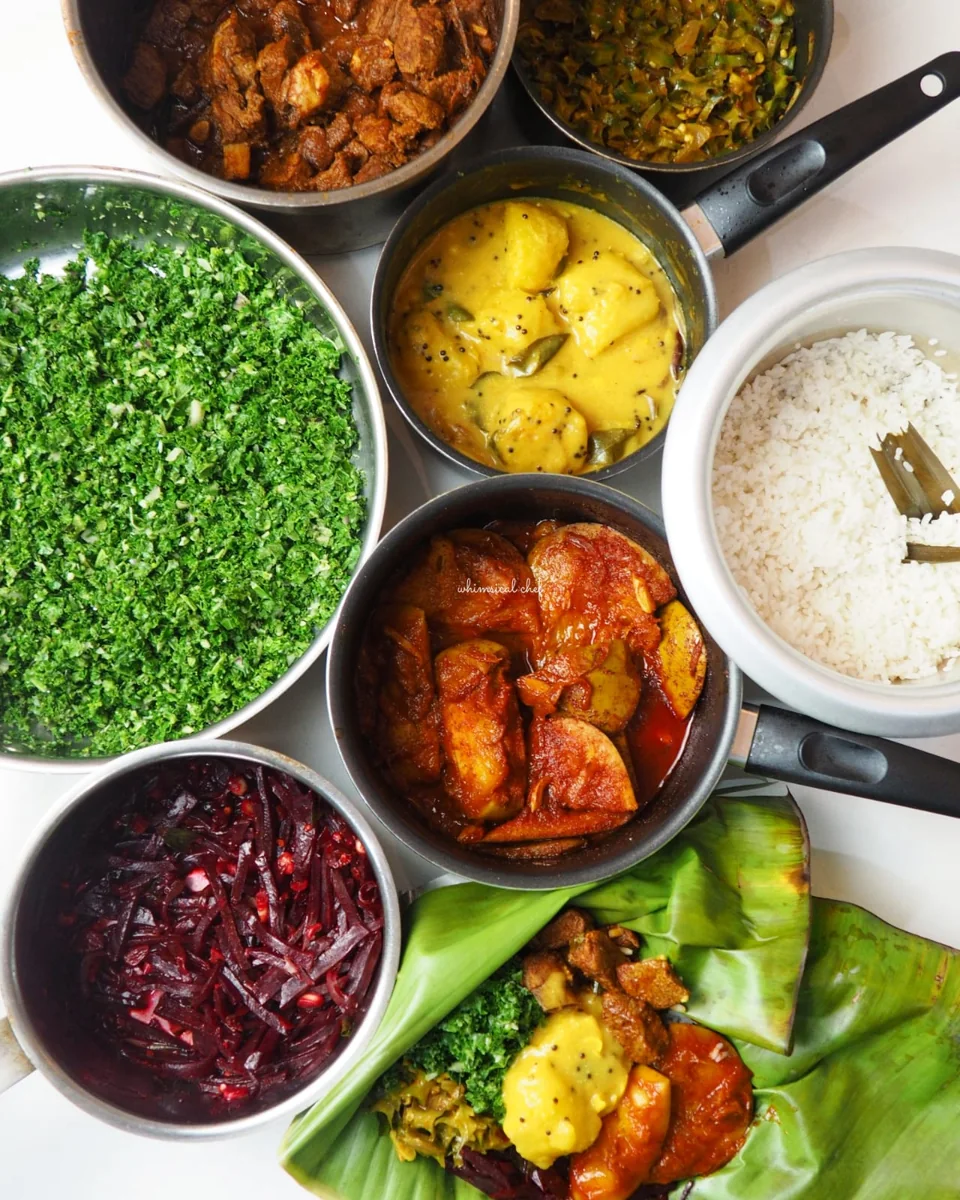
The route is built so you taste the island's greatest hits where they belong: hoppers and egg hoppers at breakfast, kottu roti chopped on a hot griddle in the evening, string hoppers and pittu in Tamil and Muslim kitchens, kiribath milk rice on special mornings, and rice and curry with dhal, pol sambol, mallum and jackfruit curry almost every day. On the coast, look for fish ambul thiyal and lagoon seafood; in the hills, Ceylon tea at the factory; and for pudding, watalappan or buffalo curd and treacle. Roadside stops add king coconut, seasonal fruit and achcharu pickles.
Our guide to traditional Sri Lankan food describes 40 dishes, sides and drinks with heat and diet notes, so you can arrive with a tasting list already in mind.
Day-by-day sample itinerary
Day 1: Arrive in Negombo
Your driver meets you at the airport. Settle into your approved hotel near Negombo, rest after your flight and consider a seafood dinner if it suits your diet. Arrival time determines what is practical today. See Negombo.
Day 2: Negombo fish market and Colombo street food
Visit the working fish market when local activity makes the visit worthwhile, then drive to Colombo. Explore Pettah spices and snacks and consider Galle Face Green in the evening. Tastings depend on stalls, weather and suitable food handling. See Colombo.
Day 3: Colombo to Kandy
Travel into the hills with optional king coconut or roadside snack stops. Visit the Temple of the Tooth if timing permits. Confirm admission arrangements and dress requirements rather than assume entrance is part of a food package. See Kandy.
Day 4: Kandy market and cooking class
Choose produce with a local cook, then prepare a rice-and-curry meal in a family kitchen. Dhal, pol sambol and jackfruit curry are example dishes; the menu and hands-on format depend on the confirmed host and your dietary needs.
Day 5: Matale spices and village cooking near Sigiriya
Visit a spice garden on the journey north, with no obligation to buy products. Continue towards Sigiriya for village cooking and a shared meal. The meal’s timing, clay-pot or wood-fire format and ingredients are agreed with the host. See Sigiriya.
Day 6: Sigiriya and Dambulla
Consider an early Sigiriya climb, then market or cave-temple visits according to your energy and access conditions. An elephant safari is optional and separately specified in your quote; wildlife sightings are not guaranteed.
Day 7: Travel into tea country
This is a substantial transfer via Kandy towards Nuwara Eliya. Arrange a tea-factory visit and tasting where operating hours permit, or move it to the following morning. Keep the rest of the day light. See Nuwara Eliya.
Day 8: Travel to Ella and a cooking class
A Nanu Oya to Ella train journey is an option only if services and tickets are available for your date. Your private vehicle is the road alternative. Allow rest before an Ella cooking class, or move the class if travel takes longer than expected. See Ella.
Day 9: Ella to the south coast
Travel south with a possible curd-and-treacle stop, then enjoy a coastal meal such as fish ambul thiyal if it suits you. Stay near Mirissa or Galle according to the season, transfer length and your departure plan. See Mirissa.
Day 10: Galle Fort and departure
Explore the fort and pause for tea if your flight leaves enough time. The airport transfer takes priority. For an early departure, stay closer to the airport the previous night or extend the trip rather than rush sightseeing. See Galle Fort.
The three cooking experiences, in detail
Kandy: market to family kitchen
Walk the market with your host to choose vegetables, spices and coconut, then cook a full rice-and-curry meal in a family kitchen. You might scrape coconut, grind spices on the stone and learn how a proper dhal should taste. The menu follows the season and your dietary needs, confirmed with the host in advance.
Near Sigiriya: village cooking on a wood fire
In a village beneath the rock, cook in clay pots over a wood fire and share lunch served on a lotus leaf: red rice, dhal, jackfruit or pumpkin curry, mallum and pol sambol. Many guests combine this with our Sigiriya village tour or the Habarana village tour, which add a bullock cart ride and a boat crossing on the village tank.
Ella: hill-country cooking class
Ella's cooking schools are a traveller favourite: small groups, open kitchens and views over the hills. Learn how coconut milk, curry leaves and roasted curry powder build a Sri Lankan curry, then eat what you made. Tell us if you'd prefer a private class and we'll check availability for your date.
The food regions you'll travel through
| Region | What to taste |
|---|---|
| Negombo and the west coast | Lagoon seafood, the working fish market, hoppers and short eats |
| Colombo | Pettah spices and snacks, kottu, Galle Face Green street food |
| Kandy | Home-style rice and curry, market produce, local sweets |
| Matale | Spice gardens: cinnamon, cardamom, pepper, nutmeg and cloves |
| Sigiriya and the Cultural Triangle | Village cooking, clay-pot curries, lotus-leaf lunches |
| Nuwara Eliya and Ella | Ceylon tea, vegetable curries, hill-country cooking classes |
| South coast and Galle | Fish ambul thiyal, seafood, curd and treacle, cinnamon country |
What your quote confirms
- Private air-conditioned vehicle and driver for the agreed route
- Airport pickup and drop-off arrangements
- Hotels you approve and the chosen meal plan
- Cooking classes and food experiences specifically listed in the booking
- WhatsApp support throughout the trip
Entrance tickets, safaris, train tickets, drinks and meals outside the selected plan must be identified as included or separate. The sample page is not a guarantee of every activity on every date; your written itinerary and quote define what you book.
Make it yours
A shorter five-to-seven-day route can focus on Colombo, Kandy and Sigiriya. Add more days for a northern Jaffna food extension or a slower south-coast stay. Vegetarian or vegan menus can be requested, but every host must confirm ingredients and cross-contact arrangements. Severe allergies require a practical kitchen assessment, not a blanket promise that every meal can be adapted.
Who this food tour suits
Curious eaters who'd rather cook with a family than photograph a buffet; couples and friends who want markets and street food with a local driver to steer them; families introducing children to new flavours at a gentle pace; and vegetarians and vegans, who eat remarkably well in Sri Lanka once hosts know your needs. If you want a shorter taste, ask us to build one or two cooking experiences into a private tour of any length.
Practical tips for eating your way around Sri Lanka
- Spice: ask for mild when you order or before a class starts; food cooked in batches can't always be adjusted afterwards.
- Water: drink bottled or filtered water, and skip ice unless you trust the source.
- Street food: choose busy stalls where food is cooked fresh in front of you; your driver knows the reliable ones.
- Allergies: tell us before booking. Coconut, seafood and Maldive fish appear in many dishes, and severe allergies need a practical kitchen assessment.
- Etiquette: eat with your right hand if you eat with your fingers, and dress modestly when a food stop includes a temple.
- Timing: Sri Lankans eat lunch early; the best market and stall visits happen in the morning.
Best time for a Sri Lanka food tour
Food tours run all year, and there's always a season for something. April brings the Sinhala and Tamil New Year, when homes and sweet shops fill with kavum, kokis and kalu dodol. From roughly May to September, look for mango, rambutan and mangosteen at roadside stalls. Seafood, hoppers and rice and curry are year-round pleasures. The main seasonal choice is which coast suits your dates; our guide to the best time to visit Sri Lanka explains the two monsoons.
Frequently asked questions
Is the food tour private?
Yes. The agreed tour is for your own group, with a private vehicle and driver. Confirm whether each cooking class is private or shared before booking.
Can it be vegetarian or vegan?
Yes, a suitable menu can be requested. Each host must confirm the ingredients; severe allergies and cross-contact requirements need an individual assessment.
How many cooking classes are included?
The ten-day sample proposes three cooking experiences: Kandy, near Sigiriya and Ella. Your written quote confirms the actual hosts and inclusions.
Is the food very spicy?
Ask for mild preparations before cooking. Hosts may adapt a menu, but food already prepared in batches may not be adjustable.
How much does it cost?
The price is a personal quote based on your dates, hotels, group size, route and confirmed experiences. No fixed starting price is advertised for this tour.
Can I join just one cooking class?
Yes. Ask Vacations Ceylon Tours to include a single suitable cooking class in a private tour or day tour, subject to host availability.
What dishes will I try on the food tour?
Hoppers, kottu, string hoppers, rice and curry with dhal and pol sambol, jackfruit curry, fish ambul thiyal, curd and treacle, watalappan, king coconut and Ceylon tea are typical. Exact tastings depend on the season, your route and your confirmed hosts.
Is street food safe to eat in Sri Lanka?
Choose busy stalls where food is cooked fresh and hot in front of you. Your driver knows reliable vendors, and bottled water is the safe default throughout the trip.
When is the best time for a food tour?
Any time of year. April adds New Year sweets such as kavum and kokis, and roughly May to September is mango, rambutan and mangosteen season. Choose your coast according to the monsoon.
Can children join the food tour?
Yes. Cooking classes and village meals work well for families, and hosts can keep dishes mild. Tell us the children's ages so we can plan suitable stops and pacing.
What is the difference between the food tour and a village tour?
The food tour is a multi-day journey around the island with three cooking experiences. A village tour is a half-day experience near Sigiriya or Habarana. Many travellers do both.
Do I need to book cooking classes in advance?
Yes. Hosts are confirmed before you book, so menus, dietary needs and whether each class is private or shared are agreed ahead of your arrival.
Related tours and reading
Plan your food journey
Check the cooking experiences before confirming
Compare the actual menu, class format, group size, meal plan and confirmed inclusions. Train journeys and market visits depend on current services and local conditions.
Give us your dietary requirements before booking. Hosts must confirm what their kitchens can provide; travel support does not replace an individual medical assessment for serious allergies.
Know who you are travelling with
Meet our founder, Dewage Nishantha Kumara, and see guest photographs from our Sri Lanka journeys. The guest gallery is separate from the original traveller reviews.
Let's Plan Your Sri Lanka Journey
Tell us when you'd like to travel and what you love, and we'll suggest a route that fits. There's no obligation.

Your next Sri Lanka journey starts here.
Tell us your dates, group size and interests. Our team will help you plan your route and confirm your quote personally.