
This guide explains when to go, what you can see, where boats leave from, what it costs, and how Trincomalee compares with Mirissa. If your trip falls between November and April, read our guide to whale watching in Mirissa instead.
Trincomalee whale watching at a glance
- Season: roughly March to August (best April to July)
- Departure: early morning, about 6:30am, from Uppuveli, Nilaveli or Trincomalee town
- Time at sea: usually 3 to 4 hours
- What you may see: blue whales, sperm whales, spinner dolphins, and occasionally orcas
- Typical price: quoted on request; message us for today’s price
- Best for: travellers visiting Sri Lanka in the middle of the year, and anyone who prefers fewer boats
Why Trincomalee is special for whale watching
Trincomalee sits beside one of the deepest natural harbours in the world. Just offshore, the seabed falls away into the Trincomalee Canyon, a huge underwater valley that brings deep, food-rich water very close to the coast.
That deep water attracts the same great whales that visit Mirissa. Many experts believe some of them move between the two coasts with the seasons, following calm seas and food. In the middle of the year, while the south-west monsoon stirs up the south coast, the east coast enjoys its dry, sunny season and calm conditions.
There is another advantage: crowds. Mirissa can have dozens of boats on the water at the peak of its season. Trincomalee has far fewer operators, so encounters tend to feel calmer and more personal.
Best months for whale watching in Trincomalee
| Month | Sea conditions | Whale watching |
|---|---|---|
| March | Calming | Season starting; good chances |
| April | Calm | Very good |
| May | Calm | Very good, often the peak for blue whales |
| June | Calm, some wind | Very good |
| July | Calm, some wind | Good |
| August | Calm to moderate | Good, season winding down |
| September to February | Rougher; north-east monsoon from about November | Few trips; visit Mirissa from November |
The middle of the year is also when the whole east coast is at its best for beaches. See our guide to Sri Lanka in July and August for what else to do on the trip.
What you can see off Trincomalee
Blue whales. The most sought-after sighting. Look for a tall, straight blow and a long, slow-rolling back. Blue whales here are often seen in the first months of the season.
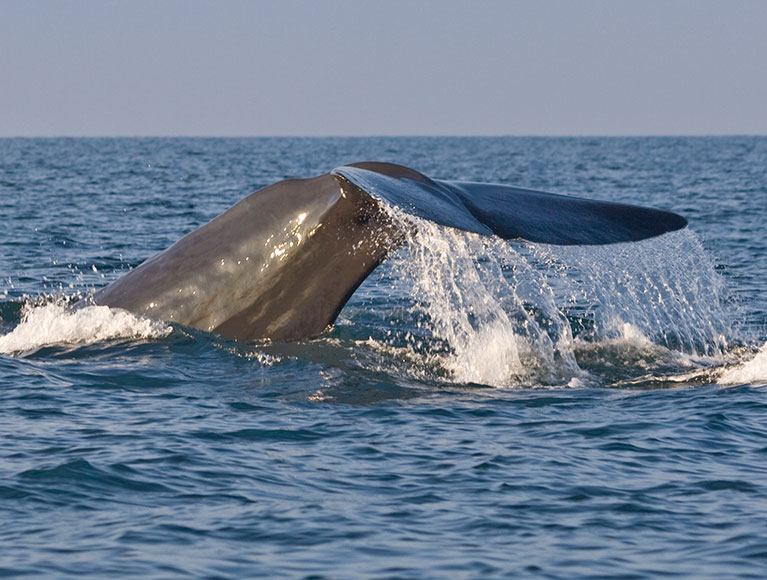
Sperm whales. Trincomalee is known for sperm whales, sometimes in family groups. With luck you may see several resting at the surface together, or a raised tail as one begins a deep dive.
Spinner dolphins. Large pods are common and can appear close to the boat, leaping and spinning.
Orcas and other species. Orcas, false killer whales and Bryde’s whales are reported now and then. They are a rare bonus rather than something to expect.
No wildlife trip is guaranteed, and sightings vary from week to week. A good crew will tell you honestly what has been seen recently.
What a whale watching trip from Trincomalee is like
Most trips leave at around 6:30am, when the sea is calmest and the light is soft. Depending on your operator, you will board from the beach at Uppuveli or Nilaveli, or from a jetty near Trincomalee town.
The boats here are often smaller than the big multi-deck vessels in Mirissa. That means you are closer to the water and the experience feels more intimate, but there is less shade, so sun protection matters. Some boats serve a light breakfast; others provide only water, so check when you book.
Because the canyon is so close to shore, you may not need to travel far before the search begins. The crew watches for blows and shares sightings by radio. Once a whale is found, the boat should wait at a respectful distance and let the whale decide how close to come.
Trips usually last 3 to 4 hours, so you will be back by late morning with the rest of the day for the beach or snorkelling.
Trincomalee whale watching prices
- Shared boat: price confirmed when you enquire
- Children: child rates available on request
- Private boat: quoted on request, recommended for families and photographers
- Hotel transfer: included when part of our tours
As in Mirissa, ask what is included: breakfast, life jackets, insurance, and whether a second trip is offered if you see nothing.
Mirissa vs Trincomalee: which should you choose?
In most cases your travel dates decide for you, because the two seasons barely overlap.
| Mirissa | Trincomalee | |
|---|---|---|
| Season | November to April | March to August |
| Sea | Can be rolling, bigger swell | Often very calm |
| Crowds | Busy at peak season | Fewer boats |
| Boats | Larger, more facilities | Often smaller and closer to the water |
| Main species | Blue whales, spinner dolphins | Blue and sperm whales, spinner dolphins |
| Best combined with | South-coast beaches, Galle Fort | East-coast beaches, Pigeon Island |
If you visit in March or April, both are possible. Mirissa is easier to reach from Colombo; Trincomalee pairs well with a Cultural Triangle trip to Sigiriya and Polonnaruwa.
Watching whales responsibly
The whales off Trincomalee face fewer boats than those in Mirissa, and it is important to keep it that way. Choose an operator that approaches slowly, keeps a respectful distance, never chases or encircles whales, and limits time with each animal. Make sure there are life jackets for everyone. For more on responsible practice across the island, read our guide to whale watching in Sri Lanka.
More to do in Trincomalee
Whale watching is only one reason to visit. Trincomalee’s beaches are among the best in Sri Lanka in the middle of the year.
- Pigeon Island. A protected marine park a short boat ride from Nilaveli, with coral, reef fish, turtles and harmless blacktip reef sharks. Read about snorkelling at Pigeon Island.
- Nilaveli and Uppuveli beaches. Long stretches of soft sand and calm water. See our guide to Nilaveli beach.
- Koneswaram Temple. A Hindu temple perched on Swami Rock, with sweeping ocean views.
- Fort Frederick and the harbour. Colonial history and spotted deer wandering the old fort grounds.
Find more ideas in our Trincomalee guide and our page on snorkelling in Sri Lanka. Trincomalee is about 2.5 to 3 hours by road from Sigiriya, which makes it easy to add to a cultural tour. Our east coast tour combines Trincomalee with the north.
Plan your trip
Want whale watching in Trincomalee as part of a longer holiday? Contact us and we will build it into an east-coast itinerary with transport, hotels and a local guide.
Frequently asked questions
What is the best month for whale watching in Trincomalee?
April, May and June usually offer the calmest seas and good blue whale sightings.
Is it suitable for children?
Yes, for children who are comfortable on boats. Trips are shorter than in Mirissa and seas are often calmer, but bring sun protection, as smaller boats have less shade.
Can I see whales in both Mirissa and Trincomalee on one trip?
Only in March or April, when the seasons overlap. Otherwise, choose the coast that matches your travel dates.
What if the sea is rough?
Boats do not go out when conditions are unsafe. You will be offered another date or a refund.
How far is Trincomalee from Sigiriya?
About 2.5 to 3 hours by car, so you can travel from the Cultural Triangle the day before your trip.