Gal Oya National Park
Visit Gal Oya National Park in eastern Sri Lanka: boat safaris on Senanayake Samudra, elephants swimming between islands, birdlife and how to get there.

Culture
The Vedda, who call themselves Wanniyala-Aetto ("forest people"), are Sri Lanka's indigenous people. The main place visitors can meet the community is Dambana, near Mahiyanganaya in the Uva Province, a few hours' drive east of Kandy. Some coastal Vedda communities also live in the east, and Vedda-led nature walks are offered near Gal Oya. Visit with a local guide, ask before taking photos and buy crafts directly from the community.
The Vedda are descendants of Sri Lanka's earliest inhabitants, who lived on the island long before the arrival of settlers from India more than 2,500 years ago. For thousands of years they lived as hunter-gatherers in the island's forests, hunting with bows, collecting wild honey and fruit, and living in caves and simple shelters.
Today only a small number of people identify as Vedda. Over the past century, national parks, forest reserves, irrigation projects and resettlement have reduced their access to traditional lands, and many families now farm, work in towns or live much like their Sinhalese and Tamil neighbours. Yet some communities still keep their language, rituals, forest knowledge and strong sense of identity.
Dambana – the main visitor site Dambana, near Mahiyanganaya, is the best-known Vedda village and the main place where visitors are welcomed. There is a small Vedda heritage centre, and community members show traditional skills such as making fire, using bows and arrows, and preparing forest foods. Confirm that your visit is community-led and agreed in advance; do not assume that a meeting with a community leader is included. Dambana is usually visited as a day trip from Kandy, or as a stop between Kandy and the east coast. See Kandy.
Gal Oya – Vedda-led nature walks Around Gal Oya National Park, some lodges and local guides arrange forest walks with members of the local Vedda community, who share their knowledge of medicinal plants, animal tracks and honey hunting. See Gal Oya National Park.
Coastal Vedda communities Some Vedda communities on the east coast, between Trincomalee and Batticaloa, have a mixed Vedda and Tamil heritage and speak Tamil. They are not set up for tourism, so visits should only happen with a trusted local contact. See Arugam Bay for the wider east coast.
Depending on community consent and arrangements confirmed in advance, a visit to Dambana may include:
The experience is short and simple. It's best enjoyed as a respectful conversation, not as a performance.
Because the Vedda are a small community whose way of life is under pressure, how you visit matters.
Read our responsible travel guide for more on visiting communities.
It's a fair question. Like many indigenous communities, the Vedda live in the modern world, and a visit to Dambana includes demonstrations arranged for visitors. Many community members see tourism as a way to earn an income, share their culture and keep traditions alive for the next generation. If you go with an open mind and a good guide, it can be a meaningful and honest exchange.
Dambana can be visited all year. The dry months, roughly May to September, make the drive easier. Avoid arriving unannounced; ask your guide to arrange your visit in advance.
If you'd like to learn more about rural Sri Lankan life, combine a Vedda visit with a village tour in the Cultural Triangle.
Our team can add a respectful visit to Dambana to a Sri Lanka cultural tour, on the way from Kandy to the east coast. Plan this with a local expert. For more cultural experiences, go back to Culture in Sri Lanka.
Many travellers begin by asking where they can go to see the Vedda. A better question is whether a meeting with Vedda people is appropriate, who has invited it and what the community gains from it. This shift matters. The Vedda, or Wanniyala-Aetto, are a living Indigenous people with their own families, opinions, jobs, concerns and futures. They are not a heritage attraction that exists for visitors, and no visitor has an automatic right to access, a photograph or a performance.
The existing guidance on the page explains where visitors have traditionally been welcomed and how to behave. This extra guidance is about decision-making: whether to go, how to prepare, what to ask, and how to leave the visit with respect intact. If the answers to those questions are uncertain, it is better to postpone or choose another experience than to push ahead.
It also helps to separate learning about the Vedda from visiting them. Reading, listening to talks and supporting community-led initiatives are valid ways to engage, and they do not impose on anyone's time. If you do arrange a visit, think of it as a conversation initiated by the community, in which you are a guest. Be ready for the possibility that the plan will change, that a particular person is unavailable, or that the community chooses not to host on a given day.
One of the most common mistakes is to imagine the Vedda as a people frozen in the past. The idea of a primitive or timeless forest people is inaccurate and unfair. Vedda communities have lived through colonial rule, land loss, the creation of protected areas, resettlement and shifting economies. Many now farm, work for wages, send children to school, use phones and take part in national life while maintaining language, ritual, identity and knowledge in different ways.
Travel language can reinforce stereotypes without meaning to. Words such as primitive, untouched, tribal, last or authentic often suggest that change is a loss of identity. A more accurate approach is to recognise that culture is practised in the present. Songs, plant knowledge, stories and ritual are not relics, they are things people choose to share and sustain. People may also be proud of their modern lives, and asking about those lives shows more respect than asking only about the past.
If you travel with children, explain this before the visit. Tell them that they will meet real people who live in the modern world, and that questions should be polite and curious, not about whether people are poor, wild or strange. Ask your host how they prefer to be described, and use the same terms. In conversation and later in writing, name the community and place specifically instead of generalising about all Vedda people, because experiences and views differ widely.
Consent is more than a yes to a visit. It includes agreement on what will happen, who will be present, whether photographs are allowed, what will be shared, what the visitors will pay, and where the money goes. It should come from the community or its recognised representatives, not just from a driver or agent who arranges the transport. If you do not know who has agreed, ask.
Consent can also be withdrawn at any time. A person who earlier agreed to be photographed may change their mind, or the community may decide to end a demonstration. Accept this without argument or disappointment. Do not argue that you have paid, and do not ask for another try. A respectful visitor treats a refusal as normal, and moves on to something else without comment.
Some elements of Vedda culture may be private or sacred, and are not for visitors. Ritual practices, certain places and some stories may be restricted. Do not ask to attend a ritual or visit a sacred place unless you are invited, and do not press for explanations of things people choose not to discuss. If you are invited to something that feels private, ask your guide quietly whether it is suitable to attend, and follow their advice about behaviour and photography.
Dambana, near Mahiyanganaya, is the most established place for visitors, and it has a heritage centre and community members used to welcoming guests. For a first-time visitor, it can be the most straightforward context, because expectations are clearer. It also means that some of what you see is arranged specifically for visitors, which is not a flaw as long as it is understood and agreed.
Vedda-led walks near Gal Oya are different. They tend to focus on the forest, plants and animal tracks rather than on cultural performance. These suit travellers who want to learn about the landscape, and they usually involve smaller groups. The details depend on the lodge or guide, and availability should not be assumed, so ask who leads the walk, whether they are Vedda community members, and how the community benefits.
Coastal and other communities in the east are generally not set up for tourism, and visits there should happen only if a trusted local contact has arranged them and the community has agreed. Do not try to turn up unannounced. If no arrangement exists, accept it and choose another activity. The absence of a visitor programme is not an invitation to improvise, and respecting that boundary is part of being a responsible traveller.
Ask the organiser how the visit was arranged and whether the community was involved in setting the terms. Ask who will lead the visit and whether they are from the community. Ask what the money pays for, how much goes directly to community members, and whether there is a fee for photographs. Ask how many visitors are typically present at once, since large groups can overwhelm a small place.
Ask practical questions too. What language will be used, and is interpretation provided? What clothing is suitable? What are the walking conditions? Is there shade, water or a toilet? Are there rules about photography, children or drones? Are there any areas or topics to avoid? A good organiser will be able to answer these clearly. If answers are vague, or if the plan promises a performance on demand, reconsider.
Finally, ask what the community would like you to do afterwards. This might be to buy directly, to share accurate information, to leave a review that reflects the visit fairly, or simply to avoid sharing certain photographs. Treat these requests seriously. It is also fair to ask whether they would welcome feedback, and how to give it. Doing so shows that you see the visit as a relationship and not a transaction.
Buying handmade items directly from community members can support livelihoods, but it should never feel obligatory. Ask who made the item, what it is made of and whether it has cultural meaning. Do not bargain aggressively, and remember that you are likely to be a small part of someone's income, not a wealthy tourist to be separated from money. If the price seems fair for the work, pay it.
Be careful with items that involve animal parts, protected plants or materials whose collection is regulated. If something looks questionable, ask about it and avoid buying if you are unsure. Honey, carvings, woven goods or plant products should come with a clear explanation. For anything you want to take home, check export rules and respect environmental protections, and do not buy anything that could harm wildlife or forests.
Giving gifts needs care. Handing out sweets, pens or money to children encourages begging and can undermine families. If you want to contribute, ask the host what is needed, and give through them in a way they choose. A donation to a community initiative can be more useful than a bag of gifts, but it should still be discussed openly. Avoid arriving with items that you expect to be gratefully received, since such assumptions can make hosts uncomfortable.
Families can visit if the host agrees, but preparation matters. Talk with children beforehand about listening, asking polite questions, and not touching tools or belongings without permission. Weapons or traditional tools demonstrated in a visit should be handled only by those leading the demonstration. Younger children may find long explanations tiring, so plan quiet breaks and keep expectations modest.
A respectful sequence begins long before the visit. Research the community and read accurate sources, preferably including those written by Vedda people. Contact the organiser well in advance and confirm every detail. On the day, arrive with an open schedule and be willing to follow the host's lead. Begin with introductions and listening, not with requests for photographs or demonstrations. Let the community decide what to share, and accept that some things may be left out.
Afterwards, reflect on what you have learned and how you describe it. Avoid sensational headlines or generalisations. If you share photographs, check that everyone shown has agreed, and tag or name the community in a way they are comfortable with. If something went wrong during the visit, share feedback with the organiser constructively. Over time, these small choices help shape tourism that supports community decisions and long-term respect.
Visit Gal Oya National Park in eastern Sri Lanka: boat safaris on Senanayake Samudra, elephants swimming between islands, birdlife and how to get there.
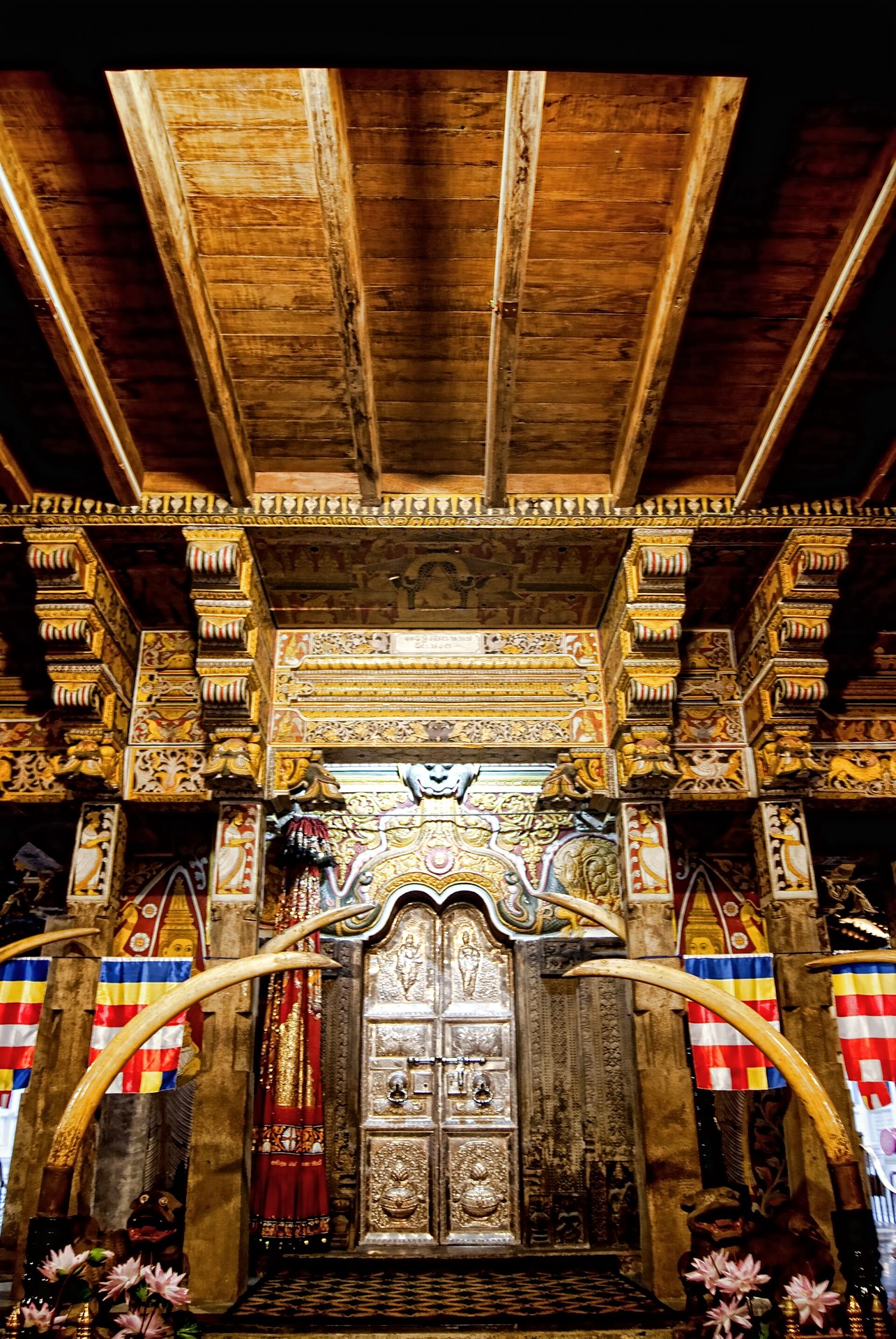
Plan your visit to Kandy, Sri Lanka: the Temple of the Tooth, Kandy Lake, botanical gardens, cultural shows, where to stay and private Kandy tours.
A sample Sri Lanka cultural tour through Anuradhapura, Polonnaruwa, Sigiriya, Dambulla and Kandy, with respectful temple visits and local traditions.
No. Photographs, filming and recordings need clear consent from each person and, where relevant, from the community. People can refuse or change their minds at any moment. Ask first, accept a no without comment, and avoid taking pictures of children or private moments. Check with your host before sharing images online.
Do not assume one will be offered. Any performance or demonstration is a choice made by the community, and some practices are private or sacred. If a programme is offered, treat it as a generous sharing, not a service. Never ask to attend a ritual unless you have been clearly invited.
Ask who arranged it, whether the community agreed to the terms, who leads the visit and where the money goes. Good organisers answer clearly and welcome questions. Be cautious if you are promised access on demand, unlimited photographs or an authentic primitive experience, as these are signs of poor practice.
It can be, if the host agrees and you prepare children in advance. Explain that they will meet real people, ask polite questions and avoid touching tools or belongings. Keep the visit short and flexible. Do not hand out sweets or money to children, as this can create unhelpful habits.
Ask open, respectful questions about work, family, education and current concerns, not only about traditions. People may be proud of modern achievements too. Avoid questions that suggest poverty or backwardness, and do not push for answers. Let the host decide what to share and follow their lead in conversation.
Buying directly from makers can support livelihoods. Ask who made each item and what it is made from, and avoid anything involving protected animal parts or plants. For honey or food items, check how it was collected and stored. Pay a fair price and do not bargain aggressively.
Dambana has an established visitor programme and a heritage centre, so expectations are clearer. Walks near Gal Oya focus more on forest knowledge, plants and animal tracks and depend on the lodge or guide offering them. Availability should not be assumed, so confirm who leads the walk and how the community benefits.
No. Arriving without arrangement can intrude on people's lives and put them in an awkward position. Visits should be agreed in advance with the community or a trusted contact. If there is no arrangement, accept it and choose another activity instead of trying to improvise a visit.
Do not hand out sweets, pens or money to individuals or children. If you wish to contribute, ask the host what would be useful and give through them. A discussed donation or a fair purchase from a maker is better than unplanned gifts. Be open about your intentions.
Describe people as individuals living in the present, not as a primitive or vanishing culture. Avoid sweeping statements about all Vedda people and do not post photographs without consent. Name the community accurately and share feedback with the organiser if you have concerns. Accuracy and respect matter more than a dramatic story.
From inspiration to your itinerary
Explore our matching private journeys. Tell us your dates and group size for a personalised route, availability and written quote.