Anuradhapura
Explore Anuradhapura, Sri Lanka's first ancient capital: great stupas, the sacred Bo tree, Mihintale, how many days you need, and private day tours.

Culture
Sri Lanka's Cultural Triangle is the area between the ancient capitals of Anuradhapura, Polonnaruwa and Kandy, in the centre and north of the island. Inside it are five UNESCO World Heritage Sites: Anuradhapura, Polonnaruwa, Sigiriya, Dambulla and Kandy. Allow at least three days to see the highlights. Sigiriya, Dambulla and Habarana make the best bases because they sit in the middle.
For more than 2,000 years, the dry plains of north-central Sri Lanka were the heart of Sinhalese civilisation. Kings built great cities, giant stupas, palaces, monasteries and huge reservoirs to water their rice fields. When the capital moved south, much of this was reclaimed by jungle. Today, the ruins have been excavated and restored, and the region is known as the Cultural Triangle.
The triangle's three corners are Anuradhapura in the north, Polonnaruwa in the east and Kandy in the south. Sigiriya and Dambulla lie near the centre. Smaller sites such as Mihintale, Ritigala and Aukana are scattered in between.
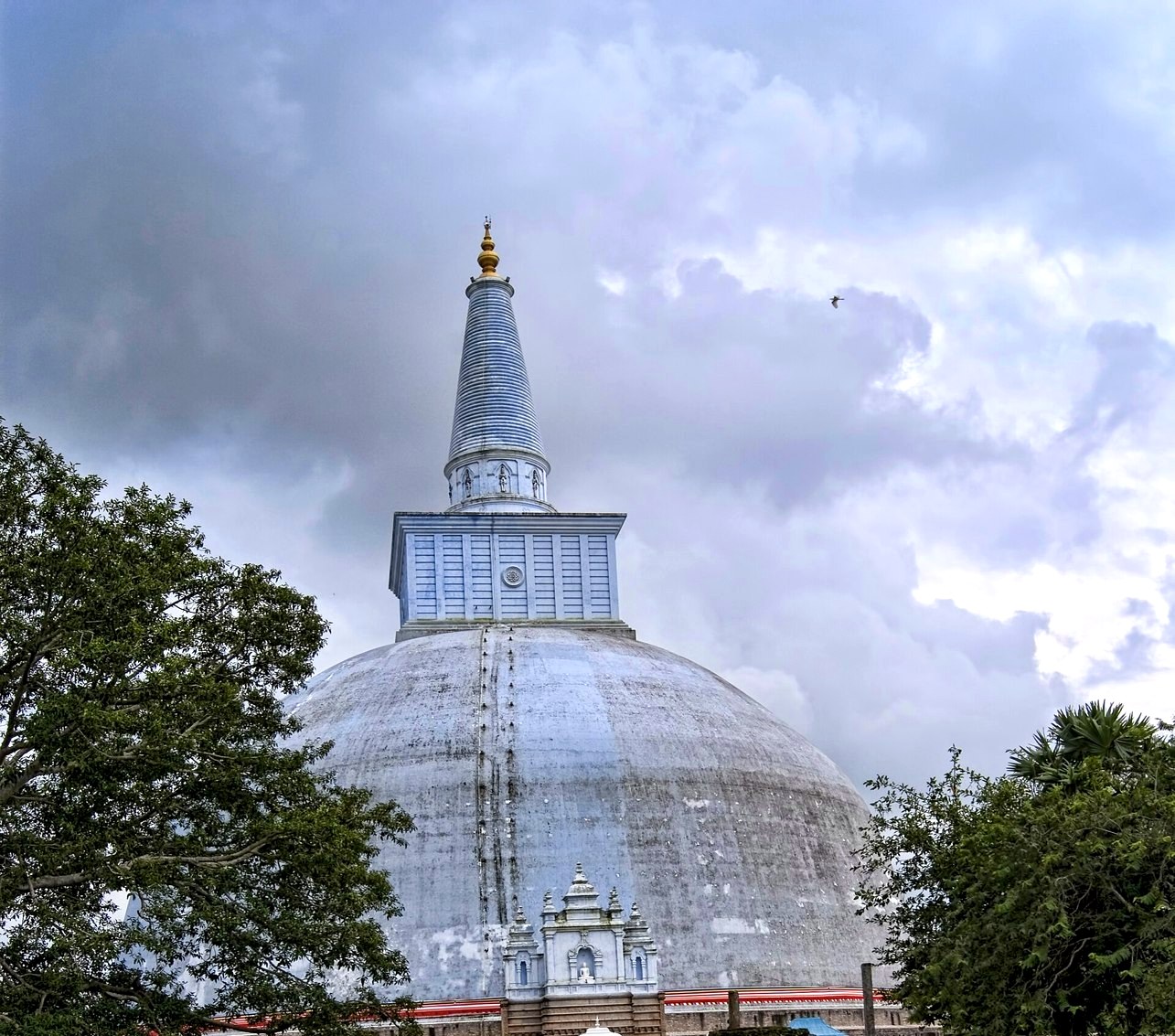
Anuradhapura – the first great capital Anuradhapura was Sri Lanka's capital for over a thousand years. Its highlights are the Sri Maha Bodhi, a sacred fig tree grown from a cutting of the tree under which the Buddha attained enlightenment, and huge stupas such as Ruwanwelisaya, Jetavanaramaya and Abhayagiri. It's a living pilgrimage site as well as an archaeological one. See Anuradhapura.
Polonnaruwa – the medieval capital Polonnaruwa became the capital after Anuradhapura. Its compact, well-preserved ruins are easy to explore by bicycle. Don't miss the Royal Palace, the Quadrangle (Vatadage) and Gal Vihara, four Buddha figures carved from a single granite rock face. See Polonnaruwa.
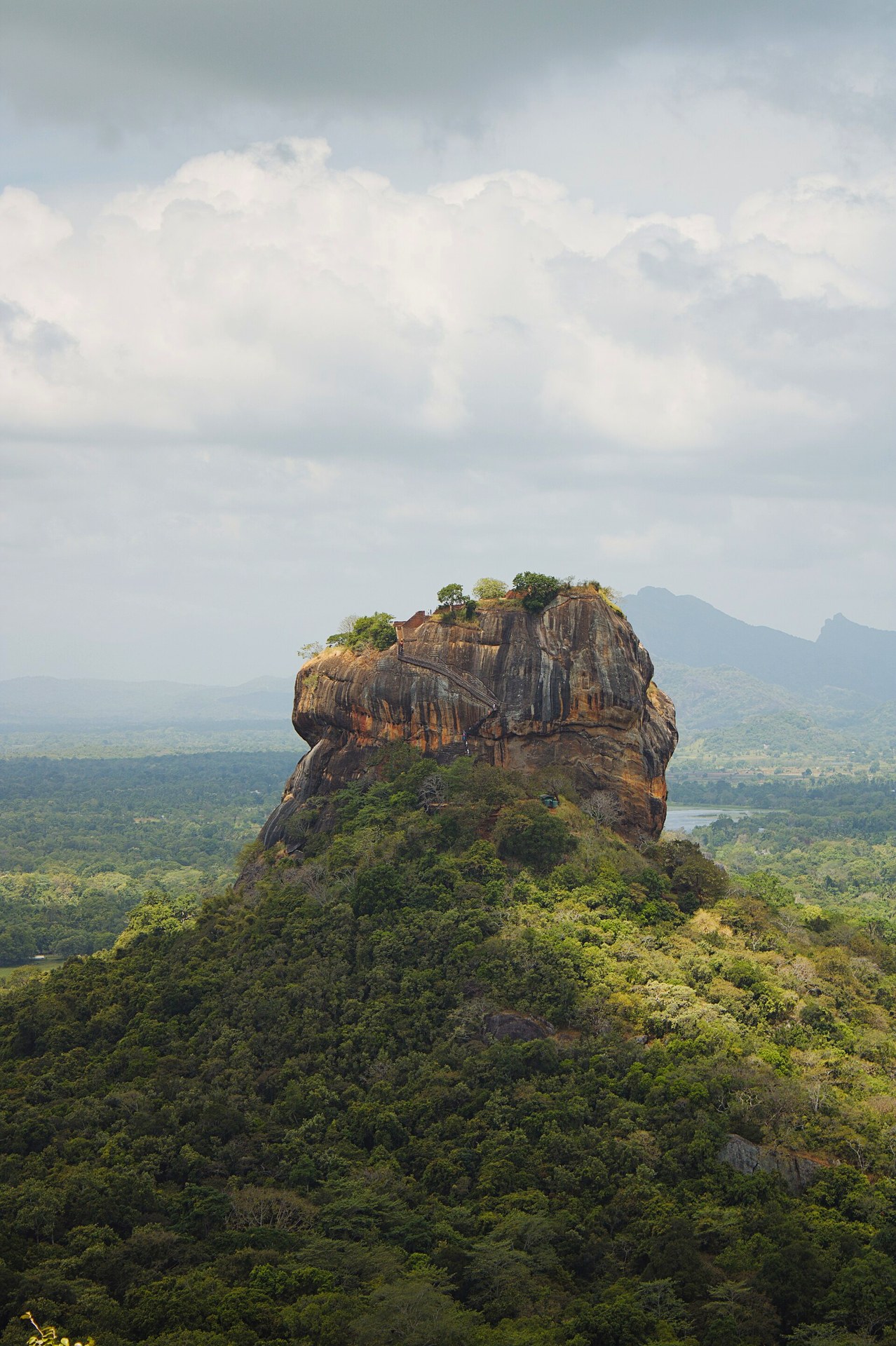
Sigiriya – the rock fortress Sigiriya is a palace and fortress built on top of a huge rock in the 5th century. The climb passes water gardens, painted frescoes, the Mirror Wall and the giant Lion's Paws before reaching the palace ruins on the summit. See Sigiriya, and compare it with nearby Pidurangala in Sigiriya vs Pidurangala.
Dambulla – the cave temples The Dambulla cave temple complex has five caves filled with Buddha statues and painted ceilings, used as a place of worship for more than 2,000 years. See Dambulla Cave Temple.
Kandy – the last royal capital Kandy was the capital of Sri Lanka's last kingdom. Its centrepiece is the Temple of the Sacred Tooth Relic, one of the most sacred places in the Buddhist world. See Kandy and Temple of the Tooth.
For a wider list, see cultural sites in Sri Lanka.
Add one or two days for Kandy, which most travellers visit on the way to the hill country.
Sigiriya, Dambulla and Habarana are all central, so you can visit most sites as day trips without changing hotels. Anuradhapura is further north, so some travellers stay a night there. See Kandy to Sigiriya for travel between the main bases.
The major sites charge entry fees for foreign visitors, and prices change from time to time. See our up-to-date Sri Lanka entry fees guide before you go.
The Cultural Triangle is in the dry zone and can be visited most of the year. It's driest from about May to September, while the north-east monsoon brings some rain from about November to January. Whatever the month, start early. Sigiriya and the ancient cities get very hot by late morning.
Our Sri Lanka cultural tour and Sigiriya day tour cover the highlights with a private driver. Plan this with a local expert. For more cultural experiences, go back to Culture in Sri Lanka.
The Cultural Triangle is often treated as one sightseeing circuit, but the sites offer different experiences. Sigiriya involves a substantial climb and can be busy. Dambulla involves steps to its cave shrines. Polonnaruwa is a spread-out archaeological park, while Anuradhapura combines archaeological remains with active places of pilgrimage. Kandy is a city with traffic, a lake and markets; the Temple of the Sacred Tooth Relic is an active place of worship with its own visiting etiquette. Consider these differences when deciding how many sites to include and in what order.
A useful comparison is to ask what interests you most at each site. Sigiriya combines a dramatic landscape with the remains of a royal complex and water gardens. Dambulla’s cave temples reflect centuries of religious use and artistic additions. Polonnaruwa preserves remains of a medieval royal city, including palaces, temples and reservoirs. Anuradhapura is a major centre of Sri Lankan Buddhist heritage and pilgrimage, with sacred trees and large stupas. Kandy was the capital of the last independent kingdom before British rule, and the Temple of the Sacred Tooth Relic remains an important religious site. Give more time to the places whose history or atmosphere interests you.
Visitor expectations differ by site. Dambulla, the Temple of the Sacred Tooth Relic in Kandy and sacred areas of Anuradhapura are active religious places; follow posted rules and staff guidance, dress respectfully, and be considerate when photographing or moving among worshippers. Rules at archaeological sites also vary, so check signs and local instructions.
There are three sensible ways to shape a trip, and the right one depends on whether you are arriving from the coast, leaving for the hill country, or basing yourself in the middle. The first is the loop from Colombo or Negombo: north through the central plains, a stay near Sigiriya or Dambulla, then south-east to Kandy. This suits people with a limited number of days who want the main sites without much backtracking. The second is the one-way transit, where the Cultural Triangle sits between the airport and the hill country or the east coast. This works well because the drive from the Triangle onward to Kandy or beyond can include a stop or two on the way.
The third shape is the hub. You stay in one central base, such as Sigiriya, Dambulla or Habarana, and treat each site as a separate outing. The advantage is that you unpack once and can choose the cooler hours for each outing. The disadvantage is that Anuradhapura, which is further north, becomes a long round trip, and some travellers prefer a night there instead. If Anuradhapura matters to you because of your interest in Buddhist heritage, build in the overnight and do not squeeze it in as a tired afterthought.
When comparing routes, count driving days honestly. Roads in Sri Lanka are often slower than the distance suggests, with towns, buses, level crossings and roadworks. A route that looks neat on a map can leave one day mostly in a vehicle. Ask your driver or planner which transfers are long, and put the lighter sites on those days. Avoid scheduling a major climb straight after a long drive, and avoid ending a big day with a late transfer when a nearer base would do.
These three are close enough to be combined and different enough to be compared. Sigiriya is the full historical experience, with water gardens at the base, a staircase section, the frescoes and the summit remains. It is also the busiest, and queues on the stairs are a normal part of the visit. Pidurangala is a neighbouring rock with a rougher approach and a bare, rocky final section, and it is mainly valued for the view back across to Sigiriya. Dambulla has far less climbing than either but includes a set of caves where you need to remove shoes, so footwear, hot paving and queues for the caves are the practical issues.
If you can only do one climb, choose based on what you want. Choose Sigiriya for history, design and context. Choose Pidurangala if the view and a quieter, more physical outing matter more than monuments. Many visitors do both on different days, but that makes a demanding combination for older children or anyone with knee or heart problems. Do not assume you must do both to have seen the area properly. A single well-paced Sigiriya visit with a guide who explains the water gardens is richer than two rushed climbs.
Dambulla works well as a balancing visit, because it adds paintings and statues to a trip that might otherwise be mostly ruins and rock. A common mistake is to treat it as a quick photo stop. The caves reward slow looking at the ceilings, the reclining Buddha figures and the way each cave has a different character. Ask your guide which cave they recommend lingering in, and give yourself enough time to wait for the room to clear. Be aware that photography rules and the etiquette of turning your back to a Buddha figure for photos can differ by site, so follow posted signs and staff direction.
Polonnaruwa is compact enough that its main group of ruins can be done by bicycle, tuk-tuk or car, and each option gives a different experience. Cycling offers freedom and a pleasant pace, but heat, sun, and the need to leave bikes while you enter ruins all require planning. A vehicle with a driver lets you use shade between stops and carry water, and it suits older visitors. Gal Vihara is often the emotional highlight, so decide whether you want to arrive there fresh rather than at the end of a hot day.
Anuradhapura is larger and more scattered, and it includes three kinds of place: the sacred city precincts where pilgrims gather, the archaeological areas with ruins of monasteries and palaces, and the outer sites such as ponds and monastery remains. Because you move between them by vehicle, a driver or guide who knows the layout makes a major difference. The best approach is to choose two or three priorities, such as the Bo tree, one great stupa and one monastery site, then add others as energy allows. Trying to see everything leads to fatigue and a blur of white domes.
In both cities, ask who the guide is and what training or licensing they hold, then ask them to explain the sequence of kingdoms and kings in simple terms before you start. At Anuradhapura, behave as you would at any pilgrimage place: dress in modest, preferably light-coloured clothes if you wish to show respect, remove shoes and hats where requested, and do not climb on structures or pose in disrespectful ways. Watch where worshippers are walking and stay out of their way.
The famous five can feel crowded, and several lesser-known sites offer a different atmosphere. Mihintale combines a staircase, a hilltop setting and an important origin story for Sri Lankan Buddhism, and it fits well with an Anuradhapura visit. Ritigala is a forest monastery in a more demanding natural setting, valued for its atmosphere and plant life as much as for stone remains, and it is a better fit for people who like walking in nature. Aukana is mainly a single large standing Buddha figure carved from rock, and it works as a short and focused stop on a longer drive.
Choosing between these depends on your mood and your legs. If your group is happy with steps, Mihintale gives you history and views in a compact outing. If you enjoy forest and uncertainty, Ritigala suits you, though access conditions, permission requirements and walking routes can change, so confirm them with a local planner before building a day around it. If your group includes young children or people who tire easily, Aukana is a gentler addition. Do not promise yourself access to any of these on a particular date until it has been confirmed.
Another way to add depth is to include a village or reservoir visit between the monuments. The ancient cities were built on water engineering, and seeing a tank, paddy fields or a farming settlement helps you understand why the kingdoms sat where they did. A short, well-hosted village experience can fit between sites, provided you are not overloading the day. Choose experiences with a named host and clear expectations, and do not treat a household as a roadside attraction.
The Cultural Triangle is workable for families, but each site has its own difficulty. Sigiriya involves long stretches of stairs, some exposed and some narrow, and handrails and crowding vary. Young children, travellers who dislike heights and people with mobility problems may prefer to see the water gardens and lower areas rather than the summit. Do not push anyone beyond what they are comfortable with, and agree in advance that part of the group can wait in a shaded area if needed.
Heat is the main issue for everyone. Stone surfaces can burn bare feet, so bring thin socks where they are accepted and ask staff or your guide whether this is allowed at each site. Plan water, hats and rest. Children can find ruins dull unless they are given a story to follow, so use a simple game such as finding animals in carvings, looking for water channels, or counting stupas. Keep sightseeing blocks short and mix them with a swim, a village lunch or free time at the hotel.
For wheelchair users and people with limited mobility, the situation varies by site, season and ongoing works. Some areas have ramps or smooth paths, but many ancient surfaces are uneven, and shrines often have steps. Ask your planner what is realistically possible, rather than assuming. A private vehicle with a driver who can stop close to entrances, and a guide who can adjust the route, matters more than any single feature of a site. Be honest about needs when planning, since good arrangements depend on accurate information.
A guide can turn a field of ruins into a story, but quality varies. Ask whether the guide is licensed, how long they have worked at the site, and whether they will tailor the visit to your interests, such as art, architecture, religion or engineering. Agree the scope and the price before starting, and be clear that you do not wish to be taken to commission shops. A good guide will be comfortable with that. Seek local recommendations through your driver or planner rather than accepting an approach at the gate.
Entry arrangements change, and some sites sell separate tickets, combined tickets or have different counters for foreign visitors. Rely on current information rather than old blog posts, and keep tickets until you leave, since checks can happen at several points. Do not assume that your ticket covers every part of a large site, because some areas, museums or extra attractions may charge separately. Ask your planner what is included in the arrangements you have booked, and what you will need to pay on the day.
Before booking a Cultural Triangle trip, it helps to ask a few practical questions. Which transfers are the longest? Which sites involve the most walking or climbing? Is there a rest day or half day built in? What happens if rain, a holiday, a religious observance or a closure affects a site? On poya days and festival days, temples and sacred sites can be crowded and some behaviour restrictions may apply, so ask about the calendar before fixing dates.
Rather than copying a rigid timetable, use a sequence that places energy where it matters. Begin with the site that most needs cooler conditions, which for most people is Sigiriya or another climb. Follow with something lower effort, such as a museum, cave temple or quiet meal. Keep the middle of the day for a rest or a drive, and return to a lighter site later if conditions allow. Local conditions, weather, crowds and your own energy should guide the details.
A sensible arrangement is to open the stay with a gentle first day, since travellers often arrive tired. Visit Dambulla, or take a village or reservoir outing, while you adjust to the heat. Put the major climb on the second day, ideally when you feel rested. Give Polonnaruwa its own day, or half a day if you move fast, and treat Anuradhapura as a separate overnight if time permits. Place Kandy at the end, when you can combine it with the temple visit and the onward journey.
Leave a buffer. Sites sometimes close for ceremonies or maintenance, roads can be slow, and travellers get tired. If you plan one thing per half-day with flexibility around it, you will see more with less stress than if you pack each hour. Agree with your driver on a way to change plans, and keep one open slot in the trip for the place you end up wanting to revisit. The best Cultural Triangle trips feel unhurried, and that is usually a matter of fewer sites, not more.
Explore Anuradhapura, Sri Lanka's first ancient capital: great stupas, the sacred Bo tree, Mihintale, how many days you need, and private day tours.
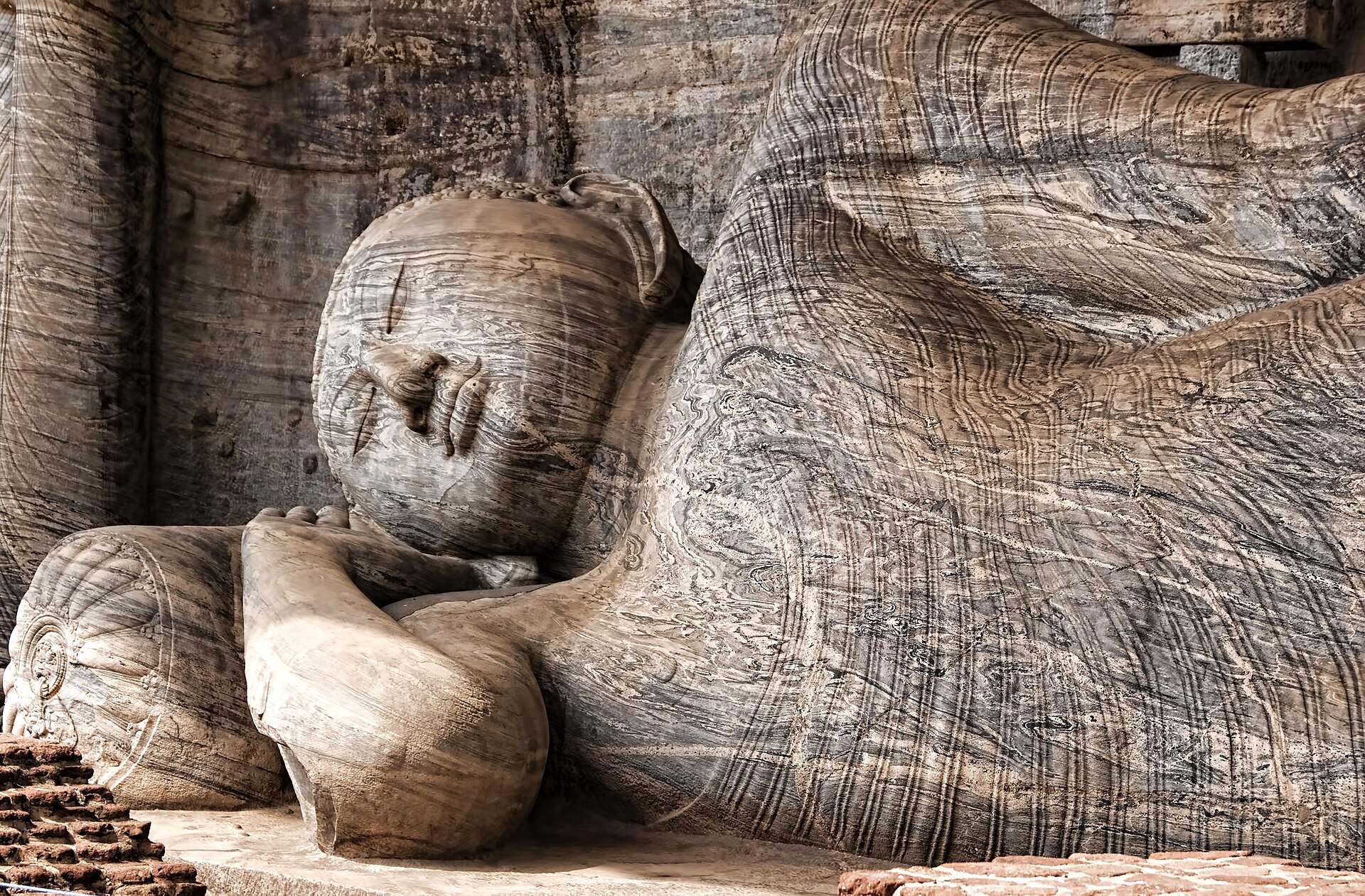
Visit Polonnaruwa, Sri Lanka's medieval capital: Gal Vihara, the royal palace, the Quadrangle, cycling the ruins, the best time to go and private tours.
Visit Sigiriya Rock Fortress in Sri Lanka: the history, the climb, the best time of day, what you see at the top, and private Sigiriya day tours.
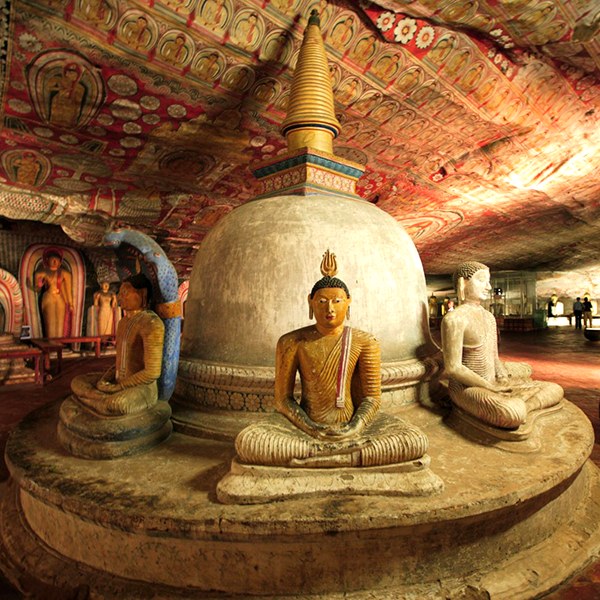
Visit the Dambulla Cave Temple in Sri Lanka: five painted caves, Buddha statues, what to wear, the best time to go and how to combine it with Sigiriya.
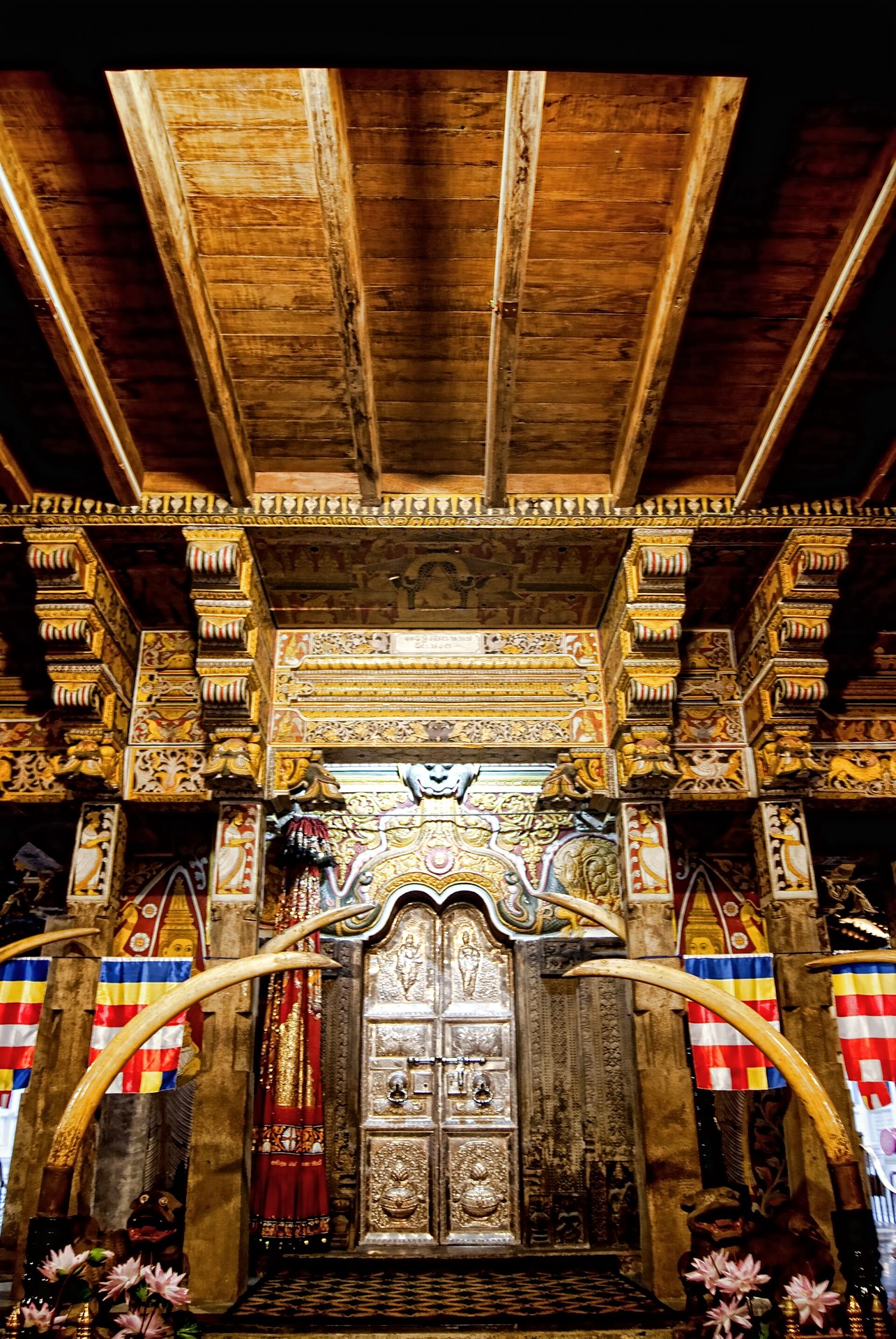
Plan your visit to Kandy, Sri Lanka: the Temple of the Tooth, Kandy Lake, botanical gardens, cultural shows, where to stay and private Kandy tours.
A sample Sri Lanka cultural tour through Anuradhapura, Polonnaruwa, Sigiriya, Dambulla and Kandy, with respectful temple visits and local traditions.
Staying in one central base such as Sigiriya, Dambulla or Habarana means less packing and lets you choose cooler hours for each site. Moving hotels can reduce long drives, especially if you want to include Anuradhapura. Many travellers combine both: one central base plus a single night further north. Choose based on how much driving your group will tolerate.
Choose Sigiriya if history, frescoes and the water gardens matter most. Choose Pidurangala if you prefer a rougher walk and a view back toward Sigiriya. Doing both suits fit travellers with enough time, but it is demanding and not necessary. One well-paced climb with a good guide is often more rewarding than two rushed ones.
Cycling is popular at Polonnaruwa and Anuradhapura because it gives freedom between ruins, but heat, traffic and distance are real factors. Ask locally about current conditions, and agree where bikes can be left. If anyone is unwell, elderly or travelling with young children, a vehicle with a driver is usually a more comfortable choice.
Cover shoulders and knees, and carry something light to put on over summer clothing. Expect to remove shoes and, in many places, hats. Light, loose clothes work best in the heat. White is often worn by pilgrims, but visitors do not have to copy it. Follow signs and staff instructions, as rules can differ between shrines.
Plan the more exposed outings for cooler parts of the day, carry plenty of water, and use a hat and sunscreen. Wear thin socks where permitted because stone can be very hot. Build in shade breaks, and do not push children or older relatives. If someone feels unwell, stop early rather than finishing the itinerary.
Parts of it can be, but many ancient surfaces are uneven and shrines often have steps. Access varies by site and may change with works or season, so ask your planner for current details instead of assuming. A private vehicle, an adaptable guide and a selective itinerary matter more than trying to cover everything.
Say at the outset that you want a site-focused day and no shopping stops unless you ask. Agree the guide fee beforehand and use recommendations from your planner or hotel. A reputable guide will respect that. If a stop is suggested, you are under no obligation to buy anything or stay longer than you wish.
They can be, depending on your interests. Mihintale adds an important origin story and a stepped hilltop visit, while Ritigala suits people who like forest walking and quiet atmosphere. Confirm current access and walking conditions with a local planner before building a day around either, since arrangements can change and should not be assumed.
Poya days, the full moon holidays, can bring crowds to temples and affect how some places operate, including restrictions at certain venues. Festival days also bring heavy traffic. Ask your planner for the local calendar when you choose dates. Plan flexibly, and treat any crowd as a chance to observe devotion respectfully, not as an obstacle.
For most travellers, one major site plus one lighter activity per day is comfortable. Two big sites in a day can be done, but heat and transfers make it tiring. Leave one open slot in the trip for a revisit or rest. Fewer, better-paced visits generally leave stronger memories than a packed schedule.
From inspiration to your itinerary
Explore our matching private journeys. Tell us your dates and group size for a personalised route, availability and written quote.