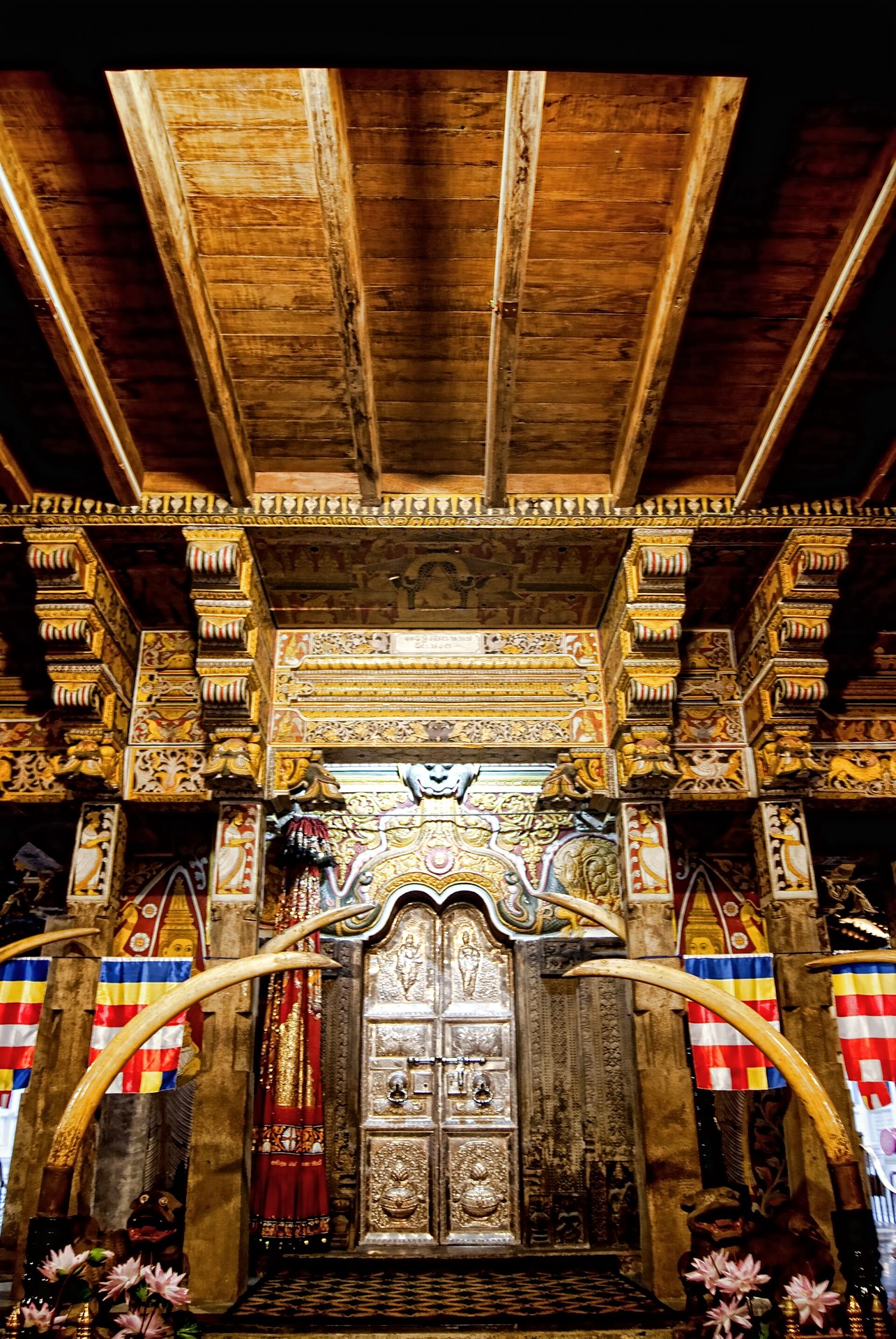
Kandy
Plan your visit to Kandy, Sri Lanka: the Temple of the Tooth, Kandy Lake, botanical gardens, cultural shows, where to stay and private Kandy tours.

Culture
The best hands-on Ceylon artist experiences in Sri Lanka are batik painting workshops around Kandy and Matale, mask carving and painting in Ambalangoda on the south coast, Kandyan dance and drumming shows and lessons in Kandy, and pottery, lace-making and wood carving in traditional craft villages. Colombo's galleries and the open-air Kala Pola art fair showcase contemporary Sri Lankan artists.
Sri Lanka has a long, rich artistic tradition. Ancient painters decorated the walls of Sigiriya and the Dambulla caves. Royal craftsmen in the Kandyan kingdom made brass, silver, lacquer and wood carvings for temples and palaces. Village artisans still pass these skills down through families.
Today you don't have to just look at this art. Some workshops welcome visitors to try a craft themselves, subject to confirmed availability, guided by local artists. It's a relaxed, creative way to connect with Sri Lankan culture and take home something you made.
Batik painting Batik is a technique of drawing designs in hot wax on cloth, then dyeing it so that the waxed areas stay pale. Sri Lankan batik is known for bright colours and designs of elephants, peacocks, dancers and flowers. Depending on the workshop, you may learn to draw with a tjanting (wax pen), apply colours and make your own piece; confirm the hands-on activities and finishing arrangements before booking. Batik workshops are common around Kandy, Matale and the south coast. See Kandy.
Mask carving and painting Ambalangoda, between Hikkaduwa and Bentota, is the centre of Sri Lanka's mask-making tradition. Masks carved from light kaduru wood were used in healing rituals, folk drama and devil dances. Family workshops here show how masks are carved and painted, and some let visitors paint a small mask. A small mask museum explains the different characters. See Hikkaduwa.
Kandyan dance and drumming Kandyan dance is one of Sri Lanka's major traditional dance forms, performed with drums in dazzling costumes and silver headdresses. Evening cultural shows in Kandy feature dance, drumming and fire-walking. Some cultural centres offer short drumming or dance lessons. See things to do in Kandy.
Pottery Villages such as Molagoda, on the Colombo–Kandy road, are known for clay pottery. You can watch potters throw pots on the wheel and sometimes try it yourself. See traditional craft villages.
Beeralu lace-making This delicate bobbin lace was introduced during Portuguese and Dutch times and is still made by women in the south, around Galle and Weligama. Watching lace-makers work dozens of bobbins at once is fascinating. See Galle Fort and things to do in Galle.
Wood carving, brass and lacquer work Around Kandy, craftspeople make carved wooden panels, brass lamps and colourful lacquered items. Some workshops let visitors try simple carving or painting.
Sri Lankan temple painting has a distinctive flat, flowing style seen in the Dambulla caves and Kandyan-era temples. Some artists offer short sessions in traditional painting techniques. See Dambulla Cave Temple to see the classic murals.
Colombo has a lively modern art scene, with galleries showing contemporary Sri Lankan painters, photographers and sculptors. Kala Pola, an annual open-air art fair usually held in Colombo early in the year, lines the streets with hundreds of local artists selling their work. See Colombo and one day in Colombo.
Batik workshops are found around Kandy and Matale and in some south coast towns. Many last two to three hours, so they fit into a morning or afternoon. Ask our team to book a small, family-run workshop rather than a large showroom.
Batik cloth, painted masks and small carvings travel well. Ask the workshop to wrap delicate pieces carefully. Large wooden items may need shipping. Antiques and some cultural objects require export permission, so buy only new pieces.
Pair a craft workshop with a cooking class for a full day of hands-on Sri Lankan culture. See food and cooking experiences.
Our Kandy city tour and Sri Lanka cultural tour can include a batik workshop, a mask studio visit or a cultural dance show. Plan this with a local expert. For more cultural experiences, go back to Culture in Sri Lanka.
The most important distinction in any craft or art experience is between watching and doing. A demonstration means you observe an artist at work and perhaps ask questions. A participatory workshop means you make something yourself, with guidance. Both can be worthwhile, but they are different products, and they cost different amounts of time, space and materials. Many disappointments come from assuming one when the other was meant.
When you enquire, ask directly: will I make something myself, or only watch? If I make something, how much of it will I do, and what will I take home? How long does the activity take? How many people are in the group? Is there a minimum age? Is the workshop available on the date I want, and has the host confirmed it? Do not treat a general listing as a confirmation, since small studios often have limited capacity.
Be wary of experiences described in vague terms such as try a craft or meet an artist, which may turn out to be a brief showroom visit. A good studio explains the process, shows materials and gives you time to work. If you are booking through an agent, ask them to confirm the details with the studio directly. If the answer is that a workshop is possible but subject to availability, treat it as unconfirmed until you hear otherwise.
Batik is among the easiest crafts for beginners, because the process is clear and results can be pleasing even for first-time makers. You draw with hot wax, apply dye and see the pattern emerge. Hot wax and dye require care, so supervision for children is important, and the finished piece may need further steps such as drying or washing that you do not do yourself. Ask what happens to your piece after the workshop.
Mask carving is a more demanding craft and generally involves watching a skilled carver, with painting often the more accessible participatory step. Masks have ritual and theatre meanings, and some represent figures used in healing ceremonies or folk drama. Ask the maker about the meaning of masks you are interested in, and avoid treating them merely as decoration. If you buy a mask, ask what role it plays and whether it has a particular character.
Lace-making is slow, intricate work, and most visitors will watch rather than try, though some makers let you handle the bobbins briefly. Traditional painting, like that seen in temple murals, requires years of training, so short sessions give a taste, not mastery. Choose according to your patience and goals. If you want a finished item to take home, batik or a small painting step may suit you better, while if you want understanding, a longer conversation with a carver or lace-maker may be more rewarding.
Kandyan dance and drumming are performing arts with rich traditions, and visitors typically encounter them in evening shows or short lessons. A show is a presentation for an audience, usually condensed and designed for visitors. A lesson, if available, lets you try basic movements or rhythms, but a short session can only introduce you to a very small part of a long discipline.
When choosing, ask what the show includes, how long it runs and where it takes place. Ask whether lessons are available, how many people take part and whether they are suitable for children or beginners. Check whether the venue is a dedicated cultural centre or a hotel space, and if you are interested in tradition, ask about the training and background of the performers. Do not assume that every show or lesson is available on any given evening.
Treat performers with respect. Photography rules vary, and flash can distract. Ask before taking photographs of individuals close up, and consider a small tip if it is customary and the performers are present. Remember that some elements of dance and drumming have ritual connections, and not all of them are suitable for entertainment. If a performance includes fire or physical feats, keep a safe distance and follow instructions from staff.
Small, family-run studios often provide the most personal experiences. You can meet the artist, ask questions and watch real work. Large showrooms can also be informative, but their main purpose is retail. The warning signs of a showroom trap include a brief demonstration followed by a long walk through a shop, pressure to buy, and a guide who seems more interested in your purchases than in the craft.
Ask the planner or guide where the money goes. If a driver or guide receives a commission from purchases, prices may be inflated. You can ask openly whether commissions are involved, and a good operator will be honest. Consider paying the studio directly for the workshop rather than through multiple intermediaries, and ask for a clear price before starting.
Watch how the studio treats its workers and apprentices. A good studio will introduce its makers and explain their roles. Ask how long the artist has been practising and where they trained. If you sense that workers are uncomfortable being observed, or that you are being steered towards expensive items, you can politely leave. Your time is valuable, and so is theirs, and a respectful interaction benefits both.
If you decide to buy, take your time. Ask who made the piece, what materials were used, and how long it took. Compare prices at more than one place if possible. Beware of claims of rarity or special value that cannot be verified, and be cautious about any piece described as an antique. Export rules apply to antiques and some cultural objects, so buy new work unless you have seen proper documentation.
Check the quality. For batik, look at the evenness of colour and the sharpness of lines. For masks, check that the wood is sound and the paint is dry and well applied. For lace, inspect the stitching and edges. Ask how to care for the item, and how to pack it. A good seller will explain these things without pressure.
Think about shipping. Fragile or bulky items can be difficult to carry, and shipping costs and risks need to be considered. Ask whether the studio can pack the item properly and arrange shipping, and get a written receipt. Do not hand over large payments without clear documentation. If you are not sure, it is fine to take contact details and decide later. Responsible buying is about slow decisions and respect for the maker.
Craft workshops can be good family activities, but suitability varies. Batik involves hot wax and dye, so supervision is necessary, and some studios set minimum ages. Painting masks is usually safer for children. Carving, with sharp tools, is typically only for watching. Ask each studio about age limits and safety rules, and do not assume children can take part.
Attention spans matter. Children may enjoy a short, hands-on session more than a long lecture. Look for experiences with a clear activity, such as painting a small piece, and keep the schedule flexible. Bring wipes and old clothing, since dye and paint can stain. Prepare children by explaining that they will make something small, and that the finished item may differ from the demonstration.
Accessibility depends on the studio. Many are in older buildings with steps, uneven floors or limited seating. Ask about access, seating, shade and toilets. If someone has limited mobility or hand strength, consider crafts that involve less fine motor work, or a demonstration with questions. Be honest about needs when enquiring so the studio can prepare. A smaller group often makes it easier to adapt, and good hosts will appreciate knowing in advance.
Before booking, it helps to have a short list of questions. What will I do, and what will I watch? Is this workshop confirmed for my date? How long does it last, and what is the group size? What is included in the price, such as materials, refreshments or finished items? Can I take my piece away the same day, or does it need time to dry or be finished?
Ask also about the artist and tradition. Who teaches the workshop? How did they learn the craft? Does the studio work with a particular tradition or family history? What themes or designs are traditional, and which are modern? Understanding the background makes the experience richer and shows respect for the maker.
Finally, ask about practicalities and fairness. What should I wear? Is there a refund or change policy if the workshop cannot go ahead? How are the artists paid? Can I buy directly from them, and is there any obligation to purchase? A reputable host will answer these questions openly. If answers are evasive, it may be wise to look elsewhere. Good communication at the beginning prevents disappointment later.
Start by deciding what you want from the experience: understanding, a keepsake, a lesson, or simply a pleasant outing. Choose one or two experiences rather than packing too many, and consider combining a workshop with a nearby cultural site or meal. Confirm details with the host in advance and keep written confirmation.
On the day, arrive with a relaxed attitude and a willingness to learn. Begin by listening to the artist, then try the activity at your own pace. Ask questions and do not worry about perfection. If you plan to buy, look around after the workshop, not before, so that you are not influenced by sales pressure. Take time to compare and consider.
Afterwards, think about how to support the artisan beyond the day. You might buy a piece, recommend them honestly to others, or share accurate information about their work. Avoid posting photographs of people without permission. If the experience was good, say so, and if you had concerns, share them politely. Small acts of respect help sustain skilled work and keep a craft alive, far more than a single purchase might.
Plan your visit to Kandy, Sri Lanka: the Temple of the Tooth, Kandy Lake, botanical gardens, cultural shows, where to stay and private Kandy tours.

Plan your trip to Hikkaduwa, Sri Lanka: coral reef snorkelling, sea turtles, surf, nightlife, the best season, where to stay and south coast tours.

Explore Galle Fort in Sri Lanka: the ramparts, lighthouse, old streets, cafés and sunset walls, with tips on when to go and private Galle day tours.
Sri Lanka's best-known traditional craft villages are Ambalangoda on the south-west coast for carved masks, the villages around Kandy for brass, silver, wood carving and Dumbara mats, Molagoda on the Colombo–Kandy road for pottery, and the Galle and Weligama area for beeralu lace. Visiting these workshops lets you see crafts made by hand and buy directly from the artisans.
A private Kandy city tour: the Temple of the Sacred Tooth Relic, Kandy Lake, Peradeniya botanical gardens and an evening cultural show. Hotel pick-up.
Ask directly and in writing: will I make something myself, how much of the process will I do, and what do I take away? Some places offer demonstrations only, others offer hands-on workshops. Treat a workshop as unconfirmed until the host has confirmed it for your date. Avoid vague descriptions that do not state what visitors do.
Batik is often the most beginner-friendly because the steps are clear and the results can look pleasing. Painting a small mask is also accessible. Carving and lace-making demand years of skill, so visitors usually watch. Choose according to patience, age and whether you want a finished piece to take home.
It can be, with supervision. Hot wax and dye require care, and some studios set a minimum age. Ask about safety rules before booking and bring old clothes. Younger children may enjoy painting steps more than wax work. Never assume children can take part without confirmation from the studio.
Choose small studios where you meet the artist, and ask in advance whether the visit includes a shop. Tell your driver or guide you do not wish to be taken to commission stops. Take time before buying, and remember you are never obliged to purchase. If you feel pressured, politely leave.
Ask who made it, what materials were used and how long it took. Check that wood is sound and paint is dry and well applied. Avoid items described as antiques, as export permission may be needed. Ask how to pack and care for it, and get a written receipt.
Some cultural centres offer short lessons, but availability varies and should be confirmed in advance. A short session introduces only a small part of a long discipline. Ask about group size, suitability for children and the background of the teachers. Do not assume a lesson will be available on any evening.
Ask first, especially for close-up portraits. Photography rules vary by venue and flash can distract performers. Some pieces and techniques may be sensitive, so follow the host's guidance. Check before sharing images online, and credit or name the studio accurately if the artist is happy for you to do so.
Some studios can pack and arrange shipping, but you should ask about cost, risk and insurance. Fragile or bulky items need careful packing. Get a written receipt and avoid paying large sums without documentation. If unsure, collect contact details and decide later instead of buying under pressure.
Choose a demonstration if you want to understand the craft and ask questions with less time commitment. Choose a workshop if you want to make something and have more time and patience. Always confirm which one is offered, how long it lasts, and what the group size will be.
Ask about steps, uneven floors, seating, shade and toilets, and about tasks requiring fine hand movement. Describe your needs honestly so the host can prepare. Smaller groups are easier to adapt. If access is limited, consider a demonstration with questions, or a different studio with more suitable facilities.
From inspiration to your itinerary
Explore our matching private journeys. Tell us your dates and group size for a personalised route, availability and written quote.