Temple of the Sacred Tooth Relic
Visit the Temple of the Tooth (Sri Dalada Maligawa) in Kandy: the puja ceremonies, dress code, what to see inside, tips and private Kandy tours.

Culture
Sri Lanka's most important ancient Buddhist sites are the Temple of the Sacred Tooth Relic in Kandy, the Sri Maha Bodhi tree and great stupas of Anuradhapura, Mihintale (where Buddhism was introduced in the 3rd century BC), the Dambulla cave temples and Gal Vihara in Polonnaruwa. Most are active places of worship, so cover your shoulders and knees and remove your shoes and hat before entering.
According to tradition, Buddhism arrived in Sri Lanka in the 3rd century BC, when Arahat Mahinda, son of the Indian emperor Ashoka, met King Devanampiya Tissa at Mihintale. Soon after, Mahinda's sister, the nun Sanghamitta, is said to have brought a cutting of the Bodhi tree to Anuradhapura.
Since then, Theravada Buddhism has shaped Sri Lankan culture, art, architecture and daily life. Many of the island's oldest monuments are Buddhist: stupas (dagobas) holding relics, monasteries, cave temples and rock-carved statues. Visiting them shows you both ancient history and a faith still very much alive.
Temple of the Sacred Tooth Relic, Kandy The Sri Dalada Maligawa houses a tooth relic of the Buddha, the most important relic in Sri Lanka. For centuries, whoever held the relic had the right to rule the island. Daily rituals (pujas) take place with drumming and offerings, and the temple is the centre of the Kandy Esala Perahera festival. See Temple of the Tooth and Kandy.
Sri Maha Bodhi, Anuradhapura This sacred fig tree is said to have grown from a cutting of the Bodhi tree in India under which the Buddha attained enlightenment. Planted in the 3rd century BC, it is often described as the oldest human-planted tree with a known planting date. Pilgrims dressed in white come to pray and make offerings every day. See Anuradhapura.
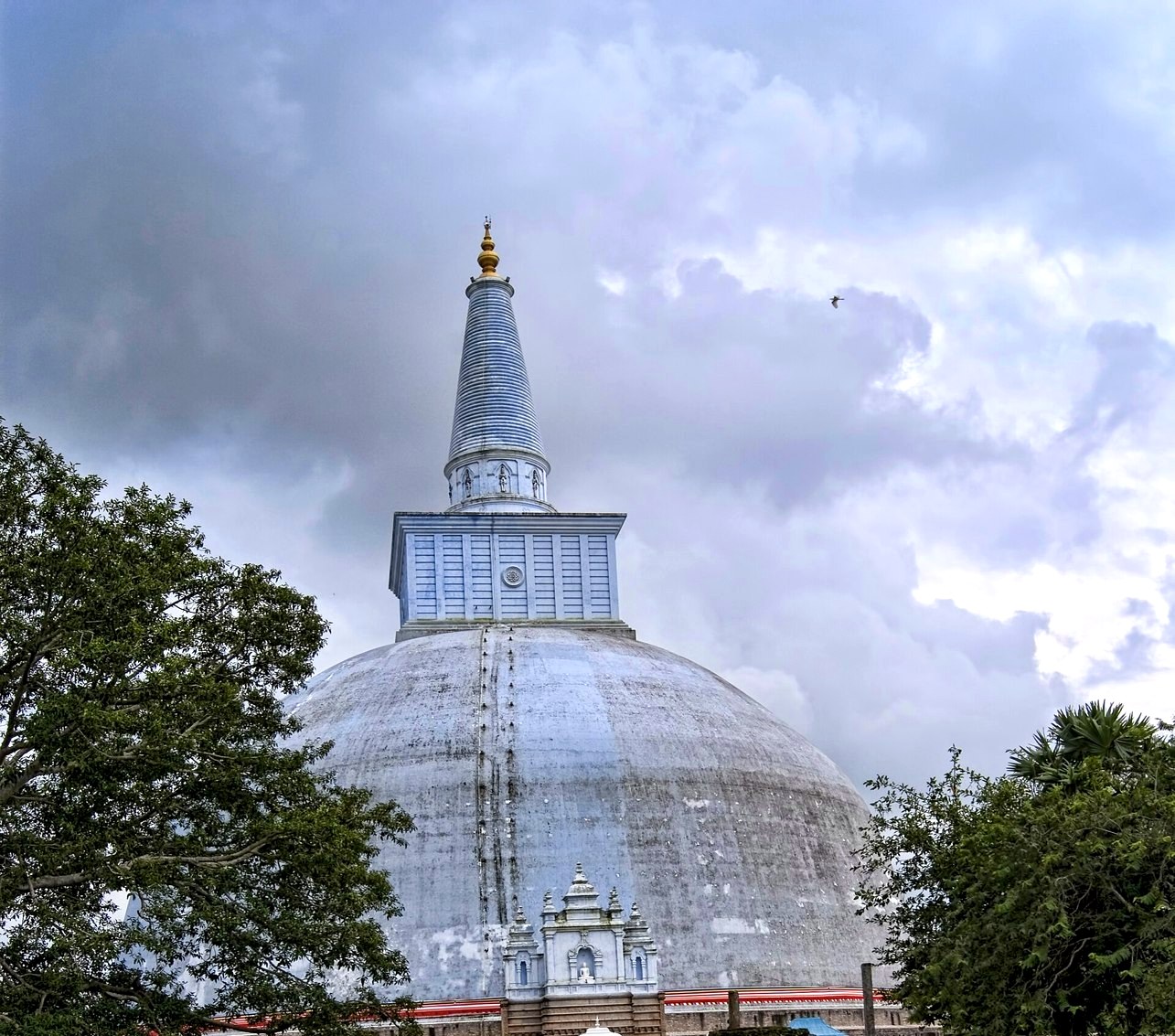
The great stupas of Anuradhapura Anuradhapura's giant stupas are among the largest ancient structures in the world. Ruwanwelisaya is gleaming white and still actively worshipped, Jetavanaramaya was once one of the tallest buildings in the ancient world, and Abhayagiri was the centre of a great monastery.
Mihintale Mihintale is the hill where Buddhism was first introduced to Sri Lanka. A long stone staircase leads past ruins and shrines to the summit, with views over the plains. It's especially busy on Poson full moon day in June, which celebrates the arrival of Buddhism. See Mihintale.
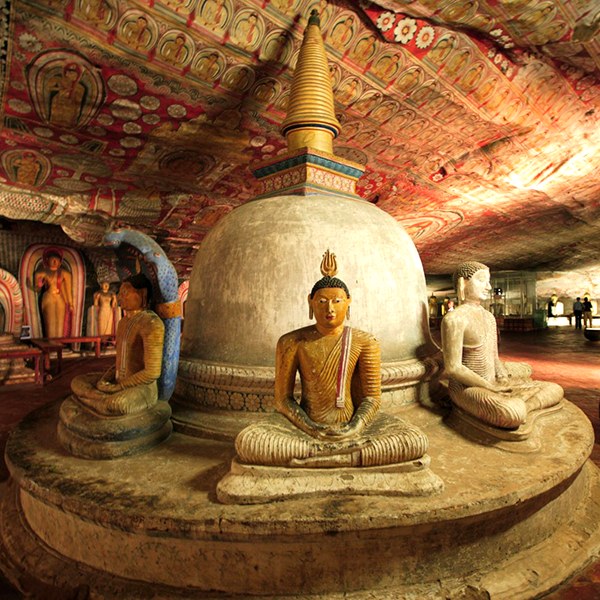
Dambulla cave temples The Dambulla complex has five caves with more than 150 Buddha statues and painted ceilings. The caves have been used for worship for more than 2,000 years. See Dambulla Cave Temple.
Gal Vihara, Polonnaruwa Gal Vihara has four large Buddha figures carved into one granite rock face in the 12th century, including a reclining Buddha around 14 metres long. It's one of the finest examples of Sri Lankan rock sculpture. See Polonnaruwa.
Ritigala forest monastery Ritigala is a peaceful, little-visited ruin of a forest monastery used by meditating monks, hidden on a jungle-covered mountain. See Ritigala.
Adam's Peak (Sri Pada) This sacred mountain has a footprint-shaped mark at the summit, revered by Buddhists as the Buddha's footprint and also sacred to Hindus, Muslims and Christians. Pilgrims climb through the night to see sunrise from the top. See Adam's Peak.
Most of these sites are part of Sri Lanka's Cultural Triangle.
Read our full guide on what to wear at Sri Lankan temples.
Usually yes, but flash may be banned, especially near murals. Some shrine rooms, including parts of the Temple of the Tooth, don't allow photography. Always follow signs and staff instructions.
The ancient cities are best visited early in the morning or late in the afternoon, when it's cooler. Poya (full moon) days are public holidays and special religious days. Temples are busy and beautiful, but some places close and alcohol isn't sold.
Our Anuradhapura day tour and Sri Lanka cultural tour cover the main Buddhist sites with a private driver and guide. Plan this with a local expert. For more cultural experiences, go back to Culture in Sri Lanka.
Most of Sri Lanka's ancient Buddhist sites are not museums. A stupa that is thousands of years old may also be the place where a family comes to offer flowers on the day of a birthday, or where a pilgrim group arrives after a long journey. That living quality is the main reason to approach these places differently from an ordinary ruin. You are a guest, and your presence is acceptable as long as it does not interfere with worship.
In practice, this means slowing down. Walk clockwise around stupas where that is the local practice, as worshippers do, and keep your voice low. Avoid standing between a person and the shrine they are facing. If you want to take photographs, think first about where you are standing and whether people are praying nearby. A beautiful view does not justify a camera pointed at someone in prayer.
It also means thinking about who you are travelling with. Children are welcome in many temple spaces, but they need clear instructions on quietness and on not touching sacred objects. If your group includes people with different beliefs or none, agree beforehand that everyone will observe the same rules of dress and conduct. Doing it as a group tends to make it feel natural, and it shows respect for people who may be having an important spiritual experience next to you.
The phrase ancient Buddhist site covers quite different kinds of place, and knowing the difference helps you choose. Stupas, or dagobas, are domed monuments that enshrine relics and are the dominant feature of old cities. Bodhi trees are living sacred trees, with the Sri Maha Bodhi in Anuradhapura the most renowned. Cave temples, such as Dambulla, are natural rock shelters turned into painted shrines. Rock-cut figures, like those at Gal Vihara in Polonnaruwa, are carved directly from the stone. Monastic ruins, such as those in forest settings, show how monks lived and studied.
Each type asks for a different kind of attention. At a stupa you notice scale, form and the way pilgrims move around it. At a Bodhi tree you notice offerings and quiet. In a cave temple you look closely at paintings, statues and the atmosphere created by low light. At rock-cut figures you see the skill of sculptors and the proportion of the faces. At a monastic ruin you might need a guide to read the layout of buildings, since the stones themselves are often plain.
If you only have time for a few visits, try to include a variety instead of repeating the same type. Three large stupas in a row can feel similar to a first-time visitor, while one stupa, one cave temple and one carved figure give a fuller picture of how Buddhist art and architecture developed. Ask your guide to explain how each site differs, and what makes it important to Sri Lankan Buddhists today.
Anuradhapura is best for depth. It holds the Bodhi tree, great stupas and monastery remains, and it can fill several days of study. It suits people who want to understand the origins and development of the religion in Sri Lanka, and it is also where pilgrim activity is most visible. Expect a lot of walking or driving between sites, and consider overnighting rather than rushing.
Mihintale is better for a compact visit with a strong origin story. It involves a long stairway and some uphill walking, and it ties directly to the introduction of Buddhism. It works well as a half-day outing from Anuradhapura, if you are comfortable with steps. Its significance is especially visible during major Buddhist observances, when crowds can be large, so ask about the calendar before choosing dates.
Polonnaruwa is best for sculpture and planning, since its ruins show a later capital with a mix of religious and royal buildings. Gal Vihara is its best-known site. Dambulla suits visitors who prefer painted interiors and continuity of worship. Kandy's Temple of the Tooth is about living ritual and the relic, and it is the most urban of the group. If you must choose between them, think about what you want to feel: scale and antiquity at Anuradhapura, climb and origin at Mihintale, carved calm at Gal Vihara, painted devotion at Dambulla, or ceremonial life at Kandy.
Everyone knows to cover shoulders and knees and remove shoes and hats, but a few other details matter. Do not pose in front of Buddha images in ways that look disrespectful, including turning your back to the image for a selfie where signs or staff ask you not to. Do not sit with your feet pointing toward a shrine. Do not touch statues, paintings or relic structures. Do not wear clothing with images of the Buddha, which can cause offence.
Offerings are a normal part of visiting, but you are not required to make them. Flowers and lamps are often sold near temples, and giving a small amount is welcome if you wish to take part. Ask your guide or a local person about how to offer properly, rather than copying others without understanding. Never pressure children into rituals, and do not treat offerings as props for photographs.
Monks deserve special consideration. Do not touch a monk, and women should especially avoid physical contact. Do not offer a handshake unless a monk initiates it. Do not photograph monks without clear permission, and accept a refusal. If a monk speaks to you, answer politely, and avoid questions that sound like testing or entertainment. If you are invited to a blessing or a short ceremony, treat it as an honour, and ask your guide what is appropriate to wear and do.
The physical demands of these sites are often underestimated. Many involve walking barefoot on stone, climbing steps, and standing in queues in direct sun. Anyone with heart, joint or breathing problems should consider which sites suit them. Mihintale's stairs and Dambulla's approach need a steady pace, while Anuradhapura's distances matter more than height.
A good approach is to schedule the more physical visits for cooler hours, and keep the heat of the day for quieter activities. Carry water, wear thin socks if the site allows them, and use sun protection. If you are in a group, let each person set their own pace, and agree on meeting points, since crowds can spread people out. If someone feels dizzy or ill, rest in shade instead of trying to complete the visit.
Keep the number of sites realistic. Three significant sites in a single day can be tiring, and visits can blur together if you rush. A better rhythm is one main site and one smaller visit, with time to sit and watch. At active shrines, spending a while simply observing often teaches more than a long explanation. If you travel with children, break visits into short segments and give them something to look for, such as lotus motifs, guardian figures or animals in the carvings.
Photography rules vary, so follow posted signs and instructions from staff. Some interiors restrict photography entirely or prohibit flash. Some areas allow cameras but not photographs of people praying. Drones are a particular concern and are often restricted at heritage and religious sites, so do not fly one without checking current rules and permissions.
Beyond rules, think about what you are capturing and why. A photograph of a stupa at a distance is different from a close photograph of a pilgrim's face. If you want a portrait of someone, ask first, and accept a refusal gracefully. Do not follow people to get a better angle, and do not make a request that implies payment unless it has been discussed openly. Ask your guide to explain local norms about photographs before you start.
There is also the question of the images you share afterwards. Avoid posting photographs that show people in private moments of worship, children without their parents' consent, or images that use sacred figures for humour. When describing the visit online, use respectful language and avoid exoticising. Presenting the sites as places of faith, art and history, not as backdrops, is both more accurate and more respectful to the people who use them.
The right questions help you learn more and avoid awkward moments. Ask the guide how the site is used today, and whether any ceremonies or observances are happening that might affect your visit. Ask where visitors should not go, and how best to behave in busy areas. Ask whether there are parts that are closed for restoration, and what is different from the last time they visited.
If you plan to attend a ritual or meet monks, ask how the arrangement works, who has agreed to it, and whether it is something a visitor can attend. Do not assume that a temple will accept visitors for talks or meditation sessions. Some monasteries welcome visitors for particular activities and others do not, and arrangements often depend on the community. Treat any invitation as something to be confirmed in advance, and be grateful if offered.
It is also reasonable to ask practical questions about costs and donations. Some sites have entry fees for foreign visitors, while others rely on voluntary donations. Ask what is expected and what the money supports, and be wary of anyone who pressures you into paying for a blessing, a ritual or a photograph. Keep small notes for donation boxes if you wish to give, and place them in official boxes rather than handing money to individuals.
A thoughtful sequence begins with context. If you are new to Buddhism, begin with Mihintale or Anuradhapura, where the story of its arrival in the island is easiest to follow. Move on to a site with sculpture, such as Polonnaruwa, to see how artistic styles developed. Include a cave temple like Dambulla to appreciate painted interiors. Finish with Kandy and the Temple of the Tooth, where you can see how relics and ritual continue to shape public life.
Within each day, keep a gentle structure. Start with the part that needs the most energy. Include time to sit quietly rather than only to move between stops. Meals and rests are part of the experience, since they give you time to absorb what you have seen. Take notes or sketches if you like, but keep them discreet.
Allow flexibility around observances. Poya days, major festivals and special ceremonies can change how a site feels and what is possible, sometimes making it more crowded and sometimes more meaningful. Ask your planner about the calendar and be ready to adjust. The point of visiting is to learn and show respect, and that often means accepting that a place has its own schedule, one that does not revolve around visitors.
Visit the Temple of the Tooth (Sri Dalada Maligawa) in Kandy: the puja ceremonies, dress code, what to see inside, tips and private Kandy tours.
Explore Anuradhapura, Sri Lanka's first ancient capital: great stupas, the sacred Bo tree, Mihintale, how many days you need, and private day tours.
Visit Mihintale near Anuradhapura, where Buddhism began in Sri Lanka: the long stairway, stupas, Aradhana Gala rock, Poson festival and visitor tips.
Visit the Dambulla Cave Temple in Sri Lanka: five painted caves, Buddha statues, what to wear, the best time to go and how to combine it with Sigiriya.
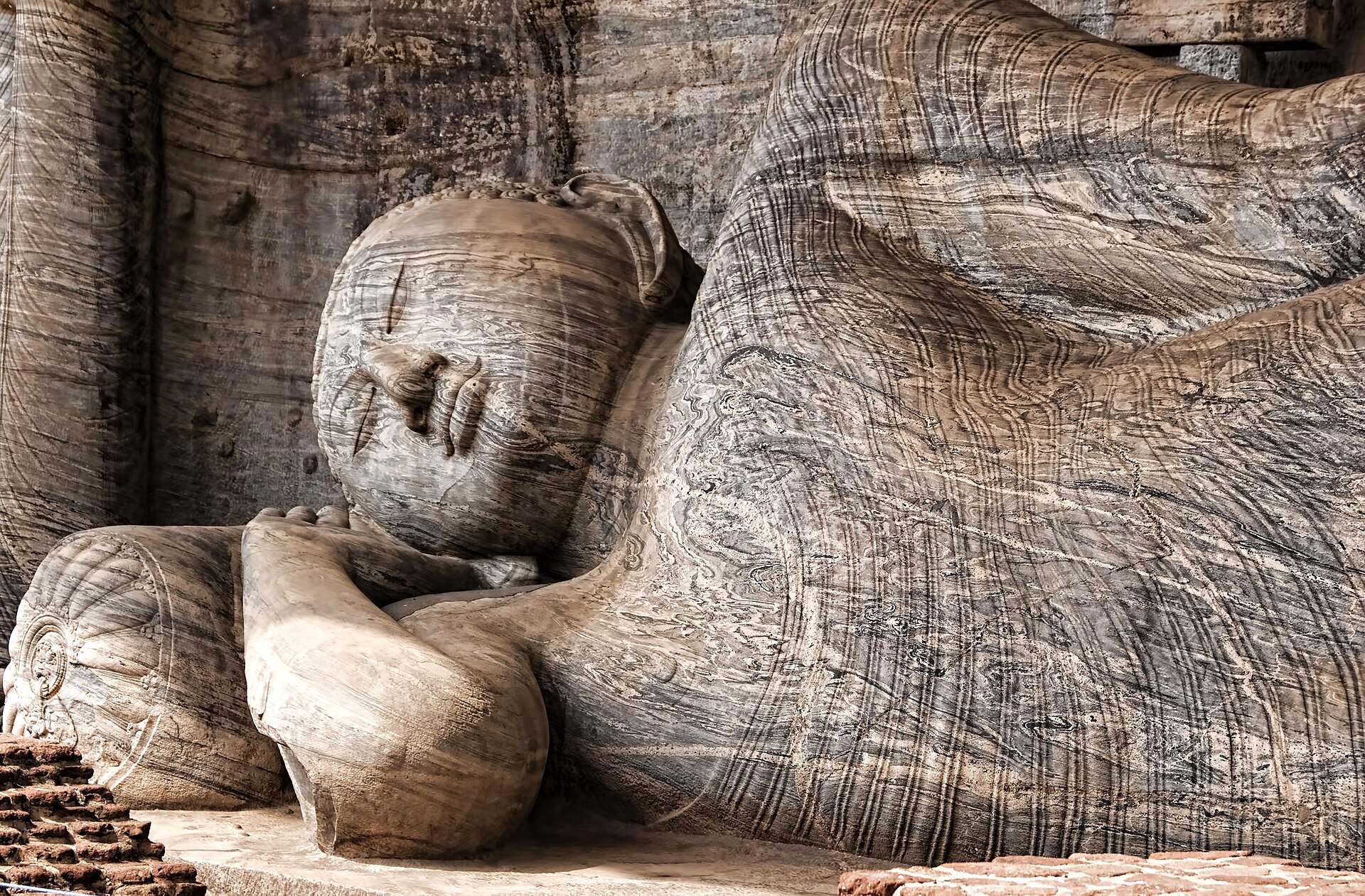
Visit Polonnaruwa, Sri Lanka's medieval capital: Gal Vihara, the royal palace, the Quadrangle, cycling the ruins, the best time to go and private tours.
Explore Ritigala, an ancient forest monastery on a jungle mountain between Anuradhapura and Habarana: ruins, meditation platforms, history and visitor tips.
A private day tour from Kandy to the sacred city of Anuradhapura: the Sri Maha Bodhi, great stupas and monastery ruins, with an optional stop at Mihintale.
A good order begins with Mihintale or Anuradhapura for the origin story, moves to Polonnaruwa for sculpture, adds Dambulla for painted interiors, and finishes in Kandy for living ritual and the relic. This gives context before detail. You can adapt it to your route, but try to mix site types rather than repeating similar ones.
It depends on the site. Some interiors restrict photography or flash, and many places discourage photographs of people praying. Follow posted signs and staff instructions, and ask your guide. Never pose in a way that turns your back to a Buddha image if asked not to, and ask permission before photographing individuals.
Visitors are generally welcome to observe respectfully, and offering flowers or a lamp is common. Ask your guide how to do it properly instead of copying others. You are never required to take part, and you should not treat rituals as entertainment. If unsure, simply watch quietly from a respectful distance.
Be quiet and polite, and do not touch monks. Women in particular should avoid physical contact, including handing items directly. Do not photograph monks without clear permission, and accept a refusal. If one speaks to you, respond courteously. Ask your guide how to address monks and what is appropriate in each setting.
Do not assume so. Some monasteries and meditation centres welcome visitors for specific programmes, while others do not accept outsiders. Any arrangement should be confirmed in advance through proper contacts, and conditions such as dress, behaviour and duration should be agreed beforehand. Treat an invitation as a privilege, not a service you are entitled to.
Explain that these are places of worship, so quiet voices, no running and no touching statues or offerings. Prepare them for removing shoes and for heat on stone. Give them something simple to look for, such as animals in carvings or lotus flowers, and keep visits short so they stay interested and respectful.
Avoid wearing clothes or accessories that show Buddha images, including tattoos, as these can cause offence. Choose plain, modest clothing covering shoulders and knees. If you already have a tattoo of a Buddha, cover it when visiting sacred sites. Carrying a light scarf or shirt makes it easy to adapt.
Donations are voluntary. If you wish to give, use official donation boxes where available, and ask your guide what is appropriate. Be wary of anyone who pressures you for payment for blessings, rituals or photographs. You do not have to pay to enter shrines that are open to the public, though some heritage sites charge entry.
Mihintale has long flights of steps, Dambulla has a steady uphill approach, and Anuradhapura involves distance rather than height. Forest monastery sites can involve rougher paths. Check current conditions with a local planner, pace yourself, bring water and let anyone with health concerns choose lighter options.
Sacred sites sometimes close for ceremonies, and poya days or festivals can bring large crowds. Build flexibility into your plans and ask your planner about the calendar. If a site is closed or full, use the time for a quieter alternative nearby. Crowds can also be a chance to observe devotion respectfully.
From inspiration to your itinerary
Explore our matching private journeys. Tell us your dates and group size for a personalised route, availability and written quote.