
Quick answer
Our private Polonnaruwa day tour takes you through Sri Lanka's medieval capital, a UNESCO World Heritage Site since 1982, with your own car and driver. You'll see the Royal Palace of Parakramabahu, the Council Chamber, the Quadrangle with its round Vatadage, the giant Rankoth Vehera stupa, the Lankatilaka image house and the famous rock-carved Buddhas of Gal Vihara. You can explore by car or rent bicycles. At the time of writing (November 2026), the foreign ticket is US$30 for adults, paid in rupees at the day's rate, and includes the museum. Start early and add an afternoon elephant safari in Minneriya or Kaudulla.
On this page 24 sections
- Polonnaruwa day tour at a glance
- A short history
- What you'll see
- Tickets and opening hours
- Getting around the site
- A sample day
- Add an elephant safari
- What's included
- When to go
- What to wear and bring
- Combining Polonnaruwa with the Cultural Triangle
- Polonnaruwa from Kandy
- Who this tour suits
- Polonnaruwa's kings and builders
- Polonnaruwa's art and architecture
- Tips for photographers
- Polonnaruwa with children
- Where to stay
- Guide or no guide?
- A two-day version
- Booking checklist
- Rules at the ancient city
- Common mistakes to avoid
- Frequently asked questions
Polonnaruwa is one of the highlights of the Cultural Triangle, a city of palaces, temples and giant stone Buddhas spread across parkland beside a vast ancient reservoir. Because the site is large and the sun gets hot, a private driver makes it much easier to see. This page explains the tour, a sample day, tickets and what's included.
Polonnaruwa day tour at a glance
| Start | Your hotel in Sigiriya, Habarana, Dambulla or Kandy |
| From Habarana | About 1 hour |
| From Sigiriya | About 1–1.5 hours |
| From Dambulla | About 1.25–1.5 hours |
| From Kandy | About 3 hours |
| Time at the site | About 3–4 hours |
| UNESCO | Ancient City of Polonnaruwa, inscribed 1982 |
| Foreign ticket | US$30 adults, US$15 children 6–12, paid in rupees (November 2026) |
| Best add-on | Afternoon safari in Minneriya or Kaudulla |
A short history
Polonnaruwa became Sri Lanka's royal capital after the fall of Anuradhapura at the end of the 10th century. Its golden age came under King Parakramabahu I in the 12th century, who built palaces, monasteries, parks and the great reservoir known as the Parakrama Samudra. Later kings, including Nissanka Malla, added more temples and monuments. Today, the ruins are some of the best preserved in Sri Lanka, set among trees and lawns that make them a pleasure to explore. See cultural sites in Sri Lanka.
What you'll see
The Royal Palace of Parakramabahu
The remains of a once-grand palace, with thick brick walls that hint at how tall it was. Nearby is the Council Chamber, with stone pillars and carved lions and elephants on its base.
The Quadrangle (Dalada Maluwa)
The most impressive group of buildings in Polonnaruwa, on a raised terrace. Highlights include:
- The Vatadage: a circular relic house with carved moonstones and four seated Buddhas facing the entrances.
- The Hatadage: a shrine that once held the Sacred Tooth Relic.
- The Gal Potha: a huge stone "book" carved with inscriptions.
- The Sathmahal Prasada: an unusual stepped tower.
Rankoth Vehera
The largest stupa in Polonnaruwa, built under King Nissanka Malla.
Lankatilaka
A tall image house with a giant standing Buddha, its walls still rising high above the ground.
Kiri Vehera
A white stupa that has kept much of its original plaster.
Gal Vihara
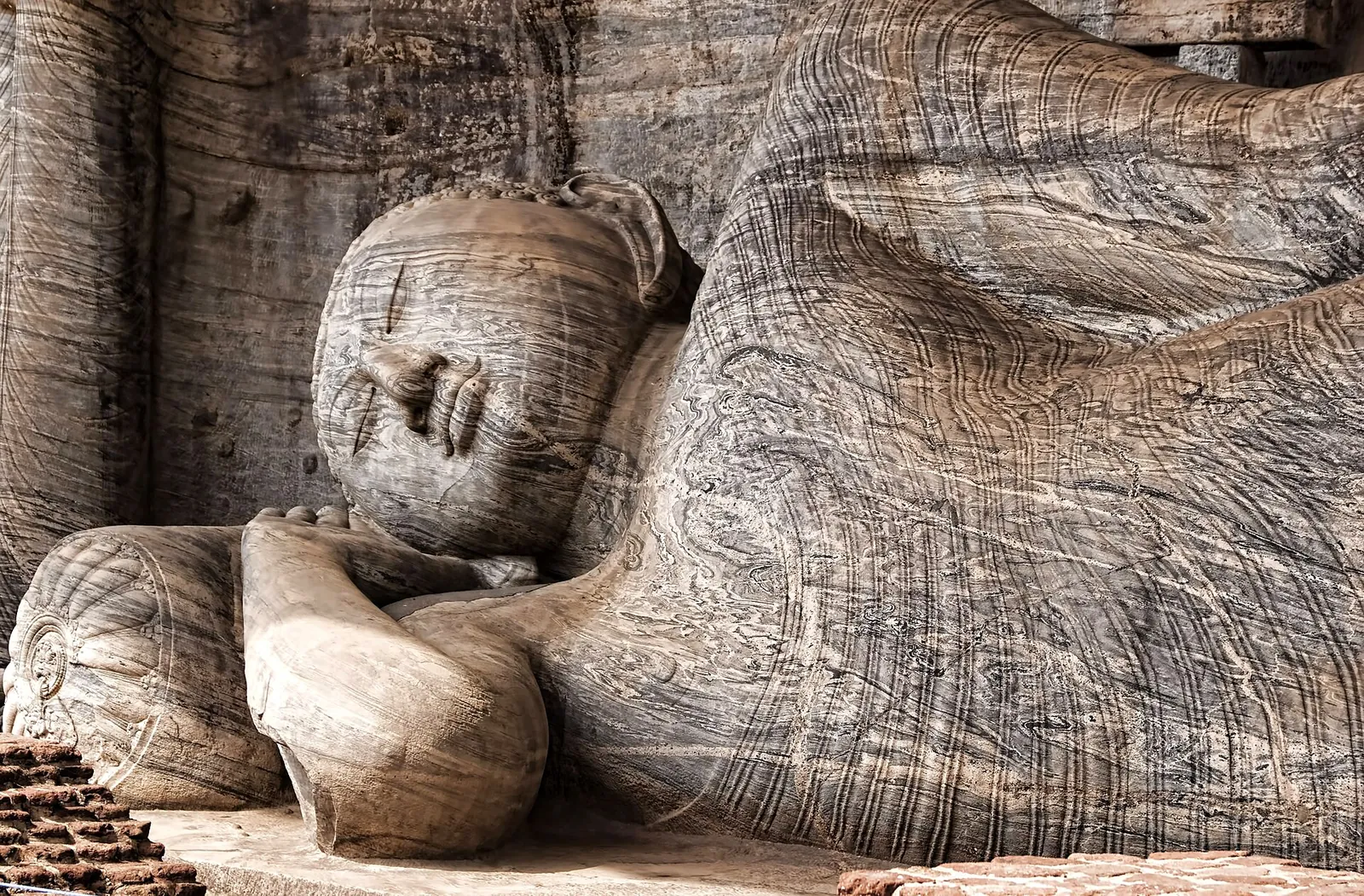
The highlight for many visitors: four Buddha images carved from a single granite rock face in the 12th century, including a beautiful reclining Buddha of about 14 metres. Please follow the signs and dress modestly here.
Potgul Vihara and the statue of Parakramabahu
A circular library monastery and a famous stone statue, often identified with the great king.
Parakrama Samudra
The vast 12th-century reservoir that still waters the surrounding rice fields. It's lovely at sunset.
The Archaeological Museum
Near the entrance, the museum explains the city's history with models and finds. It's included in the ticket and is best visited first.
Tickets and opening hours
At the time of writing (November 2026):
- Foreign adults: US$30
- Children aged 6–12 and SAARC nationals: US$15
- Children under 6: free
Ticket prices are set in US dollars but paid in rupees at the day's rate. A ticket is valid for one entry on the day of purchase. Tickets are sold at the museum near the entrance. Ticket counters are open from about 7 am to 5 pm, so arrive before 5 pm. The museum is included in the ticket. Prices can change, so check before you go. See our guide to entry fees in Sri Lanka.
Getting around the site
The ruins are spread over several kilometres. You can:
- Go by car: your driver takes you between the main groups of ruins and waits in the shade.
- Cycle: rent bicycles near the entrance and ride between the sites on flat, shady roads. It's the classic way to see Polonnaruwa. Start early to avoid the heat.
A sample day
- 6:30 am: leave your hotel in Sigiriya or Habarana after an early breakfast.
- 7:30 am: visit the museum and buy your ticket.
- 8:00 am: the Royal Palace and Council Chamber.
- 9:00 am: the Quadrangle, the Vatadage and the Gal Potha.
- 10:00 am: Rankoth Vehera, Lankatilaka and Kiri Vehera.
- 11:00 am: Gal Vihara and its rock-carved Buddhas.
- 12:00 pm: lunch, then a rest.
- 2:30 pm: an afternoon elephant safari in Minneriya or Kaudulla.
- 6:00 pm: return to your hotel.
Add an elephant safari
Minneriya and Kaudulla national parks are close to Polonnaruwa and are famous for wild elephants, especially in the dry season, often from about July to October. An afternoon safari is the perfect end to a day in the ancient city. See our Minneriya safari tour, Minneriya National Park and Kaudulla National Park.
What's included
| Included | Not included |
|---|---|
| Private air-conditioned car with driver | Polonnaruwa entrance tickets |
| Fuel, parking and tolls | Bicycle hire |
| Hotel pick-up and drop-off | Safari jeep and park tickets, unless added |
| A route planned around the heat and your interests | Meals, drinks and tips |
| Travel insurance |
We can arrange a licensed guide to explain the history in depth. See our private tour guide page.
When to go
Polonnaruwa is in the dry zone and can be visited all year. It's usually driest from about January to April and from about June to September. It's hot from late morning, so start early. See the best time to visit Sri Lanka.
What to wear and bring
- Modest, light clothes covering your shoulders and knees. You'll remove your shoes and hat at temples.
- Socks for hot stone terraces.
- A hat, sunglasses and sunscreen.
- Plenty of water.
- Cash for tickets and bicycle hire. See money in Sri Lanka.
Combining Polonnaruwa with the Cultural Triangle
Polonnaruwa is one of the "big three" ancient sites, with Sigiriya and Anuradhapura. A typical three-day plan:
- Day 1: climb Sigiriya or Pidurangala and visit the Dambulla Cave Temple.
- Day 2: Polonnaruwa in the morning and a Minneriya safari in the afternoon.
- Day 3: Anuradhapura. See our Anuradhapura day tour.
See three days in the Cultural Triangle, our Sigiriya day tour and our cultural tour.
Polonnaruwa from Kandy
You can visit Polonnaruwa as a long day trip from Kandy, about three hours each way. It's a full day, so most travellers prefer to stay in Sigiriya or Habarana for a night or two. See Kandy to Sigiriya.
Who this tour suits
- History lovers and photographers
- Families with children who enjoy cycling
- First-time visitors following the classic Cultural Triangle route
- Travellers who want to combine culture with an elephant safari
Polonnaruwa's kings and builders
Parakramabahu I (reigned 1153–1186) is remembered as one of Sri Lanka's greatest kings. He unified the island, built huge irrigation works and filled the city with palaces, monasteries and parks. He is linked with the famous saying that not a single drop of rain should flow to the sea without serving people.
Nissanka Malla followed later in the 12th century. He added many monuments and inscriptions, including the Gal Potha and Rankoth Vehera.
The city was later abandoned as the capital moved further south and west, and the jungle slowly covered the ruins until archaeologists uncovered them centuries later.
Polonnaruwa's art and architecture
Polonnaruwa shows a style that mixes Sri Lankan traditions with influences from South India. Look for:
- Moonstones: semicircular carved stones at the foot of steps, with rings of animals and plants.
- Guard stones: carved figures beside entrances.
- Brick image houses: tall buildings, such as Lankatilaka, designed to hold giant Buddha statues.
- Hindu shrines (devales): small stone temples dedicated to Shiva, showing the city's mix of cultures.
Tips for photographers
- Arrive early for soft light at the Quadrangle and Gal Vihara.
- Use a wide lens for the Vatadage and Lankatilaka.
- Respect the rules at Gal Vihara. Never pose with your back to a Buddha image.
- Ask before taking photos of people, especially monks and worshippers.
Polonnaruwa with children
Children often love cycling between the ruins, spotting monkeys and climbing the steps of the Vatadage (where allowed). Bring snacks, water and sun hats, keep visits short and plan a rest at lunchtime. An afternoon elephant safari is a great reward. See Sri Lanka with kids and our family tour.
Where to stay
Most travellers stay in Sigiriya, Habarana or Dambulla and visit Polonnaruwa as a day trip. There are also hotels and guesthouses near the lake in Polonnaruwa town, which are handy if you want to start at opening time. See where to stay in Sri Lanka.
Guide or no guide?
Signs at the main ruins are limited, so a licensed guide can bring the history to life, explaining the kings, the carvings and how the city worked. If you prefer to explore on your own, visit the museum first and take your time. Your driver can recommend the best order to see the sites.
A two-day version
If you'd like more time, spread the visit over two days. On day one, visit the museum and the Quadrangle in the morning, then rest and take a sunset walk beside Parakrama Samudra. On day two, cycle to Rankoth Vehera, Lankatilaka and Gal Vihara in the early morning, then go on a safari in the afternoon. Remember that a ticket is valid for one entry on one day only, so you'll need a new ticket for the second day.
Booking checklist
- Your hotel and pick-up time
- The number of travellers and children's ages
- Whether you'd like a licensed guide
- Whether you'd like to add an afternoon safari
- Any mobility needs, so we can plan the route by car
Rules at the ancient city
- Remove shoes and hats at temples and shrines.
- Don't climb on ruins, statues or walls.
- Don't touch carvings or paintings.
- Drones need special permission.
- Keep your ticket with you, as it may be checked at several points.
Common mistakes to avoid
- Starting late. The site gets very hot by midday.
- Skipping the museum. It makes the ruins much easier to understand.
- Wearing shorts. Cover your shoulders and knees for the temples.
- Rushing Gal Vihara. Allow time to sit and look at the carvings.
Prefer to create your own itinerary?
Use Polonnaruwa Day Tour: Private Ancient City Tour as a starting point — choose your travel dates, trip length and favourite places in our Sri Lanka Trip Planner. Preview your first three days, then share your contact details to see the full plan and request a personal quote.
Frequently asked questions
How much is the Polonnaruwa ticket for foreigners?
At the time of writing (November 2026), US$30 for adults and US$15 for children aged 6 to 12, paid in rupees at the day's rate.
How long do you need in Polonnaruwa?
About three to four hours to see the main sites.
Is Polonnaruwa a UNESCO World Heritage Site?
Yes. The Ancient City of Polonnaruwa was inscribed in 1982.
How far is Polonnaruwa from Sigiriya?
About one to one and a half hours by car.
Can you cycle around Polonnaruwa?
Yes. Bicycles can be hired near the entrance, and cycling is a popular way to see the site.
What is Gal Vihara?
A group of four Buddha images carved from one granite rock face in the 12th century, including a reclining Buddha of about 14 metres.
What are the opening hours?
Ticket counters are open from about 7 am to 5 pm. Arrive before 5 pm.
Is the museum included in the ticket?
Yes. Visit it first to understand the site.
Can I combine Polonnaruwa with a safari?
Yes. Minneriya and Kaudulla are close by, and an afternoon safari fits perfectly after a morning at the ruins.
How do I book the Polonnaruwa day tour?
Send us your date, hotel and group size through our contact page or WhatsApp, and we'll send a quote.