
Quick answer
Arankele is an ancient forest monastery in Kurunegala District, about 24 to 26 km north of Kurunegala, around 30 minutes by car. It was home to meditating monks of the Pansukulika, or "rag-robe", tradition, who made their robes from discarded cloth. It's commonly dated to the 6th century and linked by tradition with the monk Arahat Maliyadeva. Highlights include a long, paved stone meditation walkway through the forest, double-platform meditation buildings, an ancient bath and hospital complex, and rock-cave hermitages. Monks still live and meditate here, so visit quietly. Go early in the morning.
On this page 26 sections
- Arankele at a glance
- The history of Arankele
- What to see
- Visiting respectfully
- Entry and opening times
- Getting there
- Combine Arankele with nearby sites
- On the way to the Cultural Triangle
- Best time to visit
- What to bring
- A suggested half-day
- Who Arankele suits
- Meditation in Sri Lanka
- Photography tips
- Understanding forest monasteries
- How the meditation walkway was used
- The water systems
- Wildlife at Arankele
- The North Western Province
- Arankele on a private tour
- Practical tips
- A two-day route through the North Western Province
- How Arankele compares with Ritigala
- Why visit Arankele?
- Common mistakes to avoid
- Frequently asked questions
Arankele is one of the most peaceful ancient sites in Sri Lanka. There are no grand stupas or Buddha statues here, just a quiet forest, mossy stone pathways and the remains of a monastery built for meditation. This guide explains its history, what to see, how to get there and how to combine it with nearby sites such as Yapahuwa.
Arankele at a glance
| Location | Foot of the Dolukanda range, Kurunegala District, North Western Province |
| From Kurunegala | About 24–26 km, around 30 minutes |
| From Dambulla | About 51 km |
| From Colombo | About 117 km |
| Period | Commonly dated to the 6th century |
| Tradition | Pansukulika ("rag-robe") forest monks |
| Still active | Yes; a working forest monastery |
| Best time | Early morning |
| Time needed | About 1.5–2 hours |
The history of Arankele
Arankele was founded as a forest hermitage for monks who devoted their lives to meditation. They belonged to the Pansukulika tradition, known for its strict, simple way of life: the monks made their robes from discarded cloth, lived in caves and forest dwellings, and avoided decoration and display.
No written record of its founding has been found, and dates vary between sources. It is most commonly dated to the 6th century, and local tradition links it to the monk Arahat Maliyadeva and to King Jettatissa. Because the monks valued simplicity, you won't find the Buddha statues and painted shrines of other temples. The buildings were designed only for meditation, bathing and daily life.
Today, a working forest monastery stands beside the ruins, and monks still meditate here, keeping the tradition alive.
What to see
The meditation walkway (chankamana)
The highlight is the long stone walkway that leads through the forest. Monks practised walking meditation along it, moving slowly and mindfully. It's often described as the longest meditation walkway in Sri Lanka, and walking it in the quiet shade of the trees is a moving experience. Partway along, the path passes small rest stops where monks could pause.
The double-platform meditation buildings (padhanaghara)
These unusual buildings have two raised stone platforms joined by a small bridge. They are typical of forest monasteries in ancient Sri Lanka and were used for meditation.
The bath and medical complex (janthaghara)
A large complex of hot-water baths and medical treatment rooms, often described as one of the largest in Sri Lanka. It shows how the monastery cared for the health of its monks.
Ponds, wells and rock-cave hermitages
Throughout the site, you'll find stone-lined ponds, wells still used by the monks, and caves under large boulders where monks once lived and meditated. At the end of the forest path is a meditation cave beneath a huge rock.
The forest
Arankele is surrounded by lush forest, home to monkeys, birds and butterflies. The cool shade and silence are part of the experience.
Visiting respectfully
Arankele is still an active place of meditation, so please:
- Keep quiet. Speak softly or not at all on the walkway.
- Dress modestly, covering your shoulders and knees. Light colours are respectful.
- Remove your shoes where asked.
- Don't enter the monks' living areas.
- Ask before taking photos of monks, and never use flash.
- Take all rubbish with you.
See what to wear at Sri Lankan temples and our responsible travel guide.
Entry and opening times
At the time of writing, no official entrance fee has been confirmed. Caretakers may offer to show you around informally, and a small donation or tip is appreciated. The site is best visited during daylight hours.

Your trip could be next.
Tell us your dates, group size and what you love. Our team will plan your trip and confirm your quote personally.
Getting there
Arankele is about 24 to 26 km north of Kurunegala, around 30 minutes by car, via Ibbagamuwa and Moragolla. Public transport is limited, so a private driver is the easiest way to visit, especially if you combine it with other sites in the area.
Combine Arankele with nearby sites
Arankele is part of a group of quiet ancient sites in the North Western Province that few tourists visit:
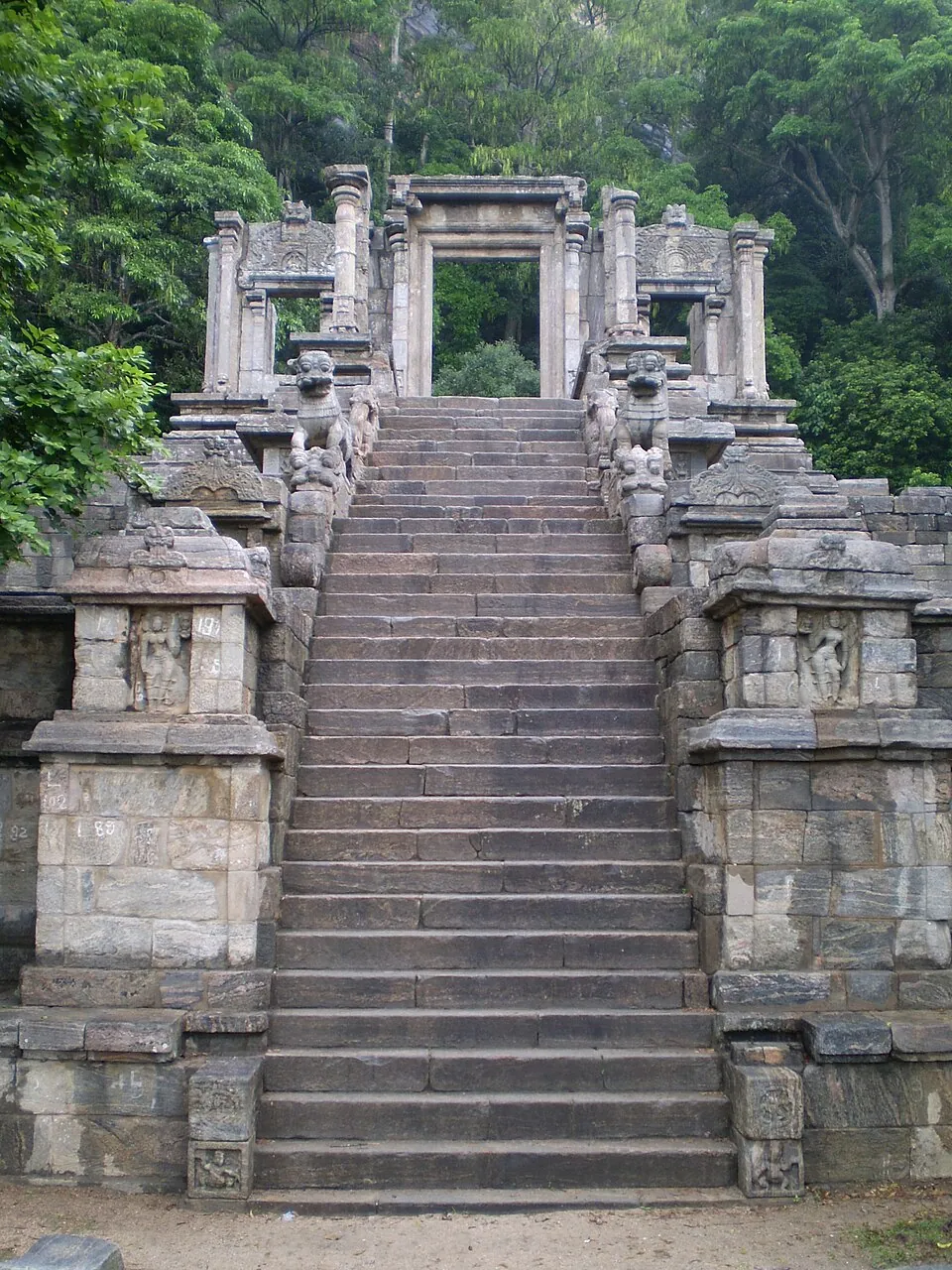
- Yapahuwa: a 13th-century rock fortress with a carved lion staircase.
- Ridi Vihara: a cave temple near Kurunegala.
- Padeniya Raja Maha Vihara: a temple with beautifully carved wooden pillars.
- Panduwas Nuwara: the ruins of an ancient royal city.
See our pages on lesser-known attractions and ancient Buddhist sites.
On the way to the Cultural Triangle
Arankele makes a peaceful stop on the drive from Negombo or Colombo to Dambulla and Sigiriya, adding a few hours to the journey. See Negombo to Sigiriya and Colombo to Sigiriya.
Best time to visit
- Early morning: cool, quiet and full of birdsong.
- Late afternoon: soft light in the forest.
- After rain: the forest is beautiful, but watch out for leeches and slippery stones.
The North Western Province can be visited all year. See the best time to visit Sri Lanka.
What to bring
- Comfortable walking shoes, plus socks for areas where shoes are removed
- Modest, light clothes
- Insect repellent, and leech socks after rain
- Water
- A little cash for donations
A suggested half-day
- 7:00 am: leave Kurunegala after an early breakfast.
- 7:30 am: arrive at Arankele and walk the meditation path in the cool morning.
- 9:00 am: explore the meditation buildings, baths and cave hermitages.
- 10:00 am: continue north to Yapahuwa and climb its lion staircase.
- 12:30 pm: lunch, then continue to Dambulla or Anuradhapura.
Who Arankele suits
Arankele suits travellers interested in Buddhism and meditation, history lovers, photographers, and anyone looking for a quiet place away from the crowds. It's a good choice for second-time visitors. See our cultural tour, cultural sites in Sri Lanka and Cultural Triangle page.
Meditation in Sri Lanka
If Arankele inspires you, some monasteries and centres in Sri Lanka welcome visitors for meditation, from short sessions to longer retreats. Ask us for advice on places that welcome foreigners. See our wellness tour.
Photography tips
- The walkway looks beautiful with morning light filtering through the trees.
- Use a wide lens for the meditation platforms and baths.
- Respect the monks: ask before photographing them, and never use flash.
Understanding forest monasteries
In ancient Sri Lanka, there were two broad kinds of monastery. Town and village monasteries had large stupas, image houses and busy daily life. Forest monasteries, like Arankele, were built for monks who wanted to withdraw and meditate. They were usually placed in quiet, wooded spots near water, and their buildings were plain, practical and carefully laid out.
Other famous examples include Ritigala, in the north central dry zone, and the western monasteries of Anuradhapura. If you enjoy Arankele, these are worth adding to your trip. See Ritigala and Anuradhapura.
How the meditation walkway was used
Walking meditation is a practice in which monks walk slowly and mindfully, paying attention to each step. The stone walkway at Arankele was laid so that monks could walk it in all weather, under the shade of the trees. The small rest areas along the way gave monks places to pause. When you walk it today, try walking slowly and quietly for a few minutes. Many visitors find it the most memorable part of their visit.
The water systems
Water was essential to life at the monastery. Look for:
- Stone-lined ponds that collected rainwater
- Drainage channels cut into the rock
- Wells still used by today's monks
- Bath complexes with stone basins and channels
These show the skill of ancient Sri Lankan engineers, who also built the great reservoirs of the dry zone. See Polonnaruwa for the giant reservoir of Parakrama Samudra.
Wildlife at Arankele
The forest is a good place to see:
- Monkeys, including toque macaques and grey langurs
- Birds, such as hornbills, barbets, bulbuls and kingfishers
- Butterflies, especially after the rains
- Lizards, including the colourful green garden lizard
Bring binoculars if you have them. Please don't feed the monkeys.
The North Western Province
The North Western Province (Wayamba) is a region of coconut plantations, rice fields and ancient sites, between the west coast and the Cultural Triangle. Few international travellers spend time here, so it's a good place to experience everyday Sri Lankan life. Kurunegala, the provincial capital, is known for its huge rock outcrops, including Ethagala (Elephant Rock), with a large Buddha statue on top and views over the town.
Arankele on a private tour
Because the sites in this region are spread out and public transport is limited, a private driver is the easiest way to explore. A route from Negombo could include Arankele, Yapahuwa and Padeniya before continuing to Anuradhapura or Dambulla. Our drivers know these quieter roads well. See our private tours and 14-day tour pages.
Practical tips
- Start early, as the forest is coolest and quietest in the morning.
- Wear shoes you can slip off easily, as some areas require bare feet.
- Watch your step on the old stone paths, which can be uneven and slippery after rain.
- Carry water, as there are few shops close to the site.
- Keep valuables in a small bag, and keep it closed near the monkeys.
A two-day route through the North Western Province
- Day 1: leave Negombo after breakfast, visit Padeniya, then continue to Kurunegala and climb Ethagala for sunset views.
- Day 2: Arankele in the early morning, Yapahuwa late in the morning, and continue to Anuradhapura or Dambulla in the afternoon.
This route turns a long transfer into two relaxed days of quiet history, and it suits travellers who have already seen the main sites or want to avoid the crowds.
How Arankele compares with Ritigala
Both are ancient forest monasteries with meditation platforms and stone paths. Ritigala sits on a mountain inside a strict nature reserve, deeper in the dry zone. Arankele is easier to reach, and monks still live and practise meditation there.
Why visit Arankele?
Most of Sri Lanka's famous ancient sites are busy with tour groups. At Arankele, you may have the forest path almost to yourself. There's no climb, no queue and no crowds, only birdsong, old stone and the feeling of a place that has been used for meditation for well over a thousand years. It's a perfect contrast to the bigger, busier sites of the Cultural Triangle.
Common mistakes to avoid
- Treating it as a tourist attraction only. It's an active monastery. Keep quiet.
- Visiting at midday. It's hot and the light is harsh. Go early.
- Expecting statues and paintings. The beauty here is in its simplicity.
- Wearing shorts. Cover your shoulders and knees.
Related guides
Frequently asked questions
Where is Arankele?
In Kurunegala District, about 24 to 26 km north of Kurunegala, at the foot of the Dolukanda range.
How old is Arankele?
It's commonly dated to the 6th century, although no written record of its founding has been found.
What is Arankele famous for?
Its long stone meditation walkway through the forest and its history as a home of Pansukulika forest monks.
Is Arankele still an active monastery?
Yes. Monks still live and meditate here, beside the ancient ruins.
Is there an entrance fee at Arankele?
No official fee has been confirmed. Donations are appreciated.
How long do you need at Arankele?
About one and a half to two hours.
What should I wear at Arankele?
Modest clothes that cover your shoulders and knees, and comfortable shoes.
Can I combine Arankele with Yapahuwa?
Yes. Both are in the North Western Province and make a good half-day together.
Why are there no Buddha statues at Arankele?
The Pansukulika monks lived a simple, austere life focused on meditation, so the monastery has no decorative statues.
Is Arankele worth visiting?
Yes, especially if you enjoy quiet, atmospheric places and ancient history away from the crowds.
Photo sources
- Yapahuwa carved stone staircase near Kurunegala — Chindemaya · Public domain · https://commons.wikimedia.org/wiki/File:Yapahuwa_Staricase_2_cdm.jpg