
Quick answer
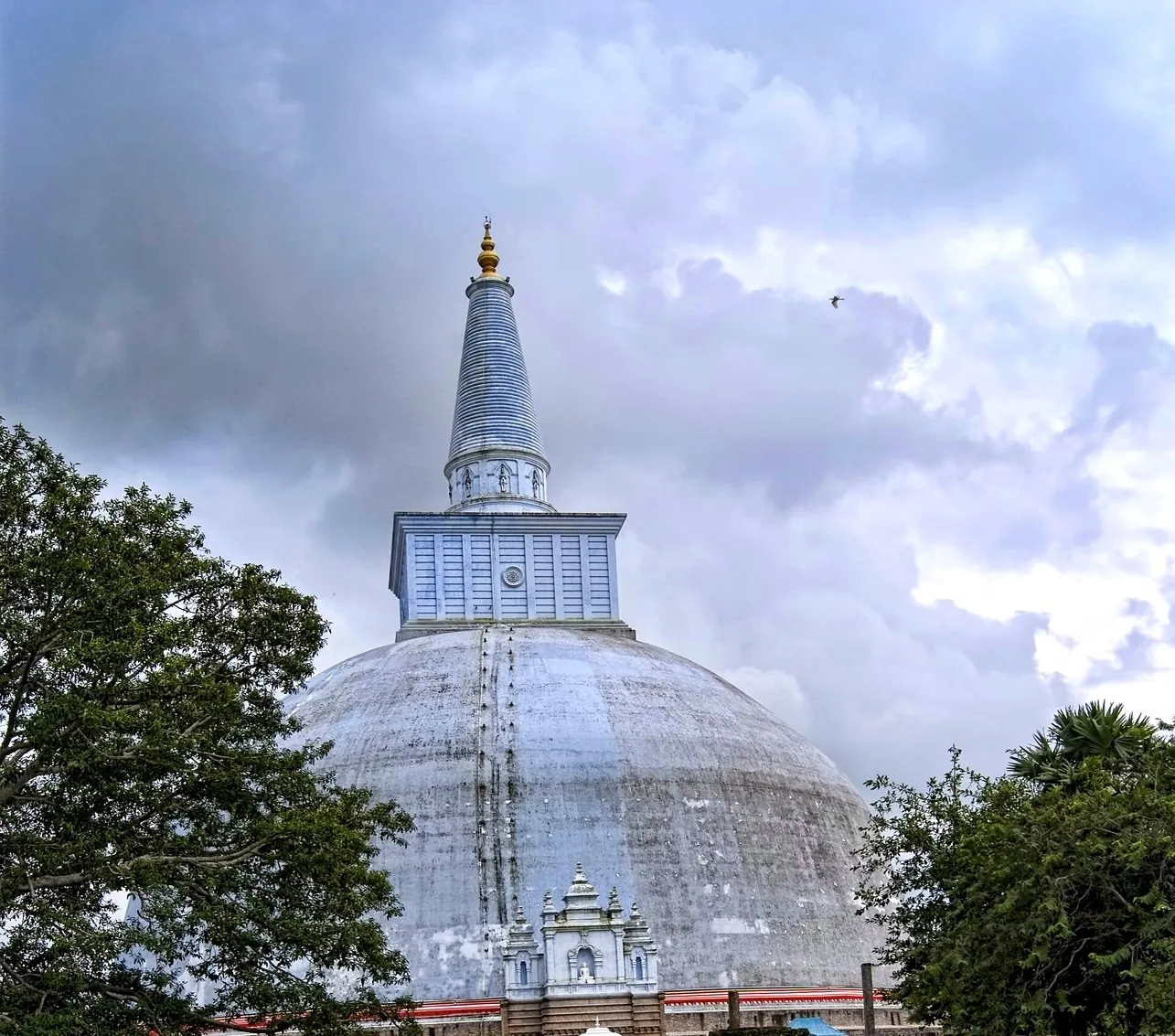
The most famous stupas in Sri Lanka are in the ancient city of Anuradhapura: Ruwanwelisaya, Jetavanaramaya (once one of the tallest structures in the ancient world), Abhayagiri and Thuparamaya, believed to be the first stupa built on the island after Buddhism arrived. In Polonnaruwa, see Rankoth Vehera and Kiri Vehera. Other important stupas include Kiri Vehera at Kataragama, Mahiyangana, Kelaniya near Colombo, Tissamaharama, Seruwila on the east coast and Nagadeepa in the north. A stupa (also called a dagoba or chaitya) is a dome-shaped monument that usually holds sacred relics. Walk around it clockwise, dress modestly, and remove your shoes and hat.
On this page 37 sections
- Sri Lanka's stupas at a glance
- What is a stupa?
- The great stupas of Anuradhapura
- 1. Ruwanwelisaya
- 2. Jetavanaramaya
- 3. Abhayagiri
- 4. Thuparamaya
- 5. Mirisawetiya
- 6. Lankaramaya
- Polonnaruwa
- 7. Rankoth Vehera
- 8. Kiri Vehera, Polonnaruwa
- 9. The Vatadage
- Other important stupas
- 10. Kiri Vehera, Kataragama
- 11. Mahiyangana
- 12. Kelaniya Raja Maha Viharaya
- 13. Tissamaharama
- 14. Seruwila
- 15. Nagadeepa
- 16. The Japanese Peace Pagoda, Unawatuna
- 17. Mihintale
- How to visit a stupa respectfully
- Full moon (Poya) days
- Best time to visit
- Entry fees
- A sample day of stupas in Anuradhapura
- Stupas on a Sri Lanka itinerary
- Photography tips
- Stupas for families
- The meaning of the stupa
- Moonstones and guard stones
- Stupas you can climb or walk around
- Stupas at night
- Stupas in daily life
- Common mistakes to avoid
- Frequently asked questions
Huge, white and dazzling in the sun, stupas are among the most striking sights in Sri Lanka. Some are over 2,000 years old and were built by kings to enshrine relics of the Buddha. Others are small village shrines, decorated with flags and flowers on full moon days. This guide explains what a stupa is, the most important stupas to visit, and how to visit them respectfully.
Sri Lanka's stupas at a glance
| Stupa | Location | Why visit |
|---|---|---|
| Ruwanwelisaya | Anuradhapura | The great white stupa, a major pilgrimage site |
| Jetavanaramaya | Anuradhapura | Once one of the tallest structures in the ancient world |
| Abhayagiri | Anuradhapura | Vast stupa at the heart of a great monastery |
| Thuparamaya | Anuradhapura | Believed to be the first stupa in Sri Lanka |
| Mirisawetiya | Anuradhapura | Ancient stupa linked to King Dutugemunu |
| Rankoth Vehera | Polonnaruwa | The largest stupa in Polonnaruwa |
| Kiri Vehera | Polonnaruwa and Kataragama | White stupas at two sacred sites |
| Mahiyangana | Uva | Linked to the Buddha's first visit to Sri Lanka |
| Kelaniya | Near Colombo | Important temple close to the city |
| Tissamaharama | Near Yala | Large stupa in the south |
| Seruwila | East coast | Ancient stupa near Trincomalee |
| Nagadeepa | Jaffna islands | Sacred island temple in the north |
What is a stupa?
A stupa is a dome-shaped Buddhist monument that usually contains sacred relics, such as relics of the Buddha or of revered monks, or sacred objects. In Sri Lanka, stupas are often called dagobas (from the Sinhala "dagaba") or chaityas.
Buddhists walk around a stupa clockwise, offering flowers, lighting oil lamps and burning incense. A stupa represents the Buddha's presence and the path to enlightenment.
The parts of a stupa - The base: often a square platform, sometimes decorated with elephant heads, as at Ruwanwelisaya. - The dome (anda): the large bell-shaped or bubble-shaped body. - The square chamber (hataraskotuwa): a box-like section on top of the dome. - The spire (kotha): a tall pinnacle, often topped with a crystal.
Stupas in Sri Lanka come in several classic shapes, such as bubble, bell, pot and paddy-heap. Many were enlarged by later kings, layer upon layer.
The great stupas of Anuradhapura
1. Ruwanwelisaya
Built by King Dutugemunu in the 2nd century BC, Ruwanwelisaya is one of the most sacred places in Sri Lanka. Its brilliant white dome rises from a platform lined with a wall of elephant sculptures. On full moon days, it's filled with pilgrims dressed in white. Visit in the late afternoon and stay for the evening, when the stupa glows in the light.
2. Jetavanaramaya
Built by King Mahasena in the 3rd century AD, Jetavanaramaya was once one of the tallest structures in the ancient world, at around 120 m. Today it stands at about 70 m, made of an estimated 90 million bricks. Its huge red-brick dome shows the incredible engineering skills of ancient Sri Lanka.
3. Abhayagiri
Abhayagiri was the centre of a large monastery with thousands of monks, and a centre of international Buddhist learning. Its huge stupa was restored in recent decades. Nearby, look for the beautiful moonstones and guard stones.
4. Thuparamaya
Thuparamaya is believed to be the first stupa built in Sri Lanka after Buddhism arrived in the 3rd century BC, and it's said to hold the collarbone relic of the Buddha. It's surrounded by elegant stone pillars that once supported a roof over the stupa.
5. Mirisawetiya
Mirisawetiya is linked to King Dutugemunu, who is said to have built it after his victory in battle. Its white dome stands on the edge of a peaceful area of the ancient city.
6. Lankaramaya
Lankaramaya is a smaller stupa surrounded by rows of stone pillars, similar to Thuparamaya. It's a quiet stop away from the crowds.
See Anuradhapura and our Anuradhapura day tour.
Polonnaruwa
7. Rankoth Vehera
Rankoth Vehera is the largest stupa in Polonnaruwa, built in the 12th century by King Nissanka Malla. Its brick dome rises over the northern part of the ancient city.
8. Kiri Vehera, Polonnaruwa
Kiri Vehera, meaning "milk-white stupa", was built by a queen of King Parakramabahu. Its original plaster is remarkably well preserved.
9. The Vatadage
The Vatadage is a circular relic house built around a small stupa, with four Buddha statues and finely carved stone. It's one of the most beautiful buildings in Polonnaruwa.
See Polonnaruwa and our Polonnaruwa day tour.
Other important stupas
10. Kiri Vehera, Kataragama
In the sacred town of Kataragama, the white Kiri Vehera stands near the main shrine, which is sacred to Buddhists, Hindus, Muslims and the Indigenous Vedda people. Visit for the evening puja. See places to visit in Kataragama.
11. Mahiyangana
Mahiyangana, in the east of the hill country, is believed to be where the Buddha made his first visit to Sri Lanka. Its stupa is one of the sixteen great pilgrimage sites (Solosmasthana).
12. Kelaniya Raja Maha Viharaya
Just outside Colombo, the Kelaniya temple is believed to have been visited by the Buddha. It has a beautiful stupa, colourful murals and a famous procession in January. It's an easy visit on your first or last day. See day trips from Colombo.
13. Tissamaharama
Near Yala, the large white stupa at Tissamaharama stands beside the Tissa Wewa reservoir, an ancient lake. It's a peaceful stop before or after a safari. See Tissamaharama.
14. Seruwila
South of Trincomalee, Seruwila is an ancient stupa said to hold a sacred relic of the Buddha, and it's an important site in the east. See Trincomalee.
15. Nagadeepa
On the island of Nainativu, reached by boat from the Jaffna peninsula, Nagadeepa is a sacred Buddhist site linked to one of the Buddha's visits to Sri Lanka. A famous Hindu temple stands nearby. See Jaffna.
16. The Japanese Peace Pagoda, Unawatuna
On Rumassala hill near Galle, the modern white Peace Pagoda was built by Japanese monks. It has lovely sea views and is a peaceful contrast to the ancient stupas. See things to do in Unawatuna.
17. Mihintale
Mihintale, near Anuradhapura, is where Buddhism is said to have been introduced to Sri Lanka. Climb the stone steps to the Maha Stupa and the rock-top viewpoint. See Mihintale.
How to visit a stupa respectfully
- Dress modestly: cover your shoulders and knees. White clothes are ideal.
- Remove your shoes and hat before entering the stupa terrace.
- Walk clockwise around the stupa.
- Never pose with your back to the stupa or a Buddha statue for photos.
- Don't climb on walls, statues or the stupa.
- Speak quietly, especially during worship.
- Bring socks: stone terraces get very hot in the midday sun.
Full moon (Poya) days
Every full moon day in Sri Lanka is a Poya day, a public holiday when Buddhists visit temples, dressed in white, to worship and meditate. Stupas are especially beautiful and busy on Poya days, with lamps, flowers and chanting. Alcohol isn't sold on Poya days. The biggest is Vesak, in May, when the island is lit with lanterns. See Vesak in Sri Lanka and the Sri Lanka festivals calendar.
Best time to visit
Visit in the early morning or late afternoon, when the stone is cooler and the light is golden. For Anuradhapura and Polonnaruwa, the drier months are usually about January to September. See the best time to visit Sri Lanka.
Entry fees
Major stupas inside the ancient cities are covered by the site's entry ticket for foreign visitors. Active temples outside the ticketed areas are usually free, but donations are welcome. See Sri Lanka entry fees.
A sample day of stupas in Anuradhapura
- Morning: Thuparamaya and the Sri Maha Bodhi tree.
- Late morning: Ruwanwelisaya.
- Lunch: rest in the shade.
- Afternoon: Abhayagiri and its moonstones.
- Late afternoon: Jetavanaramaya in the golden light.
- Evening: return to Ruwanwelisaya for the evening worship.
Stupas on a Sri Lanka itinerary
The greatest stupas are in the Cultural Triangle, so plan at least a day in Anuradhapura and half a day in Polonnaruwa. You can combine them with Sigiriya and Dambulla on a classic cultural route. See UNESCO World Heritage Sites in Sri Lanka, ancient Buddhist sites, three days in the Cultural Triangle and our cultural tour.
Photography tips
- Golden hour makes white stupas glow.
- Use a wide lens for the biggest stupas.
- Ask before photographing worshippers.
- Drones are generally not allowed at sacred and archaeological sites without permission.
Stupas for families
Children often enjoy walking around the huge stupas, spotting the elephant wall at Ruwanwelisaya and cycling between sites. Bring hats and water and avoid midday. See Sri Lanka with kids.
The meaning of the stupa
For Buddhists, the stupa represents the Buddha and his enlightenment. The dome is often compared to a heap of rice or a bubble, a reminder of impermanence. Relics are placed in a chamber deep inside, and the spire points to the sky. Building, restoring and whitewashing stupas is seen as a source of great merit, which is why so many have been restored and enlarged over the centuries.
Moonstones and guard stones
Around many stupas and temples, look for beautifully carved semicircular "moonstones" at the foot of steps, with rings of elephants, horses, lions and bulls, and "guard stones" carved with protective figures. Some of the finest are at Anuradhapura's Abhayagiri and Polonnaruwa's Vatadage.
Stupas you can climb or walk around
Most stupas are walked around on a raised terrace. You can't climb the dome itself. At Mihintale, you climb hundreds of stone steps to reach the stupas, and the views over the plains are worth every step.
Stupas at night
Many stupas are lit up in the evening, and evening worship brings lamps, incense and chanting. Ruwanwelisaya at night is especially beautiful.
Stupas in daily life
You'll see small white stupas in villages, temples and even beside busy roads.
Common mistakes to avoid
- Visiting at midday, when the stone terraces burn bare feet.
- Wearing shorts or sleeveless tops.
- Posing with your back to the stupa.
- Walking anticlockwise around a stupa.
- Rushing Anuradhapura in a few hours; it deserves a full day.
Frequently asked questions
What is a stupa in Sri Lanka?
A dome-shaped Buddhist monument, usually holding sacred relics. It's also called a dagoba.
What is the largest stupa in Sri Lanka?
Jetavanaramaya in Anuradhapura is the largest by volume and was once one of the tallest structures in the ancient world.
Which is the oldest stupa in Sri Lanka?
Thuparamaya in Anuradhapura is believed to be the first stupa built after Buddhism arrived in the 3rd century BC.
What is the difference between a stupa and a dagoba?
They're the same thing. "Dagoba" is the word commonly used in Sri Lanka.
Why do people walk around a stupa?
Walking clockwise is a traditional act of worship and respect.
What should I wear to visit a stupa?
Clothes that cover your shoulders and knees. Remove your shoes and hat on the terrace.
Can tourists visit stupas on Poya days?
Yes, respectfully. Expect crowds of worshippers dressed in white.
Where are the most famous stupas in Sri Lanka?
In Anuradhapura, with others in Polonnaruwa, Kataragama, Mahiyangana and Kelaniya.
Are pagodas and stupas the same?
They're closely related Buddhist monuments. In Sri Lanka, the word stupa or dagoba is usually used.
Can you plan a tour of the ancient stupas?
Yes. We'll plan a cultural route with a private driver. Contact us on our contact page or WhatsApp.