
Quick answer
Sri Lanka has eight UNESCO World Heritage Sites. Six are cultural: the Sacred City of Anuradhapura, the Ancient City of Polonnaruwa, the Ancient City of Sigiriya, the Sacred City of Kandy, the Old Town of Galle and its Fortifications, and the Golden Temple of Dambulla. Two are natural: the Sinharaja Forest Reserve and the Central Highlands, which include Horton Plains, the Peak Wilderness around Adam's Peak and the Knuckles range. Five of them (Anuradhapura, Polonnaruwa, Sigiriya, Dambulla and Kandy) sit in or near the Cultural Triangle, so you can see them in 4–5 days with a private driver.
For an island a little smaller than Ireland, Sri Lanka has a remarkable collection of World Heritage Sites: ancient royal capitals, a rock fortress in the sky, painted cave temples, a colonial fort by the sea, one of the last rainforests of its kind and cloud forests full of rare wildlife. This guide explains each site, how long you need, when to go and how to see them all on one trip.
Sri Lanka's UNESCO sites at a glance
| # | Site | Type | Inscribed | Region |
|---|---|---|---|---|
| 1 | Sacred City of Anuradhapura | Cultural | 1982 | North Central |
| 2 | Ancient City of Polonnaruwa | Cultural | 1982 | North Central |
| 3 | Ancient City of Sigiriya | Cultural | 1982 | Central (Cultural Triangle) |
| 4 | Sacred City of Kandy | Cultural | 1988 | Central |
| 5 | Old Town of Galle and its Fortifications | Cultural | 1988 | South coast |
| 6 | Sinharaja Forest Reserve | Natural | 1988 | Southwest rainforest |
| 7 | Golden Temple of Dambulla | Cultural | 1991 | Central (Cultural Triangle) |
| 8 | Central Highlands of Sri Lanka | Natural | 2010 | Hill country |
1. Sacred City of Anuradhapura
Anuradhapura was Sri Lanka's first great capital, from around the 4th century BC until the 11th century AD. It's one of the holiest places in Buddhism. Highlights include the Sri Maha Bodhi, a sacred fig tree grown from a cutting of the tree under which the Buddha gained enlightenment, and the giant white stupas of Ruwanwelisaya, Jetavanaramaya and Abhayagiri. The site is spread out, so explore by car, tuk-tuk or bicycle.
Time needed: a full day. Read more: Anuradhapura, our Anuradhapura day tour and stupas in Sri Lanka.
2. Ancient City of Polonnaruwa
Polonnaruwa became the capital after Anuradhapura, and it flourished in the 11th and 12th centuries. Its ruins are compact and well preserved: the royal palace, the council chamber, the Quadrangle with the circular Vatadage, and the Gal Vihara, four Buddha figures carved from one granite rock face. It's one of the best places in Asia to explore by bicycle.
Time needed: half a day to a day. Read more: Polonnaruwa and our Polonnaruwa day tour.
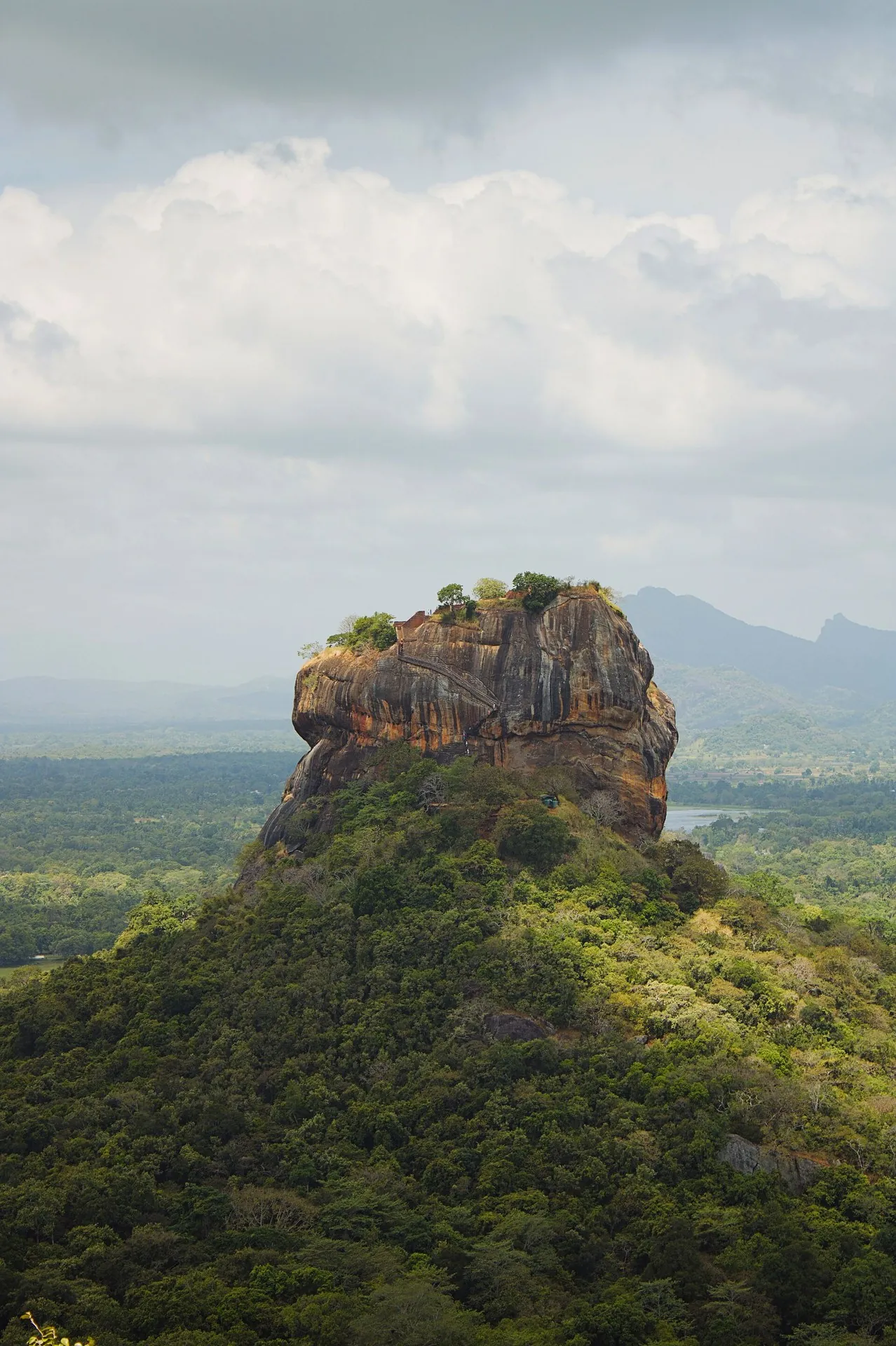
3. Ancient City of Sigiriya
Sigiriya is a royal palace and fortress built on top of a huge rock in the 5th century AD by King Kashyapa. You climb past landscaped water gardens, the famous painted ladies, the Mirror Wall and the giant lion's paws to the summit, where the foundations of the palace remain. It's the most famous sight in Sri Lanka. Climb early in the morning to avoid the heat and the crowds.
Time needed: about 3–4 hours. Read more: Sigiriya, things to do in Sigiriya, Sigiriya vs Pidurangala and our Sigiriya day tour.
4. Sacred City of Kandy
Kandy was the last capital of the Sinhalese kings until 1815. The UNESCO site centres on the Temple of the Sacred Tooth Relic, which houses Sri Lanka's most precious Buddhist relic, beside the lake built by the last king. Every year the city holds the Esala Perahera, one of the great festivals of Asia.
Time needed: a day, or two days with the botanical gardens. Read more: Kandy, the Temple of the Tooth, things to do in Kandy, the Kandy Esala Perahera guide and our Kandy city tour.
5. Old Town of Galle and its Fortifications
Galle Fort was first built by the Portuguese in the 16th century and expanded by the Dutch from the 17th century. It's one of the best-preserved fortified towns built by Europeans in South and Southeast Asia. Walk the ramparts, explore the colonial streets, visit the lighthouse, churches and museums, and stay for sunset.
Time needed: half a day, or stay overnight. Read more: Galle Fort, things to do in Galle and our Galle day tour.
6. Sinharaja Forest Reserve
Sinharaja is Sri Lanka's last large area of primary tropical rainforest. It's home to many species found nowhere else on Earth, especially birds, frogs, lizards and plants. Guided walks with local naturalists follow forest trails to streams and waterfalls, and birdwatchers come for mixed-species flocks and rare endemics such as the Sri Lanka blue magpie.
Time needed: a day, ideally with a night nearby for an early start. Read more: Sinharaja Forest Reserve, rainforests and bird watching.
7. Golden Temple of Dambulla
The Dambulla cave temple has been a place of worship for over 2,000 years. Its five caves are covered with Buddhist murals and filled with statues of the Buddha, kings and deities. It's an easy stop between Kandy and Sigiriya. Dress modestly, covering shoulders and knees, and remove your shoes and hat.
Time needed: about 1–1.5 hours. Read more: Dambulla cave temple and what to wear at Sri Lankan temples.
8. Central Highlands of Sri Lanka
Inscribed in 2010, the Central Highlands are made up of three protected areas: - Horton Plains National Park: high grasslands and cloud forest with the dramatic World's End drop. - Peak Wilderness Protected Area: the forests around Adam's Peak, a pilgrimage mountain sacred to several faiths. - Knuckles Conservation Forest: rugged mountains, villages and trekking trails.
These areas protect many of Sri Lanka's endemic species, including the purple-faced langur and the Sri Lankan leopard.
Read more: Horton Plains and World's End, Adam's Peak, the Knuckles Mountain Range and hiking in Sri Lanka.
How many UNESCO sites can you see on one trip?
| Trip length | UNESCO sites you can comfortably see |
|---|---|
| 5 days | Sigiriya, Dambulla, Polonnaruwa and Kandy |
| 7 days | Add Anuradhapura or Galle |
| 10 days | Add the Central Highlands (Horton Plains) and Galle |
| 14 days | All eight, including Sinharaja |
See our 7-day tour, 10-day tour and 14-day tour.
A sample route for all eight sites
| Day | Route | UNESCO site |
|---|---|---|
| 1 | Airport to Anuradhapura | Anuradhapura (afternoon) |
| 2 | Anuradhapura to Sigiriya | Sigiriya rock |
| 3 | Day trip from Sigiriya | Polonnaruwa |
| 4 | Sigiriya to Kandy | Dambulla, then Kandy |
| 5 | Kandy | Temple of the Tooth |
| 6 | Kandy to Nuwara Eliya | Tea country |
| 7 | Horton Plains, then Ella | Central Highlands |
| 8–9 | Ella to Sinharaja | Sinharaja rainforest walk |
| 10 | Sinharaja to Galle | Galle Fort |
| 11–13 | Beach time on the south coast | |
| 14 | To the airport |
With a driver, we'll adjust this route to your dates and pace. You can also try our Sri Lanka trip planner.
Entry fees
UNESCO sites charge entry fees for foreign visitors, and Sigiriya, Anuradhapura and Polonnaruwa are among the most expensive. Fees change, so we keep an updated list on our Sri Lanka entry fees page. Galle Fort is free to enter.
Best time to visit
| Sites | Best months |
|---|---|
| Cultural Triangle (Anuradhapura, Polonnaruwa, Sigiriya, Dambulla) | Around January to September; the driest months are usually May to September |
| Kandy | All year; showers are common |
| Galle | About December to April |
| Sinharaja | About January to April and August to September |
| Central Highlands | About January to April |
Sri Lanka's two monsoons mean there's always a good region somewhere. See the best time to visit Sri Lanka.
Tips for visiting the sites
- Start early: sites are cooler and quieter before 9 am.
- Dress modestly: cover shoulders and knees at sacred sites, and remove shoes and hats where required.
- Bring socks: temple floors get very hot in the midday sun.
- Carry water and sun protection.
- Hire a licensed guide at the bigger sites; it brings the history to life. See our private tour guide page.
- Never pose with your back to a Buddha statue for photos, and never touch statues.
Other heritage sites worth seeing
Sri Lanka has many more historic places that aren't on the UNESCO list but are just as rewarding: - Mihintale, where Buddhism is said to have arrived in Sri Lanka. See Mihintale. - Yapahuwa, a rock fortress with a beautiful stone staircase. See Yapahuwa. - Ritigala, a forest monastery in the jungle. See Ritigala. - Arankele, a meditation monastery in the forest. See Arankele.
See our cultural sites in Sri Lanka and ancient Buddhist sites.
UNESCO sites for families
Children usually love Sigiriya's climb (with lots of breaks), cycling around Polonnaruwa, exploring Galle Fort's ramparts and spotting monkeys at the ancient sites. Keep days short and avoid the midday heat. See Sri Lanka with kids and our family tour.
Why travel with a private driver?
The sites are spread across the island, and public transport between them is slow. With a private driver, you can start early, visit two sites in one day, stop at viewpoints and villages, and travel in an air-conditioned car. See our private driver page and our cultural tour.
How long to spend at each site
| Site | Minimum | Ideal |
|---|---|---|
| Anuradhapura | Half a day | A full day |
| Polonnaruwa | 3–4 hours | Half a day by bicycle |
| Sigiriya | 3 hours | Half a day, plus Pidurangala at sunrise |
| Dambulla | 1 hour | 1.5 hours |
| Kandy | Half a day | 1–2 days |
| Galle | Half a day | 1–2 nights |
| Sinharaja | Half a day | A full day with a night nearby |
| Central Highlands | Half a day (Horton Plains) | 2–3 days in the hills |
Where to stay for the UNESCO sites
The best base for the Cultural Triangle is Sigiriya, Habarana or Dambulla. From there, Polonnaruwa, Dambulla and Sigiriya are all within about an hour, and Anuradhapura is about two hours. Stay in Kandy for the Sacred City, in Nuwara Eliya or Haputale for Horton Plains, near Deniyaya or Kudawa for Sinharaja, and inside or near Galle Fort for Galle. See where to stay in Sri Lanka.
UNESCO sites and the weather
Sri Lanka's monsoons affect the sites differently. Even in the wetter months, mornings are often dry, so plan the big climbs and walks early in the day and keep museums or temples for the afternoons.
Common mistakes to avoid
- Trying to see the Cultural Triangle in one day; allow at least three days.
- Climbing Sigiriya at midday in the heat.
- Forgetting modest clothing for temples and sacred cities.
- Skipping a guide at Anuradhapura and Polonnaruwa, where the stories matter.
- Leaving Galle Fort before sunset.
Frequently asked questions
How many UNESCO World Heritage Sites are in Sri Lanka?
Eight: six cultural and two natural.
What are the UNESCO World Heritage Sites in Sri Lanka?
Anuradhapura, Polonnaruwa, Sigiriya, Kandy, Galle Fort, the Dambulla cave temple, the Sinharaja Forest Reserve and the Central Highlands.
Which is the oldest UNESCO site in Sri Lanka?
Anuradhapura, Polonnaruwa and Sigiriya were the first to be inscribed, in 1982. Anuradhapura is the oldest city.
What are the natural World Heritage Sites in Sri Lanka?
The Sinharaja Forest Reserve and the Central Highlands (Horton Plains, the Peak Wilderness and the Knuckles range).
Can I see all the UNESCO sites in one trip?
Yes, in about 12–14 days with a private driver.
Which UNESCO sites are in the Cultural Triangle?
Anuradhapura, Polonnaruwa, Sigiriya and Dambulla, with Kandy at its southern point.
Is Galle Fort free to visit?
Yes, you can walk around Galle Fort for free. Some museums inside charge a fee.
What should I wear at UNESCO sites in Sri Lanka?
Clothes that cover your shoulders and knees at temples and sacred cities. You'll also need to remove shoes and hats in sacred areas.
What is the best UNESCO site in Sri Lanka?
Sigiriya is the most famous, but many travellers love Polonnaruwa and the Dambulla cave temple just as much.
How do I book a UNESCO heritage tour?
Tell us your dates and interests, and we'll plan a route with a private driver. Contact us on our contact page or WhatsApp.