
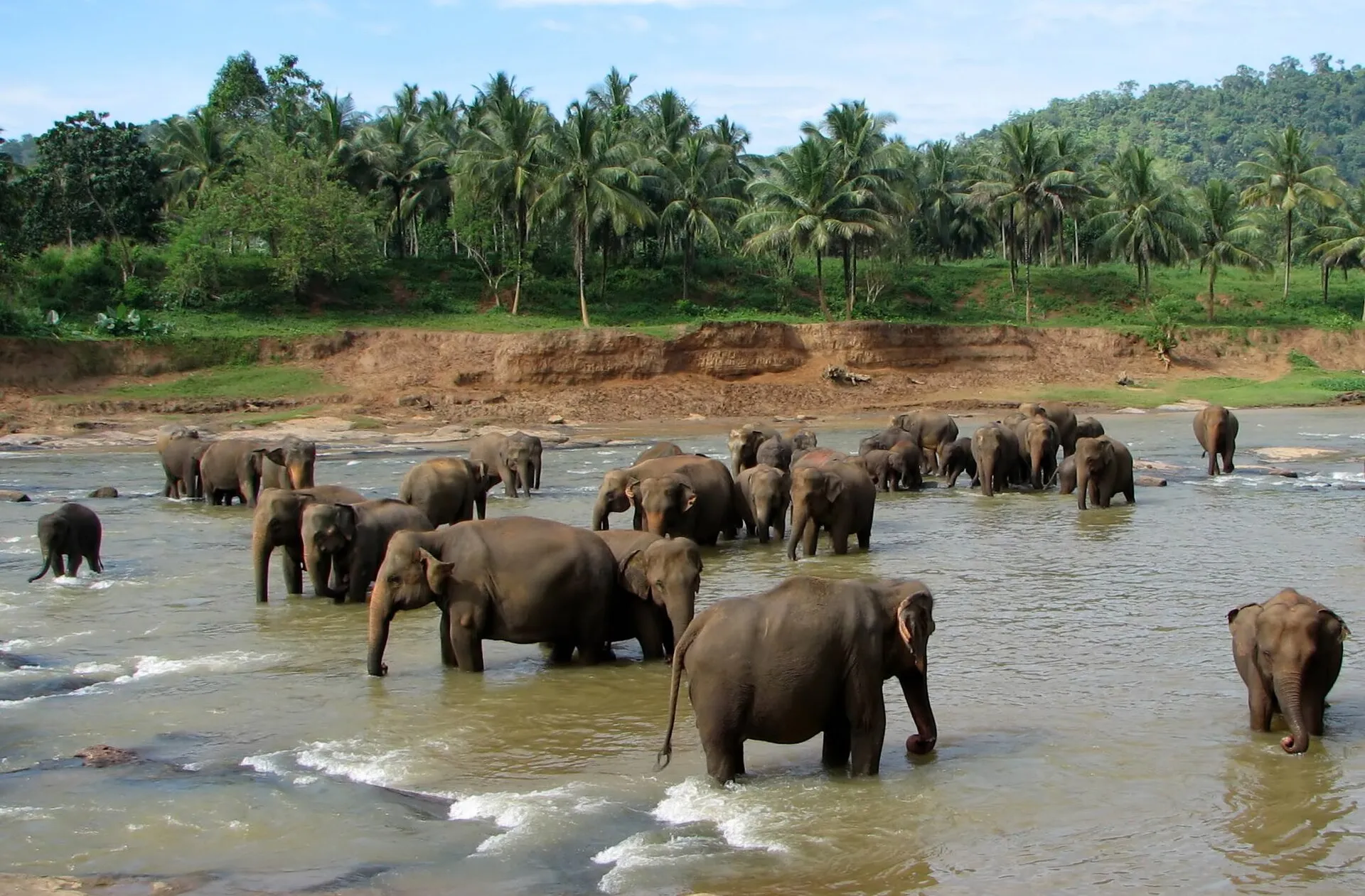
Quick answer
The Pinnawala Elephant Orphanage is a government-run elephant centre near Rambukkana in Kegalle District, about 1 to 1.5 hours from Kandy and around 2.5 hours from Colombo. It was set up in 1975 to care for orphaned and injured elephants and now has a large herd, many born there. The highlight is watching the elephants bathe in the Ma Oya river, usually around 10 am to 12 pm and 2 pm to 4 pm. At the time of writing (November 2026), the official ticket for foreign adults is US$17.70, and US$8.85 for children. Animal welfare groups have raised concerns about conditions there, so many visitors now prefer to see elephants in the wild or at the Udawalawe Elephant Transit Home.
On this page 27 sections
- Pinnawala at a glance
- A short history
- What you'll see
- Daily schedule
- Tickets
- The welfare debate
- Ethical alternatives
- Pinnawala or a safari?
- Getting there
- Combining Pinnawala with other stops
- Tips for visiting
- Visiting with children
- Elephants in Sri Lanka
- How we plan elephant experiences
- Elephant behaviour to watch for
- Planning your day around Pinnawala
- Questions to ask before visiting any elephant attraction
- Where to stay
- Best time of year
- Pinnawala on a Sri Lanka itinerary
- What to wear and bring
- Good to know
- Is Pinnawala worth visiting?
- Pinnawala Zoo and other attractions nearby
- Our view
- Common mistakes to avoid
- Frequently asked questions
Pinnawala is one of the best-known elephant attractions in Sri Lanka, and one of the most debated. This guide gives you the facts: what you'll see, bathing and feeding times, tickets, how to get there, the welfare debate, and ethical alternatives, so you can decide what's right for you.
Pinnawala at a glance
| Location | Pinnawala, near Rambukkana, Kegalle District |
| From Kandy | About 1–1.5 hours by car |
| From Colombo | About 2.5 hours by car |
| Founded | 1975 |
| Run by | Department of National Zoological Gardens |
| Foreign ticket | US$17.70 adults, US$8.85 children (November 2026) |
| River bathing | Usually about 10 am–12 pm and 2–4 pm |
| Time needed | About 2–3 hours |
A short history
Pinnawala was set up by the Department of Wildlife Conservation in 1975 to care for baby elephants found alone in the wild, often after their mothers had died or become separated. It later moved to the Department of National Zoological Gardens. Over the years, the orphanage became a major tourist attraction, and it has also bred elephants in captivity. According to the official website, the herd was around 65 elephants at the time of writing.
What you'll see
River bathing
The main event. Twice a day, the herd walks across the road to the Ma Oya river to bathe, drink and play. You can watch from the riverbank and from the restaurants overlooking the river.
Feeding
Visitors can watch the elephants being fed. The official website describes a visitor feeding session from the morning, with fruit baskets sold separately.
The herd
Elephants of different ages, from young calves to older adults, roam in the open area near the entrance.
Daily schedule
According to the official website (checked November 2026):
| Time | What happens |
|---|---|
| 8:30 am | Visitors admitted |
| About 9:15 am | Visitor feeding session begins |
| 10:00 am | Main herd walks to the river |
| 12:00 pm | Main herd returns |
| 2:00 pm | Main herd walks to the river again |
| 4:00 pm | Main herd returns |
| 5:00 pm | Ticket counter closes |
Times can change, and river bathing may be suspended during heavy rain. Plan to arrive by 9:30 am or 1:30 pm.
Tickets
At the time of writing (November 2026), the official foreign visitor prices are:
- Adults: US$17.70
- Children: US$8.85
Prices are listed in US dollars and are usually paid in rupees. Check the official website before you go. See Sri Lanka entry fees.
Your trip could be next.
Tell us your dates, group size and what you love. Our team will plan your trip and confirm your quote personally.
The welfare debate
Pinnawala divides opinion. It's important to know both sides before you visit.
Concerns raised by visitors and welfare groups:
- Elephants have at times been kept chained when not bathing.
- Mahouts use control methods that some visitors find upsetting.
- The focus has shifted from rescue to tourism and breeding in captivity.
- Elephants born at Pinnawala aren't released into the wild.
What supporters say:
- Pinnawala has cared for many orphaned and injured elephants over the decades.
- It gives elephants that couldn't survive in the wild a home.
- It raises awareness about elephants in Sri Lanka.
We believe the best way to see elephants is in the wild. If you visit Pinnawala, watch the river bathing from a distance, and avoid paid activities that involve touching, riding or posing with elephants.
Ethical alternatives
Udawalawe Elephant Transit Home
Run by the Department of Wildlife Conservation next to Udawalawe National Park, the transit home cares for orphaned baby elephants and releases them back into the wild when they're old enough. Visitors watch feeding time from a viewing platform, without contact. It's a good stop on the way to or from a safari in Udawalawe. See Udawalawe National Park and our Udawalawe safari tour.
Wild elephant safaris
Sri Lanka is one of the best places in Asia to see wild elephants:
| Park | When to go |
|---|---|
| Minneriya | The Gathering, often around August–September |
| Kaudulla | Often good later in the dry season |
| Udawalawe | Elephants year-round |
| Yala | Elephants, plus leopards |
See where to see elephants in Sri Lanka, the elephant gathering and our wildlife tour.
Pinnawala or a safari?
| Pinnawala | Wild safari | |
|---|---|---|
| Elephants | Captive herd | Wild elephants |
| Guaranteed sightings | Yes | Very likely in the right park and season |
| Experience | Watching bathing from the riverbank | Elephants in their natural habitat |
| Welfare concerns | Raised by welfare groups | Choose a responsible jeep driver |
| Best for | A short stop near Kandy | A memorable wildlife experience |
Getting there
Pinnawala is on the road between Colombo and Kandy, so many visitors stop on the way. It's about 1 to 1.5 hours from Kandy and around 2.5 hours from Colombo, depending on traffic. The nearest railway station is Rambukkana, a short tuk-tuk ride away, but a private driver is the easiest option. See Kandy to Pinnawala and Colombo to Kandy.
Combining Pinnawala with other stops
On the drive between Colombo and Kandy, you can also visit:
- Spice gardens around Kandy and Matale. See spice gardens.
- Kandy: the Temple of the Tooth and the lake.
- Peradeniya Botanical Gardens, just outside Kandy.
See things to do in Kandy and our Kandy day tours.
Tips for visiting
- Time your visit for river bathing.
- Keep a safe distance. Elephants are large and unpredictable, even in captivity.
- Don't buy "photo with an elephant" experiences or rides.
- Stay out of the path when the herd walks to and from the river.
- Bring water and a hat. It can be hot in the middle of the day.
Visiting with children
Children often love watching the elephants bathe. Hold their hands near the road when the herd crosses, and explain why it's best not to touch or ride elephants. For an unforgettable family experience, add a wild safari. See Sri Lanka with kids and our family tour.
Elephants in Sri Lanka
Sri Lanka has a large population of wild Asian elephants, and they're culturally important, appearing in temple art and festivals such as the Kandy Esala Perahera. Human-elephant conflict is a serious challenge for farmers and elephants alike, and conservation groups work on solutions such as electric fences and community projects. Choosing ethical wildlife experiences helps support conservation. See responsible travel in Sri Lanka and Sri Lanka safari.
How we plan elephant experiences
When you travel with us, we suggest wild safaris first. If you'd still like to see Pinnawala, your driver can time your stop for river bathing on the way to Kandy, and we'll explain the welfare debate so you can decide. See our private driver page.
Elephant behaviour to watch for
Even at Pinnawala, you can learn a lot by watching the elephants:
- Ears flapping help elephants cool down.
- Trunks touching are a way of greeting and comforting each other.
- Dust and mud bathing protect their skin from the sun and insects.
- Calves stay close to adult females.
A wild safari lets you see these behaviours in a natural setting, where families stay together.
Planning your day around Pinnawala
| Time | Suggested plan |
|---|---|
| Early morning | Leave Colombo or Kandy |
| About 10 am | River bathing at Pinnawala |
| Midday | Lunch at a riverside restaurant |
| Afternoon | Continue to Kandy, or visit a spice garden |
If you're coming from the airport or Negombo, Pinnawala can be a stop on the way to Kandy. See Colombo to Kandy.
Questions to ask before visiting any elephant attraction
- Are elephants chained for long periods?
- Are visitors allowed to ride, touch or bathe with elephants?
- Are elephants made to perform?
- Are any elephants released back into the wild?
If the answers worry you, choose a wild safari instead. Responsible choices help push the tourism industry towards better welfare.
Where to stay
Most visitors stay in Kandy and visit Pinnawala as a day trip or on the way. There are also a few hotels near the river in Pinnawala, overlooking the bathing area. See where to stay in Sri Lanka.
Best time of year
Pinnawala is open all year. In the wettest months, the river can be high and bathing may be cancelled during heavy rain. See the best time to visit Sri Lanka.
Pinnawala on a Sri Lanka itinerary
Pinnawala works best as a short stop on the drive between Colombo or the airport and Kandy. A typical plan:
- Day 1: arrive and stay in Negombo.
- Day 2: leave early, stop at Pinnawala for the morning bathing, and continue to Kandy for the afternoon.
- Day 3: explore Kandy, then continue to the Cultural Triangle, where you can see wild elephants on safari.
This way, you see Pinnawala and wild elephants in the same trip and can compare the two experiences. See our 10-day tour and Sri Lanka itinerary.
What to wear and bring
- Light clothes and comfortable shoes
- A hat and sunscreen
- Water
- Cash for tickets, food and drinks
- A camera with a zoom lens, so you can photograph from a distance
Good to know
- There are restaurants and shops along the road to the river, with views of the bathing area.
- Facilities can get busy with tour groups in the late morning.
- If you're short on time, the morning bathing session is usually the most popular.
Is Pinnawala worth visiting?
It depends on what you want. If you're short on time and travelling between Colombo and Kandy, watching the river bathing is easy to fit in, and many visitors enjoy it. If you care most about animal welfare, or want to see elephants behaving naturally, a wild safari is the better choice. Many travellers do both and decide for themselves.
Pinnawala Zoo and other attractions nearby
The Pinnawala area also has an open-air zoo run by the same department, with a separate ticket. Riverside restaurants, small shops and spice gardens line the roads nearby.
Our view
We want every traveller to leave Sri Lanka with happy memories of elephants. For most people, that means watching a wild herd at a waterhole at sunset, with calves playing beside their mothers. If you'd like help choosing the right park for your dates, just ask, and we'll plan it into your route.
Common mistakes to avoid
- Arriving at the wrong time and missing river bathing.
- Paying for rides or close contact with elephants.
- Getting too close when the herd walks to the river.
- Making Pinnawala your only elephant experience. Add a wild safari.
Frequently asked questions
Where is the Pinnawala Elephant Orphanage?
Near Rambukkana, in Kegalle District, between Colombo and Kandy.
How much is the Pinnawala ticket for foreigners?
At the time of writing (November 2026), the official price is US$17.70 for adults and US$8.85 for children.
What time do the elephants bathe at Pinnawala?
Usually about 10 am to 12 pm and 2 pm to 4 pm, in the Ma Oya river.
Is Pinnawala ethical?
It's debated. Welfare groups have raised concerns about chaining and captivity. Many visitors prefer wild safaris or the Udawalawe Elephant Transit Home.
When was Pinnawala founded?
In 1975.
How far is Pinnawala from Kandy?
About 1 to 1.5 hours by car.
Can I ride elephants at Pinnawala?
We recommend never riding elephants, at Pinnawala or anywhere else.
What is the Udawalawe Elephant Transit Home?
A centre that raises orphaned elephants and releases them back into the wild. Visitors watch feeding from a platform.
Where can I see wild elephants in Sri Lanka?
In Minneriya, Kaudulla, Udawalawe and Yala national parks.
How long do I need at Pinnawala?
About two to three hours, including river bathing.
Photo sources
- Elephants bathing in the Maha Oya river at Pinnawala — Bernard Gagnon · CC BY-SA 3.0 · https://commons.wikimedia.org/wiki/File:Pinnawala_01.jpg