
Quick answer
The Udawalawe Elephant Transit Home is a rehabilitation centre for orphaned baby elephants, set up in 1995 by Sri Lanka's Department of Wildlife Conservation. It's about 5 km from the main entrance of Udawalawe National Park. Calves are raised with as little human contact as possible and released back into the wild when they're old enough; over 100 have been released. Visitors watch feeding time from a viewing platform, with no touching, riding or bathing. Feeding sessions are held several times a day, and the entry fee is small. It's the ethical choice for seeing baby elephants in Sri Lanka, and it fits perfectly with a safari in Udawalawe.
On this page 31 sections
- Elephant Transit Home at a glance
- What is the Elephant Transit Home?
- What you'll see
- Feeding times and tickets
- Why it's the ethical choice
- Combine it with a safari in Udawalawe
- Getting there
- Udawalawe or Yala?
- Where to see elephants in Sri Lanka
- Elephants in Sri Lanka
- Tips for visiting
- Visiting with children
- Where to stay
- Best time to visit
- Photography tips
- Elephant Transit Home on a Sri Lanka itinerary
- What to bring
- How calves are cared for
- Release into the wild
- Human-elephant conflict
- Udawalawe National Park in brief
- Responsible safari tips
- Safari timing
- Planning your visit with a driver
- Is it worth visiting?
- A note on other elephant attractions
- Birdwatching in Udawalawe
- Combining Udawalawe with Yala
- Visiting in the rain
- Common mistakes to avoid
- Frequently asked questions
If you want to see baby elephants in Sri Lanka in a way that puts their welfare first, the Elephant Transit Home is the place to go. This guide explains how it works, feeding times, tickets, how to get there and how to combine it with a safari.
Elephant Transit Home at a glance
| Location | Near Udawalawe National Park, about 5 km from the main park entrance |
| Founded | 1995 |
| Run by | Department of Wildlife Conservation |
| Purpose | Raising orphaned calves for release into the wild |
| Elephants released | Over 100 |
| Visitor experience | Watching feeding from a viewing platform |
| Contact with elephants | None |
| Time needed | About 30–60 minutes |
What is the Elephant Transit Home?
Baby elephants in Sri Lanka are sometimes found alone after their mothers die or become separated, often because of human-elephant conflict, falling into wells or getting lost. Without help, they can't survive. The Elephant Transit Home cares for these calves, feeds them milk, and raises them in a large area next to the national park.
Unlike some elephant attractions, the aim is to return the elephants to the wild. Human contact is kept to a minimum, so the calves don't become too used to people. When they're old enough, usually at around five years old, they're released into protected areas, often Udawalawe National Park itself. The centre has received support from international wildlife organisations, including the UK-based Born Free Foundation.
What you'll see
Feeding time
At set times, the calves run in from the surrounding area to the feeding station, where keepers feed them milk through a funnel and tube. It's a lively, joyful sight, as the youngest calves rush in for their turn.
The calves
You'll usually see elephants of different ages, from tiny calves to young elephants nearly ready for release. After feeding, they wander back into the bush.
Information displays
Displays explain the work of the centre and the challenges facing elephants in Sri Lanka.
Feeding times and tickets
Feeding sessions are held several times a day, usually in the morning, early afternoon and late afternoon. Times can change, so ask your driver or check locally before you go, and arrive a few minutes early.
The entry fee for foreign visitors is small compared with national park fees. Prices can change, so check on the day. See Sri Lanka entry fees.
Why it's the ethical choice
| Elephant Transit Home | Typical captive attraction | |
|---|---|---|
| Aim | Release into the wild | Keep elephants for visitors |
| Contact | None; viewing only | Often riding, bathing or touching |
| Elephants' future | Return to protected areas | Stay in captivity |
| Visitor role | Watching respectfully | Taking part in activities |
We recommend avoiding elephant rides, bathing with elephants and photos with captive elephants. The Elephant Transit Home and wild safaris are the best ways to see elephants. See our responsible travel guide.
Your trip could be next.
Tell us your dates, group size and what you love. Our team will plan your trip and confirm your quote personally.
Combine it with a safari in Udawalawe
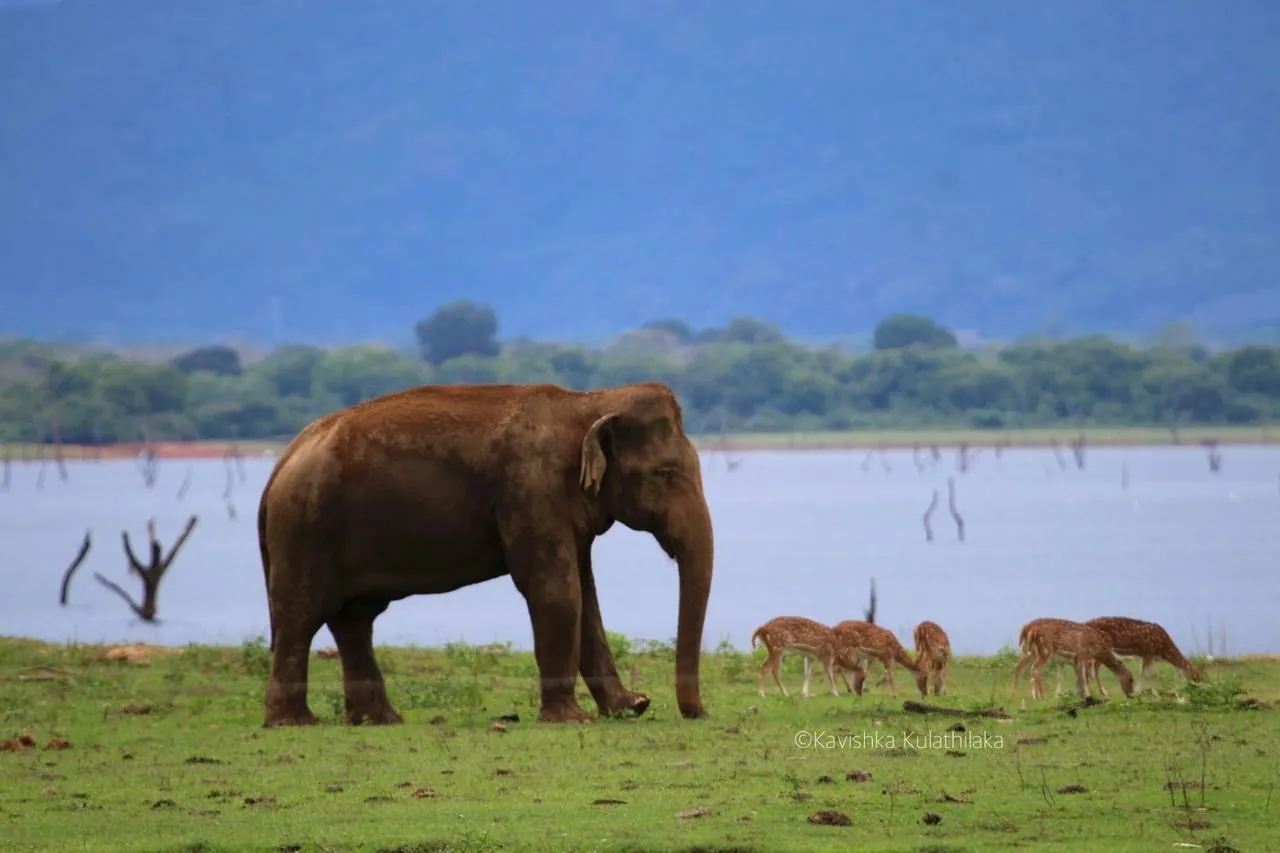
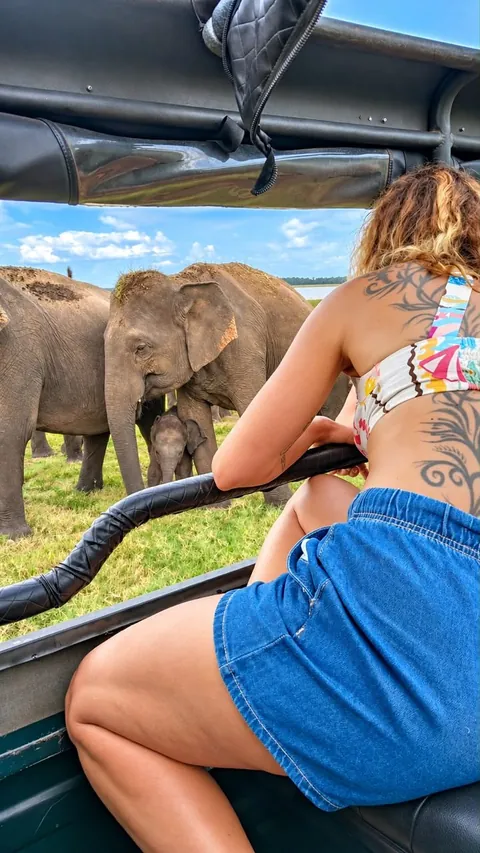
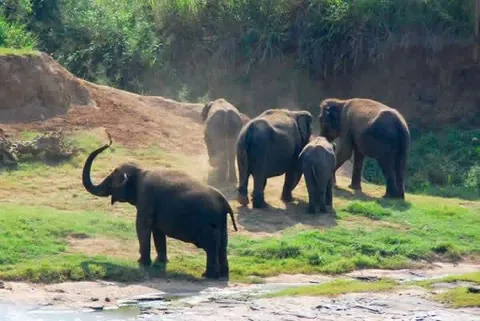
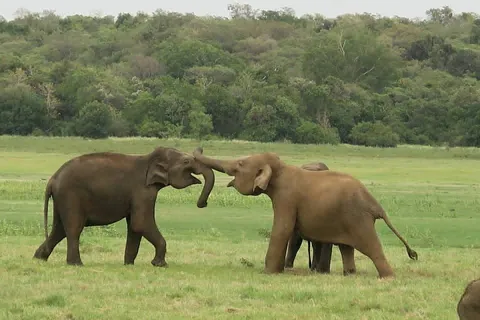
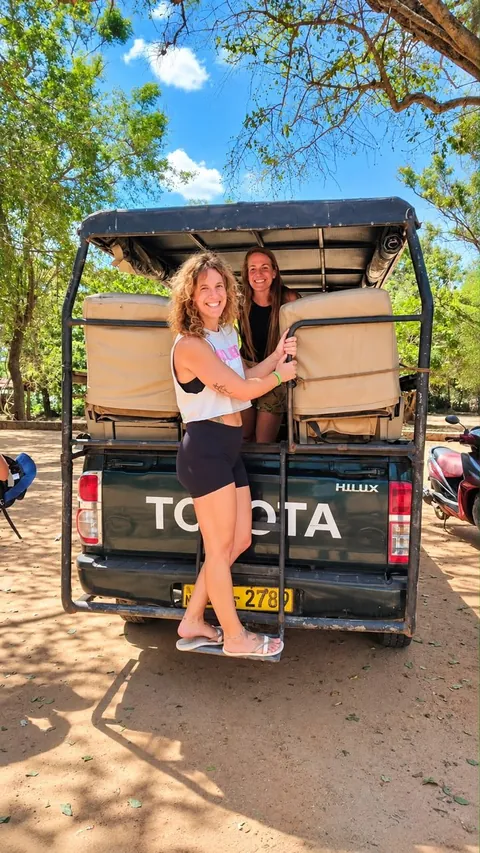
Udawalawe National Park is one of the best places in Sri Lanka to see wild elephants, often in large family groups, all year round. You may even see elephants that were raised at the Transit Home. The park also has water buffalo, crocodiles, deer and many birds, including eagles and peacocks.
A typical plan:
- Early morning: safari in Udawalawe, about three to four hours.
- Late morning: rest and lunch.
- Feeding time: visit the Elephant Transit Home.
Or reverse it with an afternoon safari. See Udawalawe National Park and our Udawalawe safari tour.
Getting there
The Elephant Transit Home is on the main road near Udawalawe, a short drive from the national park entrance.
| From | Approximate drive |
|---|---|
| Ella | About 2–2.5 hours |
| Mirissa | About 2–2.5 hours |
| Galle | About 2.5–3 hours |
| Yala (Tissamaharama) | About 2 hours |
| Colombo | About 3.5–4 hours, using the Southern Expressway |
Udawalawe fits well between the hill country and the south coast. See Ella to Mirissa, Ella to Yala and Galle to Ella.
Udawalawe or Yala?
| Udawalawe | Yala | |
|---|---|---|
| Best for | Elephants | Leopards and variety |
| Crowds | Usually quieter | Can be busy |
| Season | All year | Some blocks close for part of the dry season |
| Elephant Transit Home | Right next door | About 2 hours away |
Where to see elephants in Sri Lanka
| Place | Best time |
|---|---|
| Udawalawe | All year |
| Minneriya | The Gathering, often around August–September |
| Kaudulla | Often good later in the dry season |
| Yala | All year, with leopards too |
| Wilpattu | Quieter, with leopards and sloth bears |
See where to see elephants in Sri Lanka and the elephant gathering.
Elephants in Sri Lanka
Sri Lanka has one of the largest wild Asian elephant populations in the world. Elephants are deeply respected in Sri Lankan culture, but conflict between people and elephants is a serious problem: as forests shrink, elephants raid crops, and both elephants and people lose their lives. Orphaned calves are one result. Conservation work focuses on protecting habitats, building elephant corridors and helping farmers live alongside elephants. Visiting the Transit Home supports this work. See Sri Lanka safari and our wildlife tour.
Tips for visiting
- Arrive before feeding time to get a good view.
- Bring a camera with a zoom lens. The viewing area is set back.
- Keep quiet and calm so you don't disturb the calves.
- Bring water and a hat. It's hot in the dry zone.
- Combine with a safari for the full experience.
Visiting with children
Children usually love watching the calves run in for their milk. It's a short visit, perfect for young children, and a great way to explain why elephants belong in the wild. See Sri Lanka with kids and our family tour.
Where to stay
There are hotels, guesthouses and safari lodges around Udawalawe, many just a few minutes from the park entrance. Staying overnight lets you do an early-morning safari and see feeding time without rushing. See where to stay in Sri Lanka.
Best time to visit
The Transit Home and Udawalawe National Park can be visited all year. Mornings and late afternoons are cooler. In the wettest months, roads in the park can be muddy, but elephants are still easy to see. See the best time to visit Sri Lanka.
Photography tips
- Use a zoom lens from the viewing platform.
- Capture the moment the calves run in for feeding.
- Don't use flash.
- On safari, early morning and late afternoon give the best light.
Elephant Transit Home on a Sri Lanka itinerary
A typical route:
See our 10-day tour, 14-day tour and Sri Lanka itinerary.
What to bring
- A camera with a zoom lens
- Light, neutral-coloured clothes
- A hat and sunscreen
- Water
- Cash for tickets
How calves are cared for
Most calves arrive very young, when they still depend on milk. Keepers feed them a special milk formula several times a day and give medical care when needed. As they grow, the calves spend more time in the bush around the centre, learning to find food and live in a group. Contact with people is kept to feeding and care, so the calves stay wild.
Release into the wild
When the young elephants are strong enough, usually at around five years old, they're released into protected areas, often in groups so they have company. Some released elephants have been seen in Udawalawe National Park with calves of their own. Researchers monitor released elephants to learn how well they adapt.
Human-elephant conflict
Many orphans at the Transit Home lose their mothers because of conflict with people. As farms and villages spread into elephant habitat, elephants raid crops, and farmers try to protect their fields. Conservationists and communities are working on solutions, such as:
- Electric fences around villages rather than forests
- Elephant corridors linking protected areas
- Community projects that help farmers live alongside elephants
- Early warning systems to alert villages
Udawalawe National Park in brief
Udawalawe National Park surrounds a large reservoir, with open grassland and scrub, which makes elephants easy to see. Safaris run in the morning and afternoon in open jeeps. Besides elephants, look out for water buffalo, spotted deer, jackals, crocodiles, monitor lizards and birds such as eagles, bee-eaters and peacocks.
Responsible safari tips
- Ask your jeep driver to keep a respectful distance from elephants.
- Don't let drivers chase or crowd animals.
- Stay quiet during sightings.
- Never feed wildlife, including elephants at the park fence.
Safari timing
| Safari | Typical time | Why go |
|---|---|---|
| Morning | From around 6 am | Cooler, active animals, soft light |
| Afternoon | From around 2:30 pm | Elephants at water, sunset light |
Planning your visit with a driver
Udawalawe is usually visited on the drive between the hill country and the south coast. Your driver can time your arrival for a safari and a feeding session, arrange a jeep, and help you choose a hotel nearby. See our private driver page and Sri Lanka airport transfers.
Is it worth visiting?
Yes. It's a short, joyful visit that supports elephant conservation, and it pairs perfectly with one of the best elephant safaris in Asia. For many travellers, it's a highlight of their trip.
A note on other elephant attractions
Sri Lanka has several places that keep elephants in captivity for tourists. Before visiting any of them, ask whether elephants are chained, ridden or made to perform, and whether any are released. The Transit Home's focus on release makes it different.
Birdwatching in Udawalawe
Udawalawe is also good for birds, including raptors such as the crested serpent eagle, colourful bee-eaters, kingfishers and peacocks. Bring binoculars. See bird watching.
Combining Udawalawe with Yala
Some travellers do an Udawalawe safari and the Transit Home, then continue to Yala for leopards the next day. This makes a great two-day wildlife trip. See Yala National Park and our Yala safari tour.
Visiting in the rain
Feeding continues in light rain, and the calves often enjoy the wet weather. Bring a light rain jacket in the wetter months, and a dry bag for your camera. Paths around the viewing area can be muddy, so wear sensible shoes and bring a towel for the car.
Common mistakes to avoid
- Arriving after feeding time and missing the calves.
- Expecting to touch or feed the elephants. Viewing only.
- Skipping the safari. Seeing wild elephants is the highlight.
- Choosing captive elephant activities elsewhere.
Frequently asked questions
What is the Udawalawe Elephant Transit Home?
A centre that raises orphaned baby elephants and releases them back into the wild.
Where is the Elephant Transit Home?
Near Udawalawe National Park, about 5 km from the main park entrance.
When was it founded?
In 1995, by the Department of Wildlife Conservation.
What are the feeding times?
Several times a day, usually in the morning, early afternoon and late afternoon. Check the current times locally.
Can you touch the elephants?
No. Visitors watch from a viewing platform.
Is the Elephant Transit Home ethical?
Yes. Its aim is to return elephants to the wild, with minimal human contact.
How many elephants have been released?
Over 100 elephants have been released into the wild.
How long do I need there?
About 30 to 60 minutes.
Can I combine it with a safari?
Yes. Udawalawe National Park is next door, with wild elephants all year.
How do I get there?
By car from Ella, Mirissa, Galle or Yala. Book a driver through our contact page or WhatsApp.