
Quick answer
The easiest way to get from Sigiriya to Trincomalee is by private car, which takes about two and a half to three hours via Habarana and Kantale. By bus, the journey usually takes around three and a half to four and a half hours, with a change in Habarana or Dambulla. The train is not practical from Sigiriya. On the way, you can add an elephant safari in Minneriya or Kaudulla. The best time to go is from about April to September, when the east coast beaches are at their best.
Sigiriya and Trincomalee are close neighbours on the map, but very different places. Sigiriya is the heart of the ancient Cultural Triangle, with rock fortresses, cave temples and wild elephants. Trincomalee is a historic port town on the east coast, with soft sandy beaches, coral reefs and one of the finest natural harbours in the world. This short drive links the two, and it is one of the easiest ways to add a beach stay to a cultural tour.
Sigiriya to Trincomalee at a glance
| Option | Typical journey time | Comfort | Best for |
|---|---|---|---|
| Private car with driver | About 2.5–3 hours | High | Most travellers, families, anyone with luggage |
| Private car with an elephant safari | Most of a day | High | Combining travel with wildlife |
| Public bus with a change | Around 3.5–4.5 hours | Low | Backpackers with light bags |
| Tuk-tuk | Around 3.5–4 hours | Low | Adventurous travellers with little luggage |
| Train | Not practical from Sigiriya | — | Not recommended |
Times are approximate and depend on traffic, stops and the season.
By private car: the easiest way
A private car is the simplest way to make this journey. Your driver picks you up at your hotel in Sigiriya, Habarana or Dambulla and drops you at your hotel in Trincomalee, Uppuveli or Nilaveli.
The route
From Sigiriya, the road heads east to Habarana, a small junction town surrounded by forest and elephant country. From Habarana, the main road runs north-east past the large Kantale reservoir, an ancient tank built to water the surrounding rice fields. From Kantale, the road continues through flat countryside to the coast at Trincomalee. The roads are mostly flat and straight, so the drive is easy, but drivers slow down in areas where elephants cross, especially near dusk.
Why choose a private car?
- Door-to-door travel with your luggage
- Freedom to add a safari or a temple stop
- An air-conditioned vehicle in the hot dry zone
- A driver who knows where elephants cross the road and how to drive safely around them
You can book a single transfer, or include this journey in a trip with a private driver.
Add an elephant safari on the way
The national parks near Habarana are some of the best places in Asia to see wild elephants, and they fit neatly into this journey.
Minneriya National Park
Minneriya National Park is famous for the "Gathering", when large numbers of elephants come to graze on the grasslands around the Minneriya tank, usually in the dry season from about July to September. Outside these months, elephants are still often seen, though usually in smaller numbers.
Kaudulla National Park
Kaudulla is right on the road towards Trincomalee and is often a good choice when the elephants move away from Minneriya. Ask about current park access and suitable safari areas. Sightings are not guaranteed; do not pursue or crowd animals.
A safari usually takes around three to four hours. The simplest plan is a morning safari, lunch near Habarana, then the drive to Trincomalee in the afternoon. Read about safaris in Sri Lanka, the elephant Gathering and where to see elephants in Sri Lanka.
Other stops between Sigiriya and Trincomalee
Habarana village life
Around Habarana, you can join a village tour with a bullock cart ride, a canoe trip across a lake and a home-cooked lunch. See our Habarana village tour.
Kantale tank
The road runs beside the long bund of the Kantale reservoir, an ancient tank still used for irrigation. It is a good place to stretch your legs and watch birds and fishermen.
Polonnaruwa (a detour)
If you haven't seen it yet, the ancient city of Polonnaruwa is about an hour from Sigiriya. You can explore its ruins in the morning, then drive to Trincomalee in the afternoon. It makes a long but rewarding day.
By bus
There is no direct bus from Sigiriya to Trincomalee. A typical journey looks like this:
- Sigiriya to Habarana or Dambulla: take a local bus or tuk-tuk to the main road.
- Habarana or Dambulla to Trincomalee: catch a bus heading to Trincomalee. Buses from Dambulla pass through Habarana.
The whole journey usually takes around three and a half to four and a half hours, depending on connections. Buses can be crowded and there is little room for large bags. Travel during the day and try to arrive before dark.
Is there a train?
Trincomalee has a railway station with direct services from Colombo, but there is no railway station at Sigiriya. The nearest station, Habarana, is on the line to Batticaloa, and reaching Trincomalee by train from there means a slow journey with a change. For this short trip, the road is much faster and easier. Our guide to getting from Colombo to Trincomalee explains the train from Colombo.
When to travel
The east coast season runs from about April to September, when Trincomalee has calm seas, sunny days and the best snorkelling. From about October or November to February or March, the north-east monsoon can bring heavy rain to the east coast, and boat trips may not run. Sigiriya can be visited all year, so plan your Trincomalee stay for the dry months if you can. Read our guide to the best time to visit Sri Lanka.
What to do in Trincomalee
Trincomalee is a historic port town with beautiful beaches to the north. Highlights include:
- Snorkelling at Pigeon Island National Park off Nilaveli
- Relaxing on Nilaveli Beach and Uppuveli Beach
- Visiting Koneswaram Temple on Swami Rock, high above the sea
- Exploring Fort Frederick, where spotted deer wander among the buildings
- Whale and dolphin watching in season. See whale watching in Sri Lanka
Our list of the best things to do in Trincomalee covers 15 ideas in detail.
Before you leave Sigiriya
Climb Sigiriya Rock or Pidurangala Rock early in the morning, before the heat. The Dambulla Cave Temple is also close by. See our guide to getting from Colombo to Sigiriya for more on the area, and three days in the Cultural Triangle for a ready-made plan.
Where to stay in Trincomalee
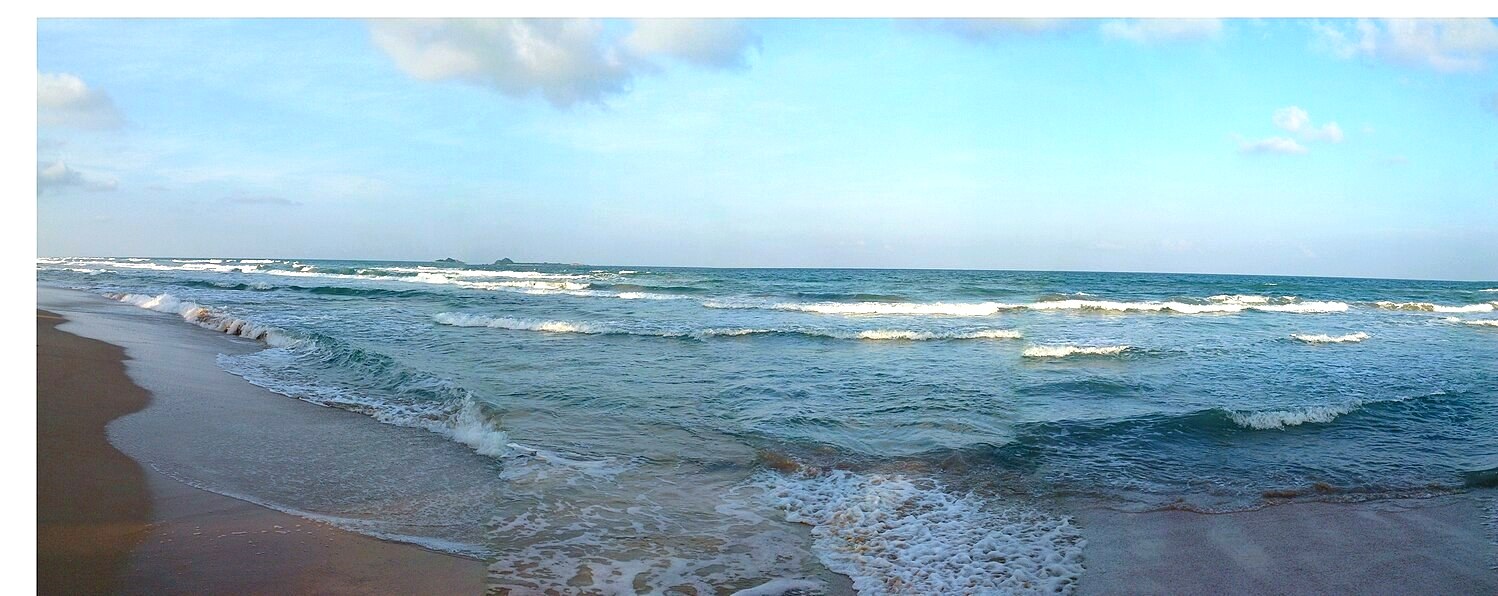
Most visitors stay at Uppuveli or Nilaveli, just north of the town, rather than in Trincomalee itself. Uppuveli is closer to town, with cafés and guesthouses. Nilaveli is quieter, with longer stretches of beach and the boat jetty for Pigeon Island. See our guide to where to stay in Sri Lanka.
Continuing your journey
From Trincomalee, many travellers continue down the east coast to Pasikuda and Arugam Bay, or head north to Jaffna. See our list of the best things to do in Jaffna and our east coast and north tour, which combines these places in one trip.
What affects the cost of a private transfer
The cost depends on the size of the vehicle, whether you add a safari or a detour to Polonnaruwa, and the season. Jeep hire and park tickets for a safari are separate from the car. If you travel with one of our drivers for your whole trip, this journey is simply one day of it. Ask us for a quote that includes everything. See how to book.
Travel tips
- Plan the safari for the morning or late afternoon, when elephants are most active and the heat is lower.
- Avoid driving after dark where possible, as elephants cross the roads around Habarana and Kantale.
- Carry cash for park tickets, jeeps and roadside stops. See money in Sri Lanka.
- Pack sun protection. The dry zone and the east coast are hot and sunny.
- Respect wildlife. Never feed elephants or get out of the vehicle near them. Read our responsible travel guide.
A sample day with a safari
- 6:00 am: climb Pidurangala Rock for sunrise.
- 8:00 am: breakfast at your hotel, then check out.
- Late morning: visit Polonnaruwa or relax by the pool.
- 2:30 pm: an afternoon jeep safari in Minneriya or Kaudulla.
- 6:00 pm: drive to Trincomalee with your driver, or stay a final night near Habarana and leave the next morning.
If you'd rather not drive after dark, take a morning safari instead and arrive in Trincomalee in the afternoon.
Staying safe around wild elephants
The roads around Habarana, Minneriya, Kaudulla and Kantale pass through areas where wild elephants live, and they sometimes cross the road or stand beside it.
- Stay in the vehicle when elephants are close.
- Never feed elephants. Feeding teaches them to come to roads, which puts them and people in danger.
- Keep noise down and don't use flash photography.
- Let your driver decide when to move on.
Common mistakes to avoid
- Going to Trincomalee in the monsoon. From about November to February, the east coast is often rainy and boat trips may stop. Plan for April to September.
- Booking a safari in the midday heat. Elephants are less active, and you will be uncomfortable. Choose morning or late afternoon.
- Arriving after dark. Elephants cross the roads in the evening. Plan to arrive in daylight.
Frequently asked questions
How long does it take to get from Sigiriya to Trincomalee?
About two and a half to three hours by private car, and around three and a half to four and a half hours by bus.
How far is Trincomalee from Sigiriya?
Roughly 100 to 110 km by road, depending on where you start.
Can I do a safari on the way?
Yes. Minneriya and Kaudulla national parks are close to the route and are known for wild elephants.
Is there a train from Sigiriya to Trincomalee?
Not a practical one. Sigiriya has no station, and the road is much faster.
When is the best time to visit Trincomalee?
From about April to September, when the east coast is dry and the sea is calm.
How do I book a car from Sigiriya to Trincomalee?
Send us your date and hotel details through our contact page or WhatsApp, and we will send a quote.
Photo sources
- Panoramic view of waves washing onto Nilaveli Beach beneath a blue, cloud-dotted sky. — Fazulrahman2020 / Wikimedia Commons · CC BY-SA 4.0 · https://commons.wikimedia.org/wiki/File:NILAWELI_BEACH.jpg
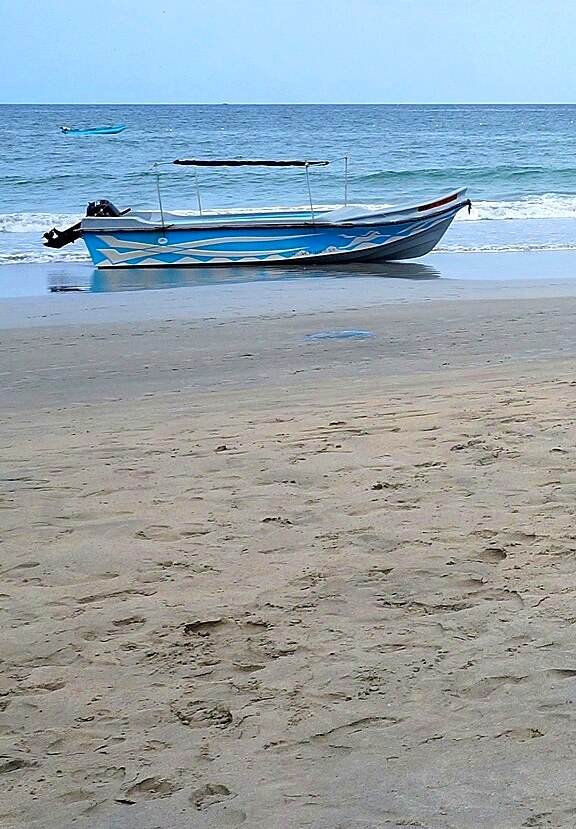
- Fishing boat on an empty stretch of Trincomalee beach — PIERRE ANDRE LECLERCQ · CC BY-SA 4.0 · https://commons.wikimedia.org/wiki/File:Les_pecheurs_de_la_plage_de_Trincomalee_(2).jpg