
Quick answer
Sri Lanka's "Big Five" are the Asian elephant, the Sri Lankan leopard, the sloth bear, the blue whale and the sperm whale. A trip of about 10–14 days can include habitats for all five, but sightings of any species are never guaranteed. The best places are Yala and Wilpattu national parks for leopards and sloth bears; Udawalawe, Minneriya and Kaudulla for elephants; and the ocean off Mirissa (about November to April) or Trincomalee (about May to August) for blue and sperm whales. Sloth bears are the hardest to find, so plan more than one safari. Choose responsible operators who keep their distance from the animals.
On this page 26 sections
- Sri Lanka's Big Five at a glance
- 1. The Asian elephant
- 2. The Sri Lankan leopard
- 3. The sloth bear
- 4. The blue whale
- 5. The sperm whale
- Why these five?
- Planning a Big Five trip
- Park closures
- Safari tips
- Whale watching tips
- Best camera gear
- Big Five for families
- Responsible wildlife watching
- Beyond the Big Five
- A short Big Five trip (7–8 days)
- Where to stay for the Big Five
- Other animals you'll see on safari
- The best safari parks compared
- Safari timings
- What to wear on safari
- Booking your Big Five trip
- Is it worth doing the Big Five?
- Big Five and the rest of Sri Lanka
- Common mistakes to avoid
- Frequently asked questions
Africa has its Big Five, but Sri Lanka has its own, and it's one of the few places on Earth where you can see the largest land mammal in Asia and the largest animal that has ever lived in the same trip. Add leopards, which are often seen in daylight here, and the shaggy, elusive sloth bear, and you have a wildlife adventure to remember. This guide covers each of the Big Five, where and when to see them, and how to plan a Big Five safari.
Sri Lanka's Big Five at a glance
| Animal | Best places | Best time (approx.) | Chance of seeing |
|---|---|---|---|
| Asian elephant | Udawalawe, Minneriya, Kaudulla, Yala | All year; Minneriya gathering about July–October | Very high |
| Sri Lankan leopard | Yala, Wilpattu | All year; best in the drier months | Good in Yala Block 1 |
| Sloth bear | Wilpattu, Yala | About May–July (fruit season) | Low to moderate |
| Blue whale | Mirissa; Trincomalee | Mirissa about November–April; Trincomalee about May–August | Good in season |
| Sperm whale | Trincomalee, Kalpitiya, Mirissa | In the whale seasons | Moderate |
1. The Asian elephant
Sri Lanka has one of the largest populations of wild Asian elephants in Asia, and they're the easiest of the Big Five to see.
Where to see elephants - Udawalawe National Park: elephants are seen on almost every safari, all year round, often in family groups. - Minneriya and Kaudulla: in the dry season, roughly July to October, hundreds of elephants gather around the reservoirs to graze. This "gathering" is one of the great wildlife spectacles of Asia. - Yala, Wilpattu and Gal Oya: elephants live in all these parks, and in Gal Oya they sometimes swim between islands. - The Udawalawe Elephant Transit Home: see orphaned calves being fed before they're released into the wild.
See where to see elephants in Sri Lanka, Udawalawe National Park, Minneriya National Park, the elephant gathering and the Udawalawe Elephant Transit Home.
2. The Sri Lankan leopard
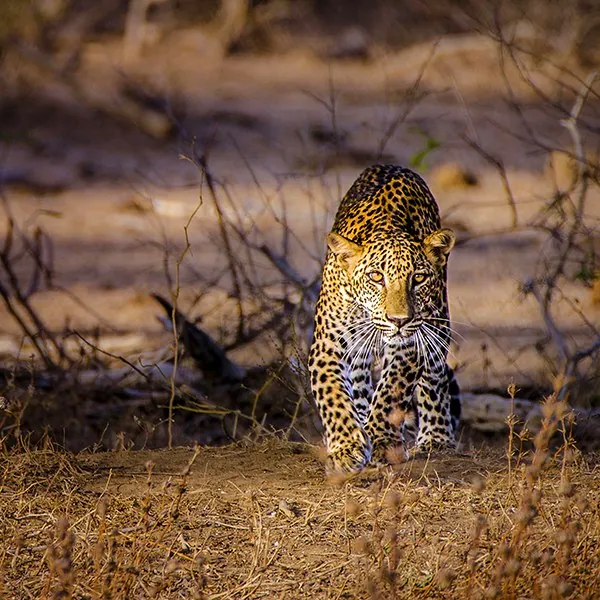
The Sri Lankan leopard is a unique subspecies found only on the island. With no lions or tigers to compete with, leopards here are the top predator, and in some parks they're often active in daylight.
Where to see leopards - Yala National Park (Block 1): one of the best places in the world to see leopards in the wild. - Wilpattu National Park: a larger, quieter park with leopards in forest and around natural lakes ("villus"). - Horton Plains and the hill country: leopards live here too but are rarely seen.
Tips: do a full-day safari or two half-day safaris for better chances, start at the park gate opening time, and choose a driver who knows the park well.
See leopard safari in Sri Lanka, Yala National Park, the Yala safari guide and Wilpattu National Park.
3. The sloth bear
The sloth bear is the rarest and hardest of the Big Five to see. It has a shaggy black coat, a pale snout and long claws for digging termites. Sloth bears are shy and often active at dawn and dusk.
Where and when - Wilpattu and Yala: the best parks for sloth bears. - About May to July: when the palu trees fruit, bears come out to feed, and sightings increase.
Tip: plan at least two or three safaris if seeing a sloth bear is important to you.
4. The blue whale
The blue whale is the largest animal that has ever lived. Sri Lanka is one of the best places in the world to see them, because the continental shelf is close to the coast and whales pass along the south and east coasts.
Where and when - Mirissa, on the south coast: about November to April. Boat trips leave early in the morning. - Trincomalee, on the east coast: about May to August, where whales can sometimes be seen closer to shore.
See whale watching, whale watching in Mirissa, whale watching in Trincomalee and our Mirissa whale watching tour.
5. The sperm whale
Sperm whales are deep divers with huge square heads. They're sometimes seen in groups off Trincomalee, Kalpitiya and Mirissa during the whale seasons. Watching a sperm whale raise its tail before a deep dive is unforgettable.
See Kalpitiya and dolphin watching.
Why these five?
Sri Lanka's Big Five is a modern idea, created to highlight the island's most impressive mammals. It brings together the land and the sea: three animals on safari and two on the ocean. Some people also talk about the "Big Six", adding the dolphin or the wild water buffalo.
Planning a Big Five trip
You need both the land and the sea, and the best seasons differ by coast.
Option 1: November to April (south coast whales) | Day | Plan | | --- | --- | | 1 | Arrive; Negombo | | 2–3 | Wilpattu: leopards, sloth bears, elephants | | 4–5 | Sigiriya and Minneriya or Kaudulla elephants | | 6 | Kandy | | 7–8 | Hill country and Ella | | 9–10 | Yala: leopards and sloth bears | | 11 | Udawalawe: elephants | | 12–13 | Mirissa: blue and sperm whales | | 14 | To the airport |
Option 2: May to August (east coast whales) | Day | Plan | | --- | --- | | 1 | Arrive; Negombo | | 2–3 | Wilpattu: sloth bears in fruit season | | 4–5 | Sigiriya; Minneriya gathering (from about July) | | 6–8 | Trincomalee: blue and sperm whales | | 9 | Kandy | | 10–11 | Hill country | | 12–13 | Yala and Udawalawe | | 14 | To the airport |
We'll adjust either route to your dates. See our wildlife tour, Sri Lanka safari and national parks in Sri Lanka.
Park closures
Some parks close for part of the year. Yala Block 1 has closed for periods in some dry seasons, often around September to October. Check before you plan. See Yala vs Udawalawe vs Wilpattu.
Safari tips
- Go early: gates open around dawn, the best time for wildlife.
- Take a full-day safari in Yala or Wilpattu for the best chances.
- Bring binoculars and a zoom lens.
- Wear neutral colours and bring a hat, sunscreen and water.
- Stay quiet and never ask your driver to get too close.
- Never feed or approach wild animals.
Whale watching tips
- Choose responsible operators that follow whale-watching guidelines and keep their distance.
- Take seasickness medicine if you need it; seas can be choppy.
- Bring sun protection, a light jacket and water.
- Be patient: sightings are likely in season, but never guaranteed.
Best camera gear
A zoom lens of 200–400 mm is ideal for leopards, bears and whales. Bring spare batteries and memory cards, and a dust cover for safari jeeps.
Big Five for families
Children love elephants and whales, but long safaris and boat trips can be tiring. Choose half-day safaris and check minimum ages for whale-watching boats. See Sri Lanka with kids and our family tour.
Responsible wildlife watching
- Choose operators who respect animals and park rules.
- Avoid crowding around animals with many jeeps.
- Don't support elephant rides or captive elephant shows.
- Keep your distance from whales and dolphins.
See our responsible travel guide.
Beyond the Big Five
Sri Lanka also has crocodiles, wild water buffalo, spotted deer, monkeys, giant squirrels and more than 400 kinds of birds, including many found only on the island. See flora and fauna and bird watching.
A short Big Five trip (7–8 days)
If you have about a week, you can still try for most of the Big Five: - Day 1: arrive and drive towards Udawalawe. - Day 2: Udawalawe safari for elephants. - Days 3–4: Yala safaris for leopards, elephants and, with luck, sloth bears. - Days 5–6: Mirissa whale watching (November to April). - Day 7: Galle Fort, then the airport.
See our Yala safari tour and Udawalawe safari tour.
Where to stay for the Big Five
Stay close to the park gates for early starts: near Tissamaharama or Kirinda for Yala, near the main entrance for Udawalawe, and near the gate for Wilpattu. For whales, stay in Mirissa or Weligama (November to April) or Trincomalee (May to August). See where to stay in Sri Lanka.
Other animals you'll see on safari
On a typical safari, you'll also see spotted deer, sambar, wild boar, water buffalo, mugger crocodiles, monitor lizards, grey langur and toque macaque monkeys, jackals, mongooses, peacocks, eagles and many water birds. Every safari is different, which is why many travellers do more than one.
The best safari parks compared
| Park | Strengths |
|---|---|
| Yala | Leopards, sloth bears, elephants, coastal scenery |
| Wilpattu | Leopards, sloth bears, quiet, natural lakes |
| Udawalawe | Elephants all year |
| Minneriya and Kaudulla | The elephant gathering |
| Bundala | Birds and wetlands |
| Kumana | Birds and wilderness |
See national parks in Sri Lanka.
Safari timings
Morning safaris usually start around 5:30–6:00 am and last about four hours; afternoon safaris run until the park closes around 6 pm. Full-day safaris give the best chance of the rarer animals.
What to wear on safari
Wear neutral colours like khaki, green or beige, and bring a light jacket for early mornings, a hat, sunglasses and a scarf or buff for dust. Avoid bright colours and strong perfume.
Booking your Big Five trip
The best guides, jeeps and boats book up early in the high season, especially from December to March and in July and August. Book your tour, safaris and whale-watching trips in advance, and leave a spare day in case of rough seas or a park closure. See how to book.
Is it worth doing the Big Five?
Yes, if you love wildlife. Even if you don't see all five, a trip combining safaris and whale watching shows you the incredible variety of Sri Lanka's nature, from dry-zone jungle to the deep ocean. Many travellers say a leopard sighting or a blue whale's spout was the highlight of their whole trip.
Big Five and the rest of Sri Lanka
Combine your wildlife adventure with Sigiriya, Kandy, the hill country and the beaches for a perfect first trip. See best places to visit in Sri Lanka.
Common mistakes to avoid
- Doing only one short safari and expecting leopards and sloth bears.
- Going to Mirissa for whales in the wrong season.
- Ignoring park closures.
- Choosing operators that chase or crowd animals.
- Forgetting binoculars and a zoom lens.
Frequently asked questions
What are Sri Lanka's Big Five?
The Asian elephant, Sri Lankan leopard, sloth bear, blue whale and sperm whale.
Can I see all of the Big Five in one trip?
It is possible, but never guaranteed. A trip of about 10–14 days with several safaris and a whale-watching trip in season gives opportunities to look for them.
Where is the best place to see leopards in Sri Lanka?
Yala National Park, especially Block 1, and Wilpattu.
Where can I see sloth bears?
In Wilpattu and Yala, especially from about May to July.
When is whale watching season in Sri Lanka?
In Mirissa, about November to April; in Trincomalee, about May to August.
Where can I see the most elephants?
At the Minneriya and Kaudulla gathering, about July to October, and in Udawalawe all year.
Which of the Big Five is hardest to see?
The sloth bear.
Is a safari in Sri Lanka safe?
Yes, with licensed drivers who follow park rules.
How many safaris should I do?
At least two or three for the best chance of leopards and sloth bears.
Can you plan a Big Five tour?
Yes. We'll plan the best route for your dates, including safaris and whale watching. Contact us on our contact page or WhatsApp.